

You’re Not Sensitive, You Just Have ADHD
Podcast · Barely Filtered · Episode 121
Hosted by Aurora Culpo · Guest: Shanna Pearson · · 36 min watch
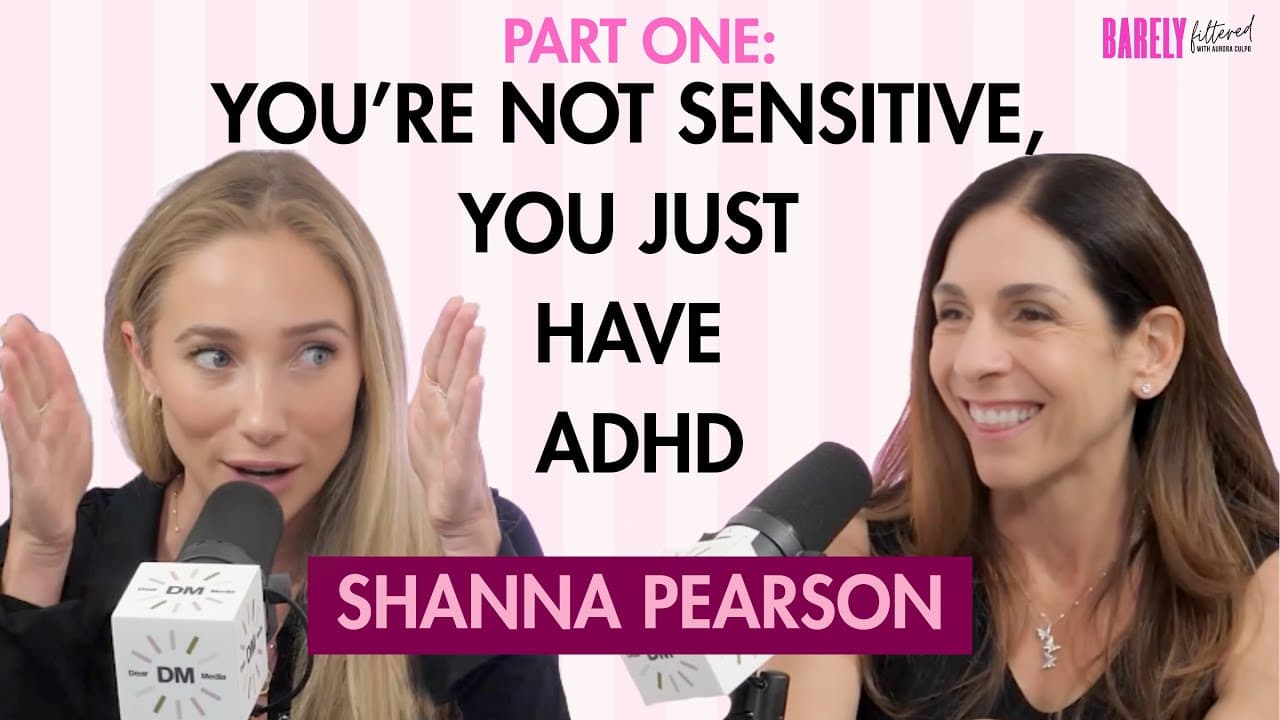
On episode 121 of Barely Filtered, Shanna Pearson, founder of Expert ADHD Coaching and author of Invisible ADHD, talks with Aurora Culpo about how to tell ADHD apart from a chaotic stretch of life, how it tends to look in girls, and why rejection sensitivity hits women with ADHD so hard. Aurora, who has ADHD herself, shares her own story along the way.
This is the first of two parts. Part 2 picks up with medication, daily habits and relationships.
In this episode
- Lifelong overwhelm, the “deer in headlights” feeling, and why ADHD isn’t something you develop as an adult
- How ADHD often looks in little girls: quieter, lost in daydreams, with an amusement park running in their minds
- Short, timed work sessions, body doubling, and accountability: “Show me, not tell me”
- Choosing a positive stimulus over a negative one when your brain needs stimulation
- Rejection sensitive dysphoria, the difference between confidence and self-esteem, and how ADHD shaped Aurora’s dating choices
- Medication (“They do not help you focus on the right things”), the GAD-7 and PHQ-9 screening forms, and why Shanna recommends seeing an ADHD specialist
Episode links
- The video on YouTube, with chapter times
- Apple Podcasts and Spotify, where the audio episode runs a few minutes longer
- Dear Media’s recap, with seven points from this conversation
- Part 2 of the conversation
Transcript
This transcript follows the video above. Times are minutes and seconds into it. The audio episode runs a few minutes longer, so its times differ.
Aurora Culpo (0:00): (upbeat music) Hi, everybody. Welcome back to Barely Filtered. Today, we have on a really special guest. Her name is Shanna Pearson, and she is a coach for ADHD. Now, she also has ADHD. You might think this makes it difficult for her to also coach people with ADHD, but she has been doing it for a while now, and she has had over 20,000 people go through her company, where she has helped them create a life that is more functional, with more confidence, um, and more productivity. So I'm super excited to get her tips because I know I can use them. So if you are ADHD or you know someone who is, this episode's for you. So you have ADHD yourself, and you're also treating people with ADHD. Do you ever feel like maybe you're not the person for the job since you have ADHD, or does it make it easier (chuckles) since you have ADHD?
Shanna Pearson (1:02): I love it.
Aurora Culpo (1:02): (laughs)
Shanna Pearson (1:02): So I, I have ADHD. I had such severe ADHD, but I didn't know it until I was in my 30s.
Aurora Culpo (1:10): Really?
Shanna Pearson (1:11): And so I had no idea how to manage ADHD without knowing that I, I even had it. But once I learnt everything humanly possible about what ADHD is and how it was able to... Like, how I was able to channel my energy, and my focus, and my internal hyperactivity, 'cause that's really what it is for a lot of women-
Aurora Culpo (1:31): Yeah
Shanna Pearson (1:31): ... it's not external, it's a lot of internal, um, that I didn't purposefully go and say, "I'm gonna go start helping people with ADHD." I just- it just sort of happened, and so I was-
Aurora Culpo (1:43): Right
Shanna Pearson (1:43): ... whatever I was doing that was working for me, my friends who were very similar to me, were asking, you know, "Well, how did you do that? And what did you do that worked?" And so I just started doing it with them, and then slowly, slowly, we- I started getting paying clients, and then it exploded. I have, I have over 50 coaches that work for me now-
Aurora Culpo (2:01): Wow
Shanna Pearson (2:01): ... over, and we work with clients worldwide. And over time, and it's been a long time, we've definitely figured out what works-
Aurora Culpo (2:09): Yeah
Shanna Pearson (2:09): ... and what doesn't.
Aurora Culpo (2:10): Right.
Shanna Pearson (2:11): So-
Aurora Culpo (2:11): Well, so I feel like ADHD is kind of like, it's like the term narcissism right now. It gets kind of thrown out-
Shanna Pearson (2:18): Totally
Aurora Culpo (2:18): ... and, like, blanketed on, you know, if someone's disorganized, or if somebody is flaky-
Shanna Pearson (2:23): Yeah
Aurora Culpo (2:23): ... or if somebody, you know, um, can't stick to one topic. Like, y- I, I feel like there's certain people who don't even believe ADHD is a thing-
Shanna Pearson (2:32): For sure
Aurora Culpo (2:33): ... because it gets used so much to cover so many different symptoms.
Shanna Pearson (2:38): Yep.
Aurora Culpo (2:39): So, first of all, how do we know if it's ADHD or if it's something else?
Shanna Pearson (2:44): Oh, my gosh, that's an amazing question. And it seems like since COVID, especially, like, in the last five years, everybody has ADHD, and they don't, right? So if you're super stressed out, and life feels incredibly chaotic right now, or, you know, you're not feeling so great about yourself, and there's a billion things going on, that doesn't mean you have ADHD. And so what you, especially for women, what you really want to look at is, and you can tell me if this is true for you, um, have you experienced the feeling of such severe overwhelm that it's almost paralyzing, where you just don't know what to do first, and it's almost like this, I call it deer in headlights syndrome, in so many different areas of your life, and you've had that for most of your life?
Aurora Culpo (3:29): Mm-hmm.
Shanna Pearson (3:30): Was that the case for you?
Aurora Culpo (3:32): Yes, for sure.
Shanna Pearson (3:34): (laughs)
Aurora Culpo (3:34): But I also feel like my life has always kind of been coupled by a lot of chaos-
Shanna Pearson (3:41): Yeah
Aurora Culpo (3:41): ... caused by some of my impulsive decisions, and also... It's almost like, what came first, the chicken or the egg?
Shanna Pearson (3:48): Right.
Aurora Culpo (3:49): 'Cause it's like, okay, well, no wonder you feel this way, because, like, you're going through a divorce, or you are... You know, you're in law school, and you can't do... You can't focus on the work, so you're quitting law school. It's like, like, all- there's always been, like, a certain level of chaos that seems kind of self-created.
Shanna Pearson (4:04): Totally.
Aurora Culpo (4:05): And so it's like, is it that, or is it, do I have ADHD, or, or, or what? (laughs)
Shanna Pearson (4:09): I feel like... So what you just said is exactly-
Aurora Culpo (4:12): Yeah
Shanna Pearson (4:12): ... it's like, it's like textbook, and I actually write about that in part two of my book. Um, and in one of the chapters is, like, I heart drama.
Aurora Culpo (4:19): Mm.
Shanna Pearson (4:20): (chuckles) And so, like, do you happen to just always find yourself in these, like, super dramatic situations that-
Aurora Culpo (4:25): Mm
Shanna Pearson (4:25): ... most of your friends don't necessarily find themselves in? But honestly, a lot of this stems from living in overwhelm-
Aurora Culpo (4:31): Mm
Shanna Pearson (4:32): ... believe it or not, because-
Aurora Culpo (4:33): Oh, so it created the ADHD?
Shanna Pearson (4:35): No, it- you're, you're born with ADHD.
Aurora Culpo (4:38): Mm.
Shanna Pearson (4:38): And when you have ADHD, you have... It's, like, think about it as having a brain that has a very difficult time compartmentalizing.
Aurora Culpo (4:46): Mm-hmm.
Shanna Pearson (4:47): So if you can't compartmentalize, and everything feels equally important all at the exact same time, and you've been like that since before kindergarten, (chuckles) since the day you were born, it creates a way of being.
Aurora Culpo (5:00): Mm, mm-hmm.
Shanna Pearson (5:00): Right? Because you're kind of, like, always in your head.
Aurora Culpo (5:03): Right.
Shanna Pearson (5:04): And you're, and you're creating things in your head in terms of, like, things that are engaging for you and things that are, like, stimulating for you, but it's all up here, and that's why we're so attracted to drama. It's why we tend to catastrophize. It's why we tend to have a hard time making decisions. It's all of this internal-
Aurora Culpo (5:21): Yeah
Shanna Pearson (5:21): ... drama, and it stems from living in perpetual overwhelm.
Aurora Culpo (5:26): Yeah.
Shanna Pearson (5:26): And living in overwhelm is something that is not on the, you know, the typical ADHD assessment tools. It's like, it's, like, one of those things that's totally missed, and yet it is the number one thing that all women with ADHD live with.
Aurora Culpo (5:43): How can you diagnose somebody who lives in chaos with ADHD when they've only ever been in chaos, and anybody who lives in chaos would be acting like somebody with ADHD?
Shanna Pearson (5:56): Well, the, the thing about it that, that you need to know is really it's been like this your whole life.... so a lot of us know people in their 20s and 30s who are, like, really, you know, living in chaos 'cause it's like this in-between age.
Aurora Culpo (6:09): Right.
Shanna Pearson (6:09): You know, you're not- you're, like, not in school anymore. You're not sure what your lifelong career is gonna be necessarily, and you're- you know, you're not even sure if you're in the right partnership (chuckles) or every- like, everything. It's like this- these decades of, of creating yourself and creating your identity. So you have to ask yourself, like, "Have I always been like this?"
Aurora Culpo (6:27): Okay, have I always been like this? So ADHD is not something you can develop.
Shanna Pearson (6:30): No. No, no, no, no. And it's like that's, like, a huge point because that's what I was saying before. It's like since COVID, everyone feels like they got ADHD, and if you think you caught it or got it-
Aurora Culpo (6:42): Yeah
Shanna Pearson (6:42): ... you don't have it because ADHD is a lifelong... It's, it's how your brain is wired-
Aurora Culpo (6:47): Interesting
Shanna Pearson (6:47): ... and you're born with ADHD.
Aurora Culpo (6:49): So what does ADHD in a little girl look like?
Shanna Pearson (6:52): Most of the time, and not all of the time, most of the time, it's a little girl who's totally enveloped in her mind and daydreams and really kind of spaced out, quote, unquote-
Aurora Culpo (7:04): Mm
Shanna Pearson (7:05): ... um, a lot quieter than boys-
Aurora Culpo (7:08): Oh
Shanna Pearson (7:08): ... who have ADHD. (chuckles)
Aurora Culpo (7:09): Yeah.
Shanna Pearson (7:09): 'Cause the boys are always, especially when I was in school, the boys were the ones who were caught. Uh, you know, they were, like-
Aurora Culpo (7:14): Totally
Shanna Pearson (7:14): ... like, called out, parents were called, "Trip to the doctor. Your kid needs to go on meds," whatever it was.
Aurora Culpo (7:20): Right.
Shanna Pearson (7:20): But for girls, they're literally sitting there not having any idea what's going on.
Aurora Culpo (7:25): So they're quieter than, like, the average girl?
Shanna Pearson (7:29): I think so.
Aurora Culpo (7:30): Okay.
Shanna Pearson (7:30): In, in my experience-
Aurora Culpo (7:31): Okay
Shanna Pearson (7:31): ... they tend to be in their mind a lot more-
Aurora Culpo (7:35): Okay
Shanna Pearson (7:35): ... than the average girl because there's, like, I call it... In my book, I refer to it as the 24/7 amusement park in your brain.
Aurora Culpo (7:41): In your brain.
Shanna Pearson (7:42): It's just nonstop, and I don't- like, you have ADHD, Aurora.
Aurora Culpo (7:47): Yeah.
Shanna Pearson (7:47): So, like, is that... Can you relate to that, or is that a bit-
Aurora Culpo (7:49): The thing is, I'm a very verbal, social person, so I can't re- really remember anybody in my life ever calling me quiet-
Shanna Pearson (7:59): Mm, super little
Aurora Culpo (7:59): ... and also, my, um, my report cards always said, like, "Aurora is a born leader." I mean, I'm the first girl of five kids-
Shanna Pearson (8:07): Mm, mm
Aurora Culpo (8:07): ... so I think birth order, things like that, probably-
Shanna Pearson (8:10): Sure, it does
Aurora Culpo (8:10): ... play into it. I feel like my- what I thought my ADHD looked like when I was little is, um, I would get really hyper-focused on things-
Shanna Pearson (8:20): Yeah
Aurora Culpo (8:21): ... and then kind of forget about everything else. And so, like, I would be the person who didn't have their homework. I'd be... I feel like from the outside world, I probably looked flaky, undependable, like I, um, like I didn't care about things that I should care about.
Shanna Pearson (8:37): Mm-hmm.
Aurora Culpo (8:37): Almost pompous in a way. Um-
Shanna Pearson (8:40): Well, you were zoned in.
Aurora Culpo (8:40): Confident, but, like, I almost just was... Yeah, I was in my own world-
Shanna Pearson (8:44): Yeah
Aurora Culpo (8:44): ... I guess.
Shanna Pearson (8:45): You were zoned in.
Aurora Culpo (8:46): Yeah, I was zoned in. (chuckles)
Shanna Pearson (8:47): So that's a good way- that's a good description, right? So you were a leader, and you were really confident, but you were still, like, all up here.
Aurora Culpo (8:54): Yes.
Shanna Pearson (8:54): Yeah.
Aurora Culpo (8:55): Interesting.
Shanna Pearson (8:55): Whereas, like, maybe a lot of your friends were up here, but they were also able to, like, do what they needed to do on, more on time and get their homework done-
Aurora Culpo (9:03): Yeah
Shanna Pearson (9:03): ... or, you know, do other projects that they weren't necessarily super interested in.
Aurora Culpo (9:07): Right. Yeah.
Shanna Pearson (9:08): Which is honestly, like, really difficult if you have ADHD, is to, like, focus on something you have no interest in.
Aurora Culpo (9:14): Right.
Shanna Pearson (9:14): Mm-hmm.
Aurora Culpo (9:15): So somebody out there with ADHD who has to do work that they do not find to be super interesting-
Shanna Pearson (9:20): Mm
Aurora Culpo (9:20): ... what is a tool that can help them to accomplish that work and maybe even enjoy it, or does it have to be painful? (chuckles)
Shanna Pearson (9:25): No, it doesn't have to be painful. (chuckles)
Aurora Culpo (9:27): Okay.
Shanna Pearson (9:27): Um, but it's never gonna be, like, the most fun you've ever had. Uh, but there's, like, s- there's so many ways to do it. It's like you can... One thing that I love to do is called, like, structured work sessions, and for some people, it's- it means, you know, a, a 45-minute work period, and you literally time yourself, and, you know, surrounded by, you know, a 10-minute break on either side. So you know you have 45 minutes to get something done.
Aurora Culpo (9:51): Right.
Shanna Pearson (9:51): Um, for me, I'm more like a five-minute break, 20-minute work session-
Aurora Culpo (9:56): Mm
Shanna Pearson (9:56): ... five-minute break. So, like, I can definitely focus on anything for 20 minutes-
Aurora Culpo (10:00): Right
Shanna Pearson (10:00): ... no problem. But if somebody told me, like, "You have to write this report," or, "You should write this article," you know, for, like, an op-ed or whatever, which is something that I actually have to do, it's like I can't do it unless I have these very thick-
Aurora Culpo (10:12): Right
Shanna Pearson (10:13): ... boundaries and, like, short periods of time-
Aurora Culpo (10:15): Yeah
Shanna Pearson (10:15): ... because it's not something I necessarily want to do.
Aurora Culpo (10:18): Interesting.
Shanna Pearson (10:19): Yeah.
Aurora Culpo (10:19): Is there something with ADHD people that they do better with somebody else with them? I feel like I always work better when there's another person in the room, even if... Like, they're- I don't want them to talk to me. I just- I need something around me.
Shanna Pearson (10:34): Yeah.
Aurora Culpo (10:34): Is that a thing?
Shanna Pearson (10:35): For sure. Well, people talk about body doubling.
Aurora Culpo (10:37): Yeah.
Shanna Pearson (10:37): Right? And so it's like, just to get anything done, I'm gonna have this person, you know, on my screen or in real life, and we're gonna do this together, and it's helpful for a lot of people. It's definitely not helpful for, for some people. Some people get really distracted by it.
Aurora Culpo (10:50): Okay.
Shanna Pearson (10:51): And, um, you know, so but I feel like a lot of what we do in our coaching is, is not body doubling, but we're all over our clients. Like, they- like, we will constantly be checking in with you. (chuckles)
Aurora Culpo (11:01): Mm, yeah.
Shanna Pearson (11:01): And like, "Did you do this, and did you do that? And just show me, not tell me."
Aurora Culpo (11:05): Right.
Shanna Pearson (11:05): Like, "Show me what you did. Take a picture. Take a video."
Aurora Culpo (11:08): Right.
Shanna Pearson (11:08): "Show me," and it makes all the difference 'cause people are like, "Oh, sh..." you know, "Oh, crap-
Aurora Culpo (11:12): Right
Shanna Pearson (11:12): ... like, I have to actually do this."
Aurora Culpo (11:14): Yeah.
Shanna Pearson (11:14): "Like, I can't- I can't just say I did it. I have to really do it," and that type of accountability is hugely helpful. It's also, like... it's stimulating.
Aurora Culpo (11:22): Right.
Shanna Pearson (11:22): Right?
Aurora Culpo (11:22): Totally. I, I'm the exact same way, and I think everybody who works with me would agree that, like, it- as an adult, it can feel a little humbling to feel like you need another adult to be like, "Where's your homework?" (chuckles)
Shanna Pearson (11:35): Right. Totally, but it works.
Aurora Culpo (11:37): But it works.
Shanna Pearson (11:37): So, so what?
Aurora Culpo (11:38): So, so what? Yeah.
Shanna Pearson (11:39): Yeah.
Aurora Culpo (11:39): It's better than not having- not accomplishing anything.
Shanna Pearson (11:41): Right. Um, talk about-
Aurora Culpo (11:42): Well, you have to do what you need to do.
Shanna Pearson (11:44): Yeah. Okay, and that's a big... That's, like, a big point because people with ADHD 100% need to do things differently.
Aurora Culpo (11:52): Yeah.
Shanna Pearson (11:53): 100%, and I compare it to having straight hair versus having curly hair. Like, why is this a big deal? Why- like, people who have curly hair, they can't blow-dry their hair like we do. They have to, like, use a diffuser, and they have to use, like, special hair product, and they can't use a brush. They have to do things in a specific way.... you have friends, I'm sure, who have, like, super curly hair-
Aurora Culpo (12:14): Oh, yeah.
Shanna Pearson (12:14): -and it's such a, quote, unquote, "pain in the butt," but they cannot do things the way you do it-
Aurora Culpo (12:18): Right
Shanna Pearson (12:18): ... for your hair. It's the same thing with ADHD management. Like, don't worry about it. So what? Okay, great, you need somebody with you. It's like using a diffuser.
Aurora Culpo (12:26): Yeah. It's just different steps.
Shanna Pearson (12:27): It's just a different thing that you need to do, but it works.
Aurora Culpo (12:31): That's interesting. I like that.
Shanna Pearson (12:32): So don't put any, like, weight on it, no stigma. It's just what you need to do.
Aurora Culpo (12:35): Yeah.
Shanna Pearson (12:36): Yeah!
Aurora Culpo (12:36): And I, I would imagine it'd be hard for somebody who hasn't been diagnosed yet and just kind of feels like, "Oh, I'm just somebody who can't do things."
Shanna Pearson (12:42): "I'm so immature."
Aurora Culpo (12:43): On my own. Yeah.
Shanna Pearson (12:43): "I haven't, like, grown up yet. I still need a buddy to-"
Aurora Culpo (12:46): Right.
Shanna Pearson (12:46): Yeah, but that- that's why it's really helpful to know what's going on with your brain.
Aurora Culpo (12:50): Right.
Shanna Pearson (12:50): If you have a brain that's naturally lower, has lower levels of dopamine-
Aurora Culpo (12:54): Mm-hmm
Shanna Pearson (12:55): ... like, that says a lot, and that'll show you so much about your life-
Aurora Culpo (12:59): Right
Shanna Pearson (12:59): ... and why you've done the things you need to do, and it makes it fine. It's like a person who needs, like, more insulin.
Aurora Culpo (13:04): Right.
Shanna Pearson (13:05): Or it's just... It's fine. Like, "Okay, great, I have lower levels of dopamine. Here's what I need to do."
Aurora Culpo (13:09): Right. Well, h- what would you say to somebody who feels like they are a dopamine-seeking type of person? Maybe they haven't been diagnosed with ADHD yet, but that's how I was diagnosed because I actually did a brain scan.
Shanna Pearson (13:21): Whoa!
Aurora Culpo (13:21): And so, like, I know straight up, like, this is what a brain with ADHD looks like, and this is what you have, and that I have a dopamine deficiency. And it made so much sense when I looked back at my past because, like you said, seeking out chaos, but also just, like, the drugs that felt really good-
Shanna Pearson (13:36): Mm
Aurora Culpo (13:36): ... or, like, you know, that first sip of alcohol that gives you that dopamine buzz. Um, what's a healthy way to get dopamine if you're somebody who's naturally deficient?
Shanna Pearson (13:46): So I call it positive stimulus versus negative stimulus.
Aurora Culpo (13:49): Mm.
Shanna Pearson (13:50): And, like, we all need stimulus, there's no question. Like, we need a lot of stimulus, and so, like, I, like... I used to... You know, I went skydiving, and I was, like, bungee jumping-
Aurora Culpo (13:58): Mm
Shanna Pearson (13:58): ... and I was just, like, swimming with whale sharks, and I was a stimulus junkie.
Aurora Culpo (14:02): Yeah.
Shanna Pearson (14:03): And-
Aurora Culpo (14:03): It sounds like fun. All that stuff sounds fun to me. (laughs)
Shanna Pearson (14:04): It's a m- it's unbelievable. You know?
Aurora Culpo (14:06): Yeah.
Shanna Pearson (14:06): It's like some of the best times of my life were, like, in, like, the craziest situations, but also dangerous, right? (chuckles) And then some of those times were not so great. The thing is, is that I believe that if you can, if you can look at yourself, if you're an adult, and you can look at yourself and be like, "Okay, that was definitely stimulus seeking, like the drugs- (chuckles)
Aurora Culpo (14:25): ... mm,
Shanna Pearson (14:25): -or, like, the partying or whatever-
Aurora Culpo (14:27): Right
Shanna Pearson (14:27): ... but it wasn't taking me closer to what I want."
Aurora Culpo (14:30): Right.
Shanna Pearson (14:30): "Okay, but then you're doing something right now that is taking you towards what you want. Like, what are you doing right now?"
Aurora Culpo (14:37): Yeah.
Shanna Pearson (14:37): Like, it's like this podcast or, like, w- like, everything that you're doing and communicating to the world.
Aurora Culpo (14:41): Right.
Shanna Pearson (14:42): Right? And it's freaking awesome.
Aurora Culpo (14:44): Yeah, getting hyperfocused on something that I'm interested in.
Shanna Pearson (14:46): You love it!
Aurora Culpo (14:47): Yeah.
Shanna Pearson (14:47): I think you love it.
Aurora Culpo (14:48): Yeah, I do.
Shanna Pearson (14:48): It seems like you love it, and so, like, that's a positive stimulus.
Aurora Culpo (14:51): Mm-hmm.
Shanna Pearson (14:52): Right? So what do you do if you know that you need the stimulus is, like, you hyperfocus on-
Aurora Culpo (14:56): Yeah
Shanna Pearson (14:56): ... the positive stimulus that's gonna get you from where you are now to wherever you wanna go, which is, if y- the work that you're doing right now, like, yourself, if that's, like, positive, and I think it is, then you just keep zoning into that-
Aurora Culpo (15:07): Keep zoning in
Shanna Pearson (15:07): ... and taking it in different directions.
Aurora Culpo (15:08): Yeah, I love that. Um-
Shanna Pearson (15:11): Yeah
Aurora Culpo (15:11): ... what would you say about rejection sensitivity? 'Cause it's a concept that I recently came upon-
Shanna Pearson (15:17): Mm
Aurora Culpo (15:17): ... and I brought it up to my sister, and she was like, "Aurora, nobody likes rejection. Like, that's a human quality." There's a- (chuckles)
Shanna Pearson (15:25): There's a difference.
Aurora Culpo (15:25): I get that reaction- I get that reaction from people-
Shanna Pearson (15:27): (chuckles)
Aurora Culpo (15:27): ... when I'm like, "Oh, I have ADHD. That's why X, Y, and Z." And they're like, "No, that's just a human thing."
Shanna Pearson (15:31): Yeah.
Aurora Culpo (15:31): "Nobody likes to be rejected." What is re- uh, rejection sensitivity?
Shanna Pearson (15:35): It's so extreme. Like, some peop- some of our clients, some of our clients won't leave the house.
Aurora Culpo (15:41): Mm.
Shanna Pearson (15:42): It's not like agoraphobia, but it's, it's different. It's like they cannot bear the reality of being seen or rejected.
Aurora Culpo (15:51): Wow.
Shanna Pearson (15:52): And so if there's any possible, remote possibility (chuckles) that this is gonna happen on this day, um, they literally stay inside.
Aurora Culpo (16:00): Oh.
Shanna Pearson (16:01): And so that's not typical.
Aurora Culpo (16:03): No, that's not typical.
Shanna Pearson (16:04): So-
Aurora Culpo (16:04): It-
Shanna Pearson (16:04): ... rejection sensitive dysphoria, it's dysphoria. It's, it's very extreme, just like... I mean, we can take everything. It's like what your sister's like... What your sister's saying is we all get- we all feel sen- like, we're all sensitive.
Aurora Culpo (16:16): Yeah.
Shanna Pearson (16:16): For sure, we are, and we're all a little bit, you know... We all live in chaos, and we all get stressed out. There's, like, the normal range-
Aurora Culpo (16:24): Right
Shanna Pearson (16:24): ... and then there's the outside of the norm.
Aurora Culpo (16:26): Right.
Shanna Pearson (16:26): So that's what RSD is. It's just, like, way outside.
Aurora Culpo (16:29): It's way outside. Yeah, I feel like, I don't... So you don't need to have that to be categorized as ADHD?
Shanna Pearson (16:35): No.
Aurora Culpo (16:35): Right. It's just-
Shanna Pearson (16:36): But oddly, um, it's coming to be seen that it's very... It's extremely common-
Aurora Culpo (16:42): Mm
Shanna Pearson (16:42): ... for women who have ADHD, and I think- and I, and I believe the answer, the reason... I believe the reason is because we have a brain that is not able to compartmentalize very well, right? So that's what leads to the overwhelm.
Aurora Culpo (16:58): Right.
Shanna Pearson (16:59): So you have this beautiful brain, and it's got... It's full of, like, amazing ideas and amazing thoughts and emotions and everything that's, like, in your world, and but you can't put it, anything in boxes, which is why everything feels equally important all the time.
Aurora Culpo (17:14): Right.
Shanna Pearson (17:14): Right? It's like everything all at once right now, and you don't know, like, what to do first, and you don't know what's more pressing. So if you have a brain that's not able to compartmentalize, it's like this big emotion is- doesn't have a place, and it's like everything is, like, dripping into everything else, and it's, like, filling up your whole being.
Aurora Culpo (17:32): Mm-hmm.
Shanna Pearson (17:32): So the reason why RSD is so common for women who have ADHD, 'cause we're so emotion and mood-based, is because that extreme sensitivity completely takes over everything.
Aurora Culpo (17:44): Yeah.
Shanna Pearson (17:44): Like, it takes over our whole mind. It takes over our whole being-
Aurora Culpo (17:47): Right
Shanna Pearson (17:47): ... because that's how our brain works. Just like when you're super pumped about something, that takes over your whole mind-
Aurora Culpo (17:53): Totally
Shanna Pearson (17:53): ... and your whole being, and if you're super sad about something, that takes over- (chuckles)
Aurora Culpo (17:58): Yeah
Shanna Pearson (17:58): ... your whole mind and your whole being, and so it's the same thing. It's just that we can't compartmentalize, so that's why-
Aurora Culpo (18:03): Right
Shanna Pearson (18:03): ... it's just like, it takes over everything.
Aurora Culpo (18:06): I think dating with ADHD was probably one of the-... hardest things I ever did, and I didn't realize just how much of my, like, rejection sensitivity was going to be provoked by people-
Shanna Pearson (18:22): Mm
Aurora Culpo (18:22): ... that, like, I didn't even- like, my rational brain was like, "I- I'm not in love with this person."
Shanna Pearson (18:26): Okay.
Aurora Culpo (18:26): "I don't even like them. I don't even want to be in a relationship with them," but it felt very difficult for me to not wrap up, like, a lot of my self-worth in acceptance from, from men, but, like, from people that I was dating at the time. Um-
Shanna Pearson (18:43): Right
Aurora Culpo (18:43): ... is that a common thing for people with ADHD?
Shanna Pearson (18:45): (clears throat) You're gonna hate this. It's a common thing for people with ADHD who, who always felt, like, always felt out of place and kind of, like, the odd one out-
Aurora Culpo (18:58): Mm-hmm
Shanna Pearson (18:58): ... in their world. I don't know if that's the-
Aurora Culpo (19:00): Yeah
Shanna Pearson (19:00): ... case with you, but because women who have ADHD tend to also have low self-esteem, I know I for sure-
Aurora Culpo (19:08): Yeah
Shanna Pearson (19:08): ... like, that is 100% me, and low self-confidence. We tend to, like, need approval-
Aurora Culpo (19:14): Right
Shanna Pearson (19:14): ... from other people-
Aurora Culpo (19:15): Yeah
Shanna Pearson (19:16): ... until we figure out, like, this is-
Aurora Culpo (19:17): Until we figure it out
Shanna Pearson (19:18): ... not, you know, this is obviously... This doesn't make any sense. Why do I need his approval? (chuckles)
Aurora Culpo (19:22): Yeah.
Shanna Pearson (19:22): Like, this is, like, illogical-
Aurora Culpo (19:23): Right
Shanna Pearson (19:24): ... fact, but the thing is, is that until you get to that place where you see, like, how completely ridiculous it is-
Aurora Culpo (19:30): Yeah
Shanna Pearson (19:30): ... your emotions take you there.
Aurora Culpo (19:32): Right.
Shanna Pearson (19:32): It's like, "Well, I need him to like me. I don't care if I don't like him."
Aurora Culpo (19:35): Yeah.
Shanna Pearson (19:35): "He has to like me-
Aurora Culpo (19:36): Right
Shanna Pearson (19:36): ... 'cause I always feel like nobody really gets me, and nobody understands me."
Aurora Culpo (19:40): Right.
Shanna Pearson (19:40): And so that's something that we grew up with before we were conscious enough to, to be self-aware.
Aurora Culpo (19:45): Yeah.
Shanna Pearson (19:45): Then you just, like, unconsciously go for that, and-
Aurora Culpo (19:47): One, yeah
Shanna Pearson (19:48): Yeah, you need it.
Aurora Culpo (19:49): I feel like that was something that, that I struggled with, and I didn't really know that I was-
Shanna Pearson (19:52): Do you still?
Aurora Culpo (19:52): Um, no, not... Well, I'm not dating anymore, but, um, I mean, now I'm in a relationship.
Shanna Pearson (19:58): Right.
Aurora Culpo (19:58): But I definitely do have to check myself with-
Shanna Pearson (20:01): Okay
Aurora Culpo (20:01): ... like, does this person's opinion of me really matter? And it- I think people are-
Shanna Pearson (20:06): Right
Aurora Culpo (20:06): ... are surprised to find that out because I'm, I'm confident- I'm a confident person, and, um, you know, I, I feel like my self-esteem has gotten a lot better over the years.
Shanna Pearson (20:17): Mm.
Aurora Culpo (20:17): But, like, when I was 25, now I'm 36, like, my confidence when I was 25 was very low-
Shanna Pearson (20:24): Mm
Aurora Culpo (20:24): ... in terms of, like, what I thought I could ask for in a relationship. So I ended up, I ended up marrying somebody who, like, didn't even b- like, couldn't be monogamous, and I was just kind of like, didn't... Like, I knew-
Shanna Pearson (20:37): Yeah
Aurora Culpo (20:37): ... that they probably weren't gonna be able to, but I kind of turned a blind eye to it 'cause I didn't really think, like, I almost didn't think it's what I deserved or, like, what I thought I could ask for. It's such a wild thing to think about now, like, 10 years later, but looking back and seeing how ADHD shaped my relationship choices is one of the, the things that, honestly, like, I have, like, grieved over the most.
Shanna Pearson (20:56): Sure.
Aurora Culpo (20:57): Of, like, I wish that I had known that that was my ADHD, that, like, oh, I, I'm not, like, a flaky person or I'm not a pers- like, I, I think I'm a very sensitive person, and I think it's been, it's been misconstrued, uh, or it's been misinterpreted o- in, in a lot of ways throughout my life. Because people with ADHD often do get the reputation of being, like, late, you don't care, you're flaky-
Shanna Pearson (21:21): Right
Aurora Culpo (21:21): ... or-
Shanna Pearson (21:21): You're flaky
Aurora Culpo (21:21): ... undependable.
Shanna Pearson (21:22): Yeah.
Aurora Culpo (21:23): Um, and it's really tough. Like, I... Why do people get so misdiagnosed?
Shanna Pearson (21:28): But it's, it's also really interesting that you (chuckles) -
Aurora Culpo (21:30): Yeah
Shanna Pearson (21:30): ... of all people-
Aurora Culpo (21:32): Yeah
Shanna Pearson (21:32): ... like, if that's, if that was your, like, that was your reality. Because, you know, you were saying before that you were, when you were little, you were a born leader.
Aurora Culpo (21:39): Yeah.
Shanna Pearson (21:40): You were really confident.
Aurora Culpo (21:41): Yeah.
Shanna Pearson (21:41): So and confidence and self-esteem are not the same thing.
Aurora Culpo (21:45): It's so interesting.
Shanna Pearson (21:46): Right?
Aurora Culpo (21:46): Yeah.
Shanna Pearson (21:46): 'Cause you are so confident, but yet you still... And it's really important for everyone to see, like, and know that confidence is not the same thing 'cause self-esteem goes so much deeper.
Aurora Culpo (21:56): Right.
Shanna Pearson (21:56): And so for some reason, and obviously now you know the reason, but, like, you thought, "Oh, it's okay, like, I, I guess I... You know, I can handle it with this guy who, you know, can't even just stay with me and only me." (chuckles)
Aurora Culpo (22:08): Yeah.
Shanna Pearson (22:08): Like-
Aurora Culpo (22:09): Right.
Shanna Pearson (22:09): Right? And it's just-
Aurora Culpo (22:09): It's, like, what you think you deserve.
Shanna Pearson (22:11): Yeah.
Aurora Culpo (22:11): Because a part of you really does believe that, oh, maybe I am flaky, undependable, undeserving.
Shanna Pearson (22:19): Or a little bit broken.
Aurora Culpo (22:19): Yeah.
Shanna Pearson (22:20): So many of my clients are, like, come in saying that they feel completely broken-
Aurora Culpo (22:24): Right
Shanna Pearson (22:24): ... and they feel like they're never gonna fit in, and nobody ever understands them. And, and it has shaped their relationships, and they've been in, you know, so many of the wrong relationships. I was engaged three times- (laughing)
Aurora Culpo (22:36): Stop
Shanna Pearson (22:37): ... before, before I actually found, you know, like, my husband.
Aurora Culpo (22:40): Yeah.
Shanna Pearson (22:41): And, like, really bad situations, really bad, and it's just... I feel like a lot of us share the very similar story-
Aurora Culpo (22:48): Yeah
Shanna Pearson (22:48): ... and for the, for almo- for very similar reasons.
Aurora Culpo (22:51): Yeah.
Shanna Pearson (22:51): And it's just, it's beautiful, too, because we really are connected, and there- and we really are experiencing the same thing.
Aurora Culpo (22:58): Right.
Shanna Pearson (22:59): Right?
Aurora Culpo (22:59): Yeah, even just the way you're like, "Oh, I was engaged three times," you don't really see ADHD people with a problem, like, getting started with a new re-
Shanna Pearson (23:06): Oh, yeah. (chuckles)
Aurora Culpo (23:07): There's, there's a lot of... Like, it's never like, "Oh, I haven't had a relationship in 20 years." It's like, "Oh, I've had 500" (chuckles)
Shanna Pearson (23:12): So many relationships. (laughing)
Aurora Culpo (23:14): Like, you can't start... It's, like, almo-
Shanna Pearson (23:16): That's the stimuli.
Aurora Culpo (23:16): Yeah.
Shanna Pearson (23:17): Like, wow, what am I gonna... It's like a game.
Aurora Culpo (23:18): Yeah.
Shanna Pearson (23:19): I used to think of it as a game to play.
Aurora Culpo (23:20): Right.
Shanna Pearson (23:21): Yeah.
Aurora Culpo (23:21): It does, and, I mean, I'm even experiencing that now that I'm in a good relationship, and I think when we-
Shanna Pearson (23:26): How long has it been?
Aurora Culpo (23:27): Well, okay, so it's been s- uh, um, six and a half months, suddenly.
Shanna Pearson (23:31): Okay.
Aurora Culpo (23:31): So, like-
Shanna Pearson (23:31): That's great.
Aurora Culpo (23:32): Yeah.
Shanna Pearson (23:32): Yeah.
Aurora Culpo (23:32): But, like, you know, we're not in the honeymoon phase anymore. It... I'm- I... He, he's my person. I want to be with him. We- we have a bright future. However, I'm like, "Okay, why aren't I euphoric every day?"
Shanna Pearson (23:45): Oh. (chuckles)
Aurora Culpo (23:45): Like, where is, where is (chuckles) where is my... Like, 'cause, you know, in the beginning-
Shanna Pearson (23:48): Yeah
Aurora Culpo (23:48): ... that chase, it's not there, and I feel like with pe- for people with ADHD, it's like, "Where's my dopamine hit?"
Shanna Pearson (23:55): Right. So where is it?
Aurora Culpo (23:57): So, well, I don't know. I'm trying to find it. (laughing) I, I need... There are times when I'm... And I'm an ex-vaper, too. Like, I g- I used to get my, my dopamine from nicotine.
Shanna Pearson (24:05): Yeah.
Aurora Culpo (24:05): And so, like, the times like that where I'm, like, feeling a little flat, especially certain times of the month, I'll be like, "Oh, man," like, you... I miss the, I miss the nicotine, but I'm like, "I'm not gonna do it," 'cause I know it's- that's not a rabbit hole I want to go down. Um, so, yeah, I'll work out. Working out for me is, like, probably the-
Shanna Pearson (24:20): That's huge.
Aurora Culpo (24:20): Yeah.
Shanna Pearson (24:21): That's huge, but it's also, like, everyone's got to know what their own positive stimulus is.
Aurora Culpo (24:25): Totally.
Shanna Pearson (24:25): So you're not relying on it from your partner because there's no relationship on the planet that's, like, got all these dopamine hits, you know, 10 years in-
Aurora Culpo (24:33): Right
Shanna Pearson (24:33): ... or five years in.... honestly, probably like three years in (chuckles) and so it's like, it's just, it just doesn't exist. So where's the dopamine gonna come from? And then you can create, like, consciously have an intention of creating, you know, whether it's working out or doing, you know, any- like, anything that you are excited-
Aurora Culpo (24:51): Right
Shanna Pearson (24:52): ... about.
Aurora Culpo (24:52): Getting ahead of it.
Shanna Pearson (24:53): Yeah, getting ahead of it, knowing what those things are, and, like, and, and going for it.
Aurora Culpo (24:58): Right.
Shanna Pearson (24:58): Not just, like, thinking about it and telling your friends about it, but going for it. That's freaking awesome.
Aurora Culpo (25:03): Mm-hmm.
Shanna Pearson (25:03): Like, that's, that's dopamine.
Aurora Culpo (25:04): Yeah.
Shanna Pearson (25:05): And it's also gonna, you know, get you amazing results and whatever.
Aurora Culpo (25:08): Right. Yeah-
Shanna Pearson (25:08): Yeah
Aurora Culpo (25:09): ... long-term, real results.
Shanna Pearson (25:10): Yeah.
Aurora Culpo (25:10): So just for a minute, let's talk a little bit about medication and misdiagnoses.
Shanna Pearson (25:16): This is so big.
Aurora Culpo (25:17): Yeah.
Shanna Pearson (25:18): Um, this is huge. So, well, medication is-
Aurora Culpo (25:22): Like, where do you stand on it? And do you feel like it's something that all people with ADHD should use?
Shanna Pearson (25:29): Not necessarily. I feel like people should really get over the stigma that's attached to ADHD medication, because it's really helpful for a lot of people.
Aurora Culpo (25:38): Yeah.
Shanna Pearson (25:38): It's actually a lifesaver for some people.
Aurora Culpo (25:39): Right.
Shanna Pearson (25:40): We've had people who are 100%, like, ready to just end their life-
Aurora Culpo (25:45): Mm
Shanna Pearson (25:45): ... and, and they don't have clinical depression, you know, after everything is... But they just feel like they really haven't accomplished anything. There's no purpose for them in this world anymore, and it's, like, so sad.
Aurora Culpo (25:54): Yeah.
Shanna Pearson (25:54): And they go on (chuckles) ADHD medication, and it, and it helps them to be on, you know, more on, on focus, and be on purpose, and, and figure out what they want, and move towards that-
Aurora Culpo (26:06): Right
Shanna Pearson (26:06): ... which is, when you're moving towards something that you love, honestly, like, that's, like, one of the best feelings in life.
Aurora Culpo (26:13): Yeah.
Shanna Pearson (26:13): You know?
Aurora Culpo (26:13): Yeah, that's... I was just talking about that.
Shanna Pearson (26:14): More than, like, having what you love.
Aurora Culpo (26:16): Yeah. We- I was just talking about that in my other episode, that it- it's in the pursuit of something that you want-
Shanna Pearson (26:20): Totally
Aurora Culpo (26:20): ... that more dopamine is released, and, uh, you know, when you feel like you're on the right path.
Shanna Pearson (26:24): Yeah.
Aurora Culpo (26:24): And, you know, and, and somebody like that-
Shanna Pearson (26:25): 100%
Aurora Culpo (26:25): ... is now building confidence that they probably haven't been able to build.
Shanna Pearson (26:28): It's like, "Wait a minute. I'm actually doing things. I'm getting things done. Like, this is, like, a whole new, you know, identity." And I've seen this happen so many times that I, I used to th- I used to be like, "no" for medication, and like-
Aurora Culpo (26:39): Yeah
Shanna Pearson (26:39): ... "Well, there's more natural ways of doing things," but now I'm- I've seen it so many times where people- people's lives totally change for the better, and so I think it's great in the right amount.
Aurora Culpo (26:50): Right.
Shanna Pearson (26:50): If it's the right medication and the right amount. I've, like, I've, I've learned that a lot of our people, a lot of our clients, have been prescribed way too heavy of a dose.
Aurora Culpo (27:02): Yeah.
Shanna Pearson (27:02): And, like, they feel like complete zombies.
Aurora Culpo (27:04): Mm-hmm.
Shanna Pearson (27:04): And then it's not working, but then, you know, you get- you, you advise them, like, "Ask your doctor if you can, you know, get a lower dose or, you know, whatever."
Aurora Culpo (27:11): Right.
Shanna Pearson (27:11): "Just talk about it with your doctor. They're the medical professionals."
Aurora Culpo (27:14): Right.
Shanna Pearson (27:14): "And, and they will adjust it, and you can maybe go on a different medication or go on a smaller amount." But it does work. I don't think everyone needs it.
Aurora Culpo (27:22): Right.
Shanna Pearson (27:22): When people are pregnant, they can't... A lot of people can't take ADHD medication, so they have to learn the tools.
Aurora Culpo (27:28): Right.
Shanna Pearson (27:28): I mean, that's what we do.
Aurora Culpo (27:29): Okay.
Shanna Pearson (27:29): Everything we do is non-medical-
Aurora Culpo (27:31): Okay
Shanna Pearson (27:31): ... even though probably, like, 80% of our clients do take medication. Also, it's not enough. They still need-
Aurora Culpo (27:37): Right.
Shanna Pearson (27:37): They still, they're still not getting what they want, so they need the skills.
Aurora Culpo (27:39): Are you taking medication for your ADHD?
Shanna Pearson (27:41): I started taking, uh, the- it's so funny, the pediatric dose, like, what they, what they give to, to small children, um, while I was writing my book.
Aurora Culpo (27:49): Of Concerta or Adderall?
Shanna Pearson (27:51): It was Adderall.
Aurora Culpo (27:52): Okay.
Shanna Pearson (27:52): And it was while I was writing my book, because I just couldn't do it any other way-
Aurora Culpo (27:55): Yeah
Shanna Pearson (27:55): ... and I needed to finish it, and, and it was amazing.
Aurora Culpo (27:59): Yeah.
Shanna Pearson (27:59): But it was such a tiny dose. My doctor said, "This doesn't exist for adults."
Aurora Culpo (28:03): Yeah. I can't believe that.
Shanna Pearson (28:04): And then I'm like, "Can you please check?" (chuckles) And then she checked and got back to me two weeks later, and she's like, "Oh yeah, we can do this. This for- this is what we give to children." But she didn't, 'cause she's an adult doctor-
Aurora Culpo (28:12): Yeah
Shanna Pearson (28:12): ... she didn't know that.
Aurora Culpo (28:13): Wow!
Shanna Pearson (28:14): So... Yeah, I felt that way.
Aurora Culpo (28:15): And it was fine. That it, that it's way too... Medication for me was too, way too strong, and-
Shanna Pearson (28:21): Yeah
Aurora Culpo (28:21): ... it, it ended up ca- it became like a... I, I was kept se- wanting more and more, because I wasn't getting the euphoria out of it, and that's, like, what I was looking for.
Shanna Pearson (28:30): (chuckles)
Aurora Culpo (28:30): And then also the nicotine aspect is just-
Shanna Pearson (28:32): Yeah.
Aurora Culpo (28:33): So I... Adderall for me is, like, a definitely no.
Shanna Pearson (28:35): Not happening.
Aurora Culpo (28:36): But I am on Wellbutrin-
Shanna Pearson (28:37): Okay
Aurora Culpo (28:37): ... which is a mild stimulant-
Shanna Pearson (28:39): Totally
Aurora Culpo (28:39): ... that, um, that has made things much easier for me. It, it got me off vaping, and, and I, I mean, I really love it, so...
Shanna Pearson (28:47): That's why I don't think people should be against medication.
Aurora Culpo (28:49): No.
Shanna Pearson (28:50): Like, it's- it can be 100% life-changing.
Aurora Culpo (28:52): Right.
Shanna Pearson (28:53): Um, the problem with medication is when a woman who tends to be more in her head, a woman with ADHD, who tends to have the hyperactivity component in her m- you know, inside her mind, and she's constantly thinking, and ruminating, and catastrophizing, and just, like, so enveloped in her mood and emotions, and she goes to a doctor and says, "This is how I feel," the doctor... And I don't know if this happened to you, but I'm- but I know it's happened to, like, practically every woman who's ever walked into our, our coaching practice. (chuckles) The doctor will give her a self-assessment for anxiety-
Aurora Culpo (29:29): Mm-hmm
Shanna Pearson (29:29): ... and/or depression.
Aurora Culpo (29:31): Mm-hmm.
Shanna Pearson (29:31): And that's it. So wait, I brought it. Here's what... You'll get it on a clipboard or on an iPad, right, at your doctor's office. So this is the anxiety questionnaire that they'll give you at the doctor's office. It's called the GAD-7, and here's the questions. "Feeling nervous or anxious?"
Aurora Culpo (29:47): Yeah.
Shanna Pearson (29:47): Obviously. "Not being able to s- control your worrying."
Aurora Culpo (29:51): Mm-hmm.
Shanna Pearson (29:51): Like, think about this in terms of ADHD also, right? "Worrying too much about different things. Trouble relaxing." Like, is there a, an ADHD human that doesn't- doesn't have these.
Aurora Culpo (30:01): Yeah.
Shanna Pearson (30:01): Being restless, that it's hard to sit still. Becoming easily annoyed (laughs) um, thinking that something awful might happen.
Aurora Culpo (30:10): Mm-hmm.
Shanna Pearson (30:11): Like, they- that's the catastrophizing. These are all... Every woman with ADHD would respond, like, would say, you know, more than half the days or nearly every day to, to every single one of these.
Aurora Culpo (30:22): Yeah.
Shanna Pearson (30:22): But they're not asking about ADHD. They're, they're testing you for anxiety.
Aurora Culpo (30:26): Right.
Shanna Pearson (30:26): So now you're gonna be diagnosed with anxiety-
Aurora Culpo (30:28): Right
Shanna Pearson (30:28): ... or depression, because a depression questionnaire, it's like, you know, feeling down.
Aurora Culpo (30:33): Right.
Shanna Pearson (30:33): No, you have ADHD. You haven't been able to follow through on things. Your life is not working out the way you want it to. Your relationships have been all over the place. You're gonna feel down.
Aurora Culpo (30:43): Right.
Shanna Pearson (30:43): Right? You're gonna, um... Do you have trouble falling or staying asleep? Do you have poor appetite, or do you overeat? And I feel like you're either one-
Aurora Culpo (30:52): You're one or the other
Shanna Pearson (30:53): ... or the other.
Aurora Culpo (30:53): Mm-hmm.
Shanna Pearson (30:53): Um, do you feel bad about yourself? Do you have trouble concentrating on things? (laughs) Do you feel fidgety or restless?
Aurora Culpo (31:00): Right.
Shanna Pearson (31:01): Again, and there's one question here that's 100% depression, but out of, except for, except for that, eight out of the nine questions are-
Aurora Culpo (31:10): Right
Shanna Pearson (31:10): ... would be po- like, a positive for anyone with ADHD.
Aurora Culpo (31:13): So how can any doctor-
Shanna Pearson (31:15): So, like, every single woman
Aurora Culpo (31:16): ... tell the difference, then?
Shanna Pearson (31:17): Is gonna... So you have to go to an ADHD specialist-
Aurora Culpo (31:20): Mm
Shanna Pearson (31:20): ... because they'll look back at your entire life, not just how you feel today-
Aurora Culpo (31:25): Right
Shanna Pearson (31:25): ... because you broke up with your boyfriend, or, you know, you got let go from a job. They'll look back on your entire life, and they'll see if these, you know, if these symptoms of ADHD, um, which include, you know, not following through on things and impulsivity and also the overwhelm that I was talking about before-
Aurora Culpo (31:43): Right
Shanna Pearson (31:43): ... which hopefully the specialists, the ADHD specialists will definitely know about for women. And if you've had that and experienced that for your whole life, it's much more likely ADHD, and you still might also have anxiety-
Aurora Culpo (31:56): Right
Shanna Pearson (31:56): ... or depression-
Aurora Culpo (31:57): Mm
Shanna Pearson (31:57): ... but at least you'll be able to be treated for your ADHD.
Aurora Culpo (31:59): Yeah.
Shanna Pearson (32:00): Yeah.
Aurora Culpo (32:00): Yeah. I, I, I've been to so many doctors where, with those questionnaires, and it feels like you can also say the same thing for ADHD, though. Like, if you walk in, you're like, "Oh, do you have trouble concentrating? Do you..."
Shanna Pearson (32:12): Yeah.
Aurora Culpo (32:12): Like, you know, maybe you... Like, I feel like people get misdiagnosed with ADHD just as much as maybe they get misdiagnosed with anxiety and depression, and maybe they have ADHD.
Shanna Pearson (32:23): I don't know. I feel like not enough doctors are, are even thinking about ADHD-
Aurora Culpo (32:27): Really?
Shanna Pearson (32:28): ... yet.
Aurora Culpo (32:28): Yeah.
Shanna Pearson (32:28): I think there's definitely an... Like, some people say that there's, like, a lot of overdiagnosis of ADHD, but I don't know if those people are being assessed properly or if they're just telling their doctor, "You know, I can't focus on my schoolwork. Please prescribe me (laughs) -
Aurora Culpo (32:42): Right
Shanna Pearson (32:42): ... this medication," and then they're- and then the doctor does it. But I think when people are, are actually getting an ADHD questionnaire and, like, the real... 'Cause you don't, you don't get that automatically at the doctor's-
Aurora Culpo (32:54): Right
Shanna Pearson (32:54): ... office, um, it doesn't really look like anxiety-
Aurora Culpo (32:58): Yeah
Shanna Pearson (32:58): ... or depression. It looks like you can't follow through on things, and you have poor executive functioning.
Aurora Culpo (33:02): Yeah.
Shanna Pearson (33:03): But the ADHD questionnaires also don't touch on the emotional impact that women experience who ha- you know, who have ADHD.
Aurora Culpo (33:10): Right.
Shanna Pearson (33:10): That's why, that's why I'm a big proponent of seeing a specialist.
Aurora Culpo (33:13): Totally, especially coupled with, like, you know, PMS and just the hormones that we go through naturally-
Shanna Pearson (33:18): Oh, my gosh
Aurora Culpo (33:18): ... and perimenopause and menopo- menopause, and-
Shanna Pearson (33:20): That's a whole other-
Aurora Culpo (33:21): Yeah.
Shanna Pearson (33:21): That's a huge thing.
Aurora Culpo (33:22): Yeah, so-
Shanna Pearson (33:23): 'Cause estrogen-
Aurora Culpo (33:24): Yeah
Shanna Pearson (33:24): ... affects your dopamine.
Aurora Culpo (33:25): Okay.
Shanna Pearson (33:26): Okay? So you're already dopamine deficient.
Aurora Culpo (33:29): Right.
Shanna Pearson (33:30): Your brain is, and you're like, you're... But, you know, you h- your brain doesn't have as much dopamine as it, as it needs.
Aurora Culpo (33:36): Right.
Shanna Pearson (33:36): Whether it's because it produces less or because less is absorbed, whatever the reason is, your brain needs more dopamine. And now you're going through hormonal shifts, whether it's PMS or perimenopause or menopause, and like, now you've got even less dopamine.
Aurora Culpo (33:49): Right.
Shanna Pearson (33:50): So that's why a lot of women aren't being diagnosed with ADHD until they're, like, in their late 40s or 50s-
Aurora Culpo (33:55): Mm
Shanna Pearson (33:56): ... because it's just-
Aurora Culpo (33:56): When they can't take it anymore, and then, then you have your whole life to look back on and see, "Okay, well, actually-
Shanna Pearson (34:00): Oh, my gosh
Aurora Culpo (34:01): ... maybe I've always had this."
Shanna Pearson (34:02): Yeah.
Aurora Culpo (34:02): For me, I really loved... I went to the Amen Clinic and got a brain scan, and for me-
Shanna Pearson (34:06): Yay
Aurora Culpo (34:06): ... I never really believed that I had ADHD because I was always able to accomplish a lot, and, like, my brother had ADHD. We knew he did, and his looks totally different than mine. I was not a hyperactive kid.
Shanna Pearson (34:19): Right.
Aurora Culpo (34:20): So I was like, "I don't have ADHD. I'm literally just, like, you know, all these things."
Shanna Pearson (34:23): 'Cause you thought it was the boy symptoms-
Aurora Culpo (34:25): Yeah
Shanna Pearson (34:25): ... like hyperactivity-
Aurora Culpo (34:26): Yeah
Shanna Pearson (34:26): ... but physical.
Aurora Culpo (34:27): Right.
Shanna Pearson (34:27): Yeah.
Aurora Culpo (34:28): I just thought I was a little broken, and so when-
Shanna Pearson (34:30): Mm
Aurora Culpo (34:30): ... I actually saw it on the brain scan, it was a totally pivotal moment for me. 'Cause I was like, "Wow, okay. I thought I had been faking on these questionnaires to get Adderall my whole life-
Shanna Pearson (34:42): Oh, my gosh! (laughs)
Aurora Culpo (34:44): ... but I actually just really..." (laughs)
Aurora Culpo (34:45): I mean, there's something to the fact that it, like, made me feel so great. I, you know, it is... For me, it's way too strong.
Aurora Culpo (34:51): Was it, like, a relief? It was, it was a relief. The Adderall, for me, is like... It made me feel great because I was accomplishing a lot, but I was never accomplishing the things that I needed to accomplish.
Shanna Pearson (35:00): That's exactly it.
Aurora Culpo (35:00): I was, like, organizing my cereal boxes-
Shanna Pearson (35:03): Yeah
Aurora Culpo (35:03): ... instead of, like, reading my law school books. (laughs)
Shanna Pearson (35:05): Oh, my gosh. 'Cause okay, so this is a- this is important for everyone to understand about ADHD medication, and you just said it perfectly.
Aurora Culpo (35:11): Okay.
Shanna Pearson (35:12): ADHD medication, the stimulants, they help you focus. They do not help you focus on the right things.
Aurora Culpo (35:18): Yes. (laughs)
Shanna Pearson (35:19): Period, end of story. So you're, like, focused on your cupboards in your kitchen, and like-
Aurora Culpo (35:23): Totally
Shanna Pearson (35:23): ... It was exactly the same thing when I was first prescribed. It was way too much, and I was like n- I was hyperfocused on everything except for what I needed to be doing.
Aurora Culpo (35:31): Yeah.
Shanna Pearson (35:31): You know? So-
Aurora Culpo (35:32): That's a really common thing.
Shanna Pearson (35:33): That's important to know.
Aurora Culpo (35:35): Oh, my God.
Shanna Pearson (35:35): So that's why, like, 80% of our clients do take meds, but they, they had to come to coaching to, to be able to design their life in terms of what they should be focusing on.
Transcribed from the episode audio.