

How ADHD Affects Women: Mood, Hormones, and Self-Esteem
Podcast · On Purpose with Elizabeth Pehrson · Episode 77
Hosted by Elizabeth Pehrson · Guest: Shanna Pearson · · 41 min listen
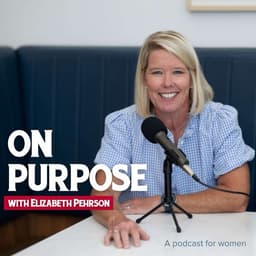
On Purpose with Elizabeth Pehrson
How ADHD Affects Women: Mood, Hormones, and Self-Esteem
On episode 77 of On Purpose, Elizabeth Pehrson talks with Shanna Pearson, founder of Expert ADHD Coaching and author of Invisible ADHD, about how ADHD shows up in women: a life spent in overwhelm, hyperactivity that stays inside the mind instead of the body, and symptoms that falling hormones in midlife make harder to manage.
Shanna also talks about her own diagnosis as an adult, how families can support a child or partner with ADHD, and tips from her book to start using right away.
In this episode
- Why Shanna said yes when Macmillan asked her to write the book, and why it was so hard to split such connected topics into chapters
- Overwhelm as a key sign of ADHD in women that the usual questionnaires leave out, and why it takes a specialist to tell ADHD apart from anxiety and depression
- Hyperactivity that shows up as worrying and catastrophizing, and how lower estrogen in perimenopause and menopause means lower dopamine
- Mood management, and what growing up with undiagnosed ADHD does to self-esteem and relationships
- Shanna’s own diagnosis, a client’s story from the book, and why she stays off social media
- Supporting someone with ADHD without asking “Why can’t you just…,” then mood scheduling, “keep it to three,” a thick box around each task, and physical state changes
Episode links
- The episode page on Buzzsprout, with the show notes
- Spotify and Apple Podcasts, where it’s listed as episode 77, “Invisible ADHD”
- The podcast’s page at The Exchange, the nonprofit for women that Elizabeth founded
Transcript
This transcript follows the audio episode above. Times are minutes and seconds into it. The episode opens with the show’s recorded welcome and Elizabeth’s introduction of Shanna.
Announcer (0:00): (upbeat music) Welcome to On Purpose, a podcast designed for all women that want to live this one messy, hard, fun, challenging, and exciting life we've been given on purpose and with intention. It is our heartfelt belief that women do that better when we're together, better when we are connected, better when we learn from each other. Each episode, you'll be hearing from Elizabeth on a variety of ways that we can be more intentional with our lives. We hope to inspire you and encourage you as we engage together on purpose. Here's your host, Elizabeth Pehrson.
Elizabeth Pehrson (0:35): (upbeat music) Hi, friends. It's a great day here in the ATL. You can actually feel the fall in the air. And another reason it's a great day is because Liz and I are here together, and we're about to learn something new. We both love being students of other people that are wiser and smarter than we are in a particular area. And not too long ago, I learned that an estimated 50% to 70% of women struggle with ADHD, and I had no idea it was that high. People my whole life have asked me if I have (laughs) ADHD, and maybe I do, maybe I don't. Who knows? But to you, our listeners, whether or not you've been diagnosed or people have questioned whether or not you do, I would encourage you to stick around to this very insightful conversation that we had with our special guest.
(1:19) On today's show, we sat down with Shanna Pearson, who's the founder and director of Expert ADHD Coaching, the world's largest one-on-one ADHD coaching company. Shanna has written the nationally known bestselling book, Invisible ADHD: Proven Mood and Life Management for Smart Yet Scattered Women. If you are a fellow smart yet scattered woman, you will not want to miss this interview. Let's go ahead and jump right in. So welcome, Shanna. Thank you for being on our show today.
Shanna Pearson (1:48): Thank you, Elizabeth. I'm so happy to be here. I think we're gonna have a lot of fun.
Elizabeth Pehrson (1:52): That is right up my alley.
Shanna Pearson (1:53): Mm-hmm.
Elizabeth Pehrson (1:54): So before we jump into the meat of this, can you just tell us a little bit about yourself?
Shanna Pearson (1:58): I'm Shanna. It's great to meet all of you.
Elizabeth Pehrson (2:00): (laughs)
Shanna Pearson (2:01): I hope I get to someday. I am a middle-aged woman (laughs) who's managed to grow this, an incredibly awesome and fulfilling coaching company specifically for adults who have ADHD. And I came ac- upon this through my personal history, which I talk a lot about in my book. But I'm, I would say, an extreme, extreme case (laughs) of ADHD, and I had a very difficult time navigating life for the majority of my life because I never knew I had ADHD until I was in my 30s. And then thankfully I was diagnosed. (laughs) But long story short, this coaching company has been remarkable in terms of changing people's lives. And it took a while, but I ended up taking the tools and the techniques and the systems that I had created for myself when I had no other options-
Elizabeth Pehrson (2:55): Mm-hmm
Shanna Pearson (2:55): ... and just sharing them with everybody. And eventually people started paying for, (laughs) paying for a process-
Elizabeth Pehrson (3:02): Yeah
Shanna Pearson (3:02): ... a program. And then I wanted, I, the book, I just wanna share that for, for the book itself, it really is an act of love, because there's a lot of people that just cannot afford, or for different reasons, just they're not able to participate in a coaching program, and that breaks my heart because I really do know how painful it is to have ADHD and to live with ADHD and not know what to do about it. It's very difficult and depressing at times. And so what I did was when the publisher came to me, I jumped on it because I'm like, "This is a way that I could give our tools to everybody, people who can't necessarily participate in a coaching program.
(3:43) I just want everyone to have this so that I can help people without them being part of our program."
Elizabeth Pehrson (3:49): I love that.
Shanna Pearson (3:51): And so it's really an act of love, and there's a ton of information that's gonna help people.
Elizabeth Pehrson (3:55): So let me ask you, when did you write this book?
Shanna Pearson (3:58): This, I've just finished.
Elizabeth Pehrson (3:59): Oh, you-
Shanna Pearson (4:00): I feel like-
Elizabeth Pehrson (4:00): Just finished
Shanna Pearson (4:01): ... honestly, I mean, it just, it was just published-
Elizabeth Pehrson (4:03): Okay
Shanna Pearson (4:03): ... a couple of weeks ago.
Elizabeth Pehrson (4:04): Okay.
Shanna Pearson (4:04): It just came out two weeks ago. Um-
Elizabeth Pehrson (4:06): Oh, that's amazing. Well, what inspired you?
Shanna Pearson (4:08): I'm still in it, right?
Elizabeth Pehrson (4:10): Yeah, you feel like you're still in it.
Shanna Pearson (4:11): I'm, like, buzzing it.
Elizabeth Pehrson (4:11): Yeah.
Shanna Pearson (4:11): Oh my God, yeah.
Elizabeth Pehrson (4:12): I bet. (laughs) Oh.
Shanna Pearson (4:14): Oh, change that word, and I should've changed that story, but yeah, no, it-
Elizabeth Pehrson (4:18): Hey, that's o-
Shanna Pearson (4:18): It's very recent
Elizabeth Pehrson (4:18): ... that's okay. Well, tell me, what inspired you? Obviously you yourself have ADHD, and I know that you said that you, it was an act of love, but did you decide to do this or did somebody come to you? How'd that-
Shanna Pearson (4:29): No. They came to, Macmillan Publishers-
Elizabeth Pehrson (4:31): Okay
Shanna Pearson (4:31): ... are one of the Big Five publishers in New York City.
Elizabeth Pehrson (4:34): Okay.
Shanna Pearson (4:34): They found me, which I think that's weird and unusual, but apparently it does happen.
Elizabeth Pehrson (4:39): Yeah.
Shanna Pearson (4:39): (laughs) So they, I wasn't expecting it. It was not on my radar. I am not a writer.
Elizabeth Pehrson (4:45): Okay.
Shanna Pearson (4:45): And so I've never associated myself with writing a book. And to be honest, this was probably one of the hardest things I've ever done, because again, I'm not a writer. It's hard for me to compartmentalize. And so how do you put so many different topics around the world of ADHD, 'cause they're all so connected to each other-
Elizabeth Pehrson (5:07): Yeah
Shanna Pearson (5:07): ... how do you separate them into chapters?
Elizabeth Pehrson (5:09): Right. Right.
Shanna Pearson (5:10): How do you separate time management from overwhelm when they're completely connected to each other? How do you separate impulsivity from mood management?
Elizabeth Pehrson (5:19): Wow. Yeah.
Shanna Pearson (5:20): They're so connected to each other, if you think about it. And for me, it's all connected to each other, so it was so difficult. But but it's done-
Elizabeth Pehrson (5:27): Well-
Shanna Pearson (5:28): ... and it's good
Elizabeth Pehrson (5:28): ... good for you.
Shanna Pearson (5:28): And again, like, they, yeah, they came to me, so it was not something I was, like, trying to do for years. I just did it so that I could give my tools and systems and techniques to a much, much greater group of people-
Elizabeth Pehrson (5:41): Yeah
Shanna Pearson (5:42): ... be in the coaching program.
Elizabeth Pehrson (5:43): Yeah.
Shanna Pearson (5:43): And so this is my way of, of giving to them.
Elizabeth Pehrson (5:45): I love that you did that. Before we move on, can we just go back, and like I said earlier, all my life people have said that I might have ADHD, but w- just-
Shanna Pearson (5:53): Right
Elizabeth Pehrson (5:54): ... since you're such an expert, what are some clues that I might have it or someone else might have it? Like, how does it feel?
Shanna Pearson (5:59): Yeah.
Elizabeth Pehrson (5:59): What might life look like? Any of that.
Shanna Pearson (6:01): I feel like this is something that everybody really needs to pay attention to when I say this, because this is not in any of the diagnostic ... questionnaires that you'll get at your doctor's office.
Elizabeth Pehrson (6:11): Okay.
Shanna Pearson (6:12): Because those diagnostic questionnaires are mostly male-oriented, and so it's a lot about executive functioning, like disorganization and time blindness, and always procrastinating. But for women, one of the key signs (laughs) that you may have ADHD is if you feel that you've been living in a state of overwhelm-
Elizabeth Pehrson (6:32): Hmm
Shanna Pearson (6:32): ... for most of your life, and it almost is like you just don't know what to do first. You're always in a, "Oh my gosh, there are so many things happening all at the same time, and they're all equally important, and I'm not exactly sure what to do when."
Elizabeth Pehrson (6:46): Gotcha.
Shanna Pearson (6:47): That's your state, like-
Elizabeth Pehrson (6:48): Okay
Shanna Pearson (6:49): ... every day. (laughs)
Elizabeth Pehrson (6:50): Okay. Yeah. I, I-
Shanna Pearson (6:51): I'm the same woman with ADHD to a T.
Elizabeth Pehrson (6:53): (laughs) Okay. Well, that, so if that's someone listening and they're like, "Oh my goodness, that is me. I live in a constant state of overwhelm"-
Shanna Pearson (7:01): Overwhelm
Elizabeth Pehrson (7:01): ... well, you know what, and they suspect that they do have it, what should they do? What would you recommend?
Shanna Pearson (7:07): I would recommend if it's important for you to know what is exactly is going on, if it's something that's getting in your way, if it's something that's stopping you from being present with people and so it affects your relationships, and it affects your communication, or it affects your career, right?
Elizabeth Pehrson (7:24): Yeah.
Shanna Pearson (7:24): If this way of being, where we're not really able to compartmentalize and we always seem to be somewhere else other than where we need to be, if that makes sense-
Elizabeth Pehrson (7:33): Uh-huh
Shanna Pearson (7:33): ... in your mind or, or physically-
Elizabeth Pehrson (7:34): Yeah
Shanna Pearson (7:34): ... somewhere else, if that's you and it's impacting you in a way that's not working for you, go seek out a diagnosis with an expert who works, specifically diagnoses people with ADHD. Because a general mental health diagnosis will likely pin you to anxiety or depression, believe it or not.
Elizabeth Pehrson (7:57): Oh, when-
Shanna Pearson (7:57): About-
Elizabeth Pehrson (7:57): ... it's actually ADHD, is what you're saying?
Shanna Pearson (8:00): When it's actually ADHD.
Elizabeth Pehrson (8:00): Okay.
Shanna Pearson (8:00): This is 100% accurate. 80% of the women that come to my coaching company, so they're all I would say between the ages of, let's say, 30 to 70, 80% have been misdiagnosed with-
Elizabeth Pehrson (8:14): Hmm
Shanna Pearson (8:14): ... depression or anxiety before finding out that they have ADHD.
Elizabeth Pehrson (8:19): Wow, that's unbelievable. It-
Shanna Pearson (8:21): It, it is unbelievable. But if you look at the diagnostics, if, and I would show this to you, but I can't 'cause we're on the phone, but if anybody looks this up, and you look at the diagnostic criteria for anxiety or depression and ADHD, you will see that the three of them share almost the exact same symptoms.
Elizabeth Pehrson (8:41): Interesting. Oh.
Shanna Pearson (8:43): So it's very easy-
Elizabeth Pehrson (8:44): Yeah
Shanna Pearson (8:44): ... to be misdiagnosed-
Elizabeth Pehrson (8:45): I can-
Shanna Pearson (8:45): ... which is why you need a specialist.
Elizabeth Pehrson (8:46): Yeah, I can see that now. Well, you started to touch on it when you said something about disorganization or compartmentalization. I'm not sure exactly what you said, but-
Shanna Pearson (8:54): Yeah
Elizabeth Pehrson (8:54): ... how does ADHD manifest itself differently in women versus men?
Shanna Pearson (9:00): Oh, well, it's really quite simple. There's a hyperactivity component, but it's not physical, so you're not gonna see... You know, a man tends to have the hyperactivity component more in the physical realm, so he's pacing or just constantly fidgeting, or he can't sit still for long periods of time. Or when you're sitting across from him at the dinner table, his eyes will be going, like, all over the place, like he's looking at everything else except for you.
Elizabeth Pehrson (9:28): Oh.
Shanna Pearson (9:28): They're the little boys, or they tended to be boys, who are running around, not sitting still, pulling on girls' hair. Just physical, physical, physical, right?
Elizabeth Pehrson (9:37): Yeah.
Shanna Pearson (9:37): For women, it's hyperactivity is completely invisible. It's emotional and mental. So it's just nonstop worrying, catastrophizing, creating very enthralling dramas in our head. (laughs) Just really our brain is going a billion miles an hour nonstop in every possible direction, and it's all extremely interesting.
Elizabeth Pehrson (10:04): Yeah. Is that not all women, though, or is that- (laughs)
Shanna Pearson (10:07): No.
Elizabeth Pehrson (10:07): Okay, it's not.
Shanna Pearson (10:08): It's women-
Elizabeth Pehrson (10:08): Okay. And I'm not being funny. I just feel like when I, my head hits the pillow at night, like, everything races through my mind, and it's like all the things I have to do, and so I just was curious.
Shanna Pearson (10:16): So imagine if that, everything is racing in your mind when your head hits the pillow.
Elizabeth Pehrson (10:21): Mm-hmm.
Shanna Pearson (10:21): Imagine if that's also the exact same state, but you're also catastrophizing, you're also worrying, and you're also trying to catch the 30 different things that are all happening tomorrow all at once-
Elizabeth Pehrson (10:32): Oh, okay
Shanna Pearson (10:32): ... and that's happening for you-
Elizabeth Pehrson (10:34): Yeah
Shanna Pearson (10:34): ... 24/7.
Elizabeth Pehrson (10:35): Oh, I see. Oh, yeah, that would be exhausting.
Shanna Pearson (10:38): It's maddening, and it's exhausting, and it's stressful.
Elizabeth Pehrson (10:41): Oh.
Shanna Pearson (10:41): It's really a difficult way to live.
Elizabeth Pehrson (10:43): Yeah, I can't even begin to comprehend that. I know we briefly touched on this, and I was blown away that you were working with women 30, 40, 50, 60, and in their 70s that have reached-
Shanna Pearson (10:54): Oh, I have a client who's in her late 80s.
Elizabeth Pehrson (10:56): Late 80s.
Shanna Pearson (10:56): Which, I mean, beautiful.
Elizabeth Pehrson (10:57): They lived their life, and they did not know that they were experiencing ADHD. That's just-
Shanna Pearson (11:02): Correct
Elizabeth Pehrson (11:02): ... mind-blowing to me.
Shanna Pearson (11:03): It is. And it's sad, too, because a lot of these women are taking medications for the wrong diagnosis.
Elizabeth Pehrson (11:08): Oh, wow.
Shanna Pearson (11:09): They're on antidepressants, or they're on anti-anxiety medication. And they're not feeling any better. That's the point. (laughs) Like, they're just like, "Why isn't this working for me? Nothing's gonna work for me ever." And so there's also a sense of hopelessness.
Elizabeth Pehrson (11:21): Uh-huh.
Shanna Pearson (11:21): But the truth is, is that they're just being misdiagnosed, and if they only knew that they had ADHD, it would be a lot more manageable for them.
Elizabeth Pehrson (11:28): Oh my goodness. Bless their hearts for entering their 70s and 80s their whole life not knowing that. Obviously, those are late diagnosis. When and how would you say is the best way to screen for ADHD? Like, is there a test, or h- what's the-
Shanna Pearson (11:40): If you seek out a doctor who's actually an expert in ADHD diagnosis, they will screen you. They'll know what they're doing, right? And if they just screen you for depression and anxiety, you then need to say, "Can you also please screen me for ADHD?" And a doctor who's not an expert in this will be like, "Well, why should I do that? You're already showing so high on the depression and anxiety scales." And everybody just needs to know, and you can all look this up, like, this is not a secret-
Elizabeth Pehrson (12:05): Yeah
Shanna Pearson (12:05): ... that the symptoms are completely overlapping with each other. So if you're just doing, like, Q&A on paper or on an iPad at your doctor's office- And they don't screen you for ADHD, it's going to look like you have anxiety or depression. So you just need to go to somebody who knows or ask for an ADHD diagnosis. Look for somebody who's an expert in this.
Elizabeth Pehrson (12:23): Okay.
Shanna Pearson (12:24): And, and everybody has doctors or psychologists-
Elizabeth Pehrson (12:27): Yep
Shanna Pearson (12:27): ... who know about this and can know about the ADHD symptoms for women especially.
Elizabeth Pehrson (12:31): Well, and that's what I wanna move into next, because I'm midlife and knee-deep, and, or neck deep, really, in hormones. So, like, how do-
Shanna Pearson (12:39): Mm-hmm
Elizabeth Pehrson (12:40): ... hormones interact with the ADHD brain?
Shanna Pearson (12:43): I find this really fascinating. Our estrogen declines as we hit middle age, right?
Elizabeth Pehrson (12:49): Mm-hmm. Yep.
Shanna Pearson (12:49): And then, and it declines by as much as 65% once we're going through menopause, which is a huge drop, and estrogen affects the levels of dopamine.
Elizabeth Pehrson (12:59): Mm-hmm.
Shanna Pearson (12:59): So when your estrogen is lower, your dopamine is lower, and lower dopamine is in fact what is ADHD.
Elizabeth Pehrson (13:08): Oh.
Shanna Pearson (13:09): So people who have ADHD have less amounts of dopamine in their brain, whether that's because our brain just creates less or produces less, or it's because less reaches into our brain through neurotransmitter uptake and whatnot, nobody knows for sure, but we have less dopamine. So now take another, a neurotypical woman who's going through menopause or perimenopause. She also has lower amounts of dopamine, so her symptoms, her mental and emotional symptoms, what we like to phrase as brain fog-
Elizabeth Pehrson (13:44): Uh-huh
Shanna Pearson (13:44): ... they look like ADHD. And by the way, the, the techniques and the tools and all of the processes that I teach in my book or through our coaching program, it works for brain fog (laughs). This is all the same thing, 'cause we're not dealing with medication or hormones. We're dealing with your habits and behaviors. If you're a woman who's neurotypical and you're going through perimenopause or you've hit menopause, you will feel like you have ADHD. If you are a woman who has ADHD and you're going then (laughs) through perimenopause or menopause, your ADHD symptoms are, like, going through the roof.
Elizabeth Pehrson (14:19): Oh my goodness. Okay.
Shanna Pearson (14:20): That's why so many women in midlife are finally realizing that they have ADHD, because we're smart enough to be able to create these systems for ourselves.
Elizabeth Pehrson (14:30): Mm-hmm.
Shanna Pearson (14:30): And whatever we've had that's been working for us, it just stops working once we hit that time, because it's just like ADHD times 100.
Elizabeth Pehrson (14:38): Oh, that makes so much sense. So our hormones play a major factor into that, but then-
Shanna Pearson (14:43): It does
Elizabeth Pehrson (14:43): ... what happens to feelings and emotions? How do they play into... 'Cause I know I'm a big feeling person, emotion person. How does that play into ADHD?
Shanna Pearson (14:52): ADHDers are very mood dependent.
Elizabeth Pehrson (14:55): Okay.
Shanna Pearson (14:55): So if you think of all of the jokes you've ever heard about ADHD, like, "Oh, look, a squirrel."
Elizabeth Pehrson (15:00): Oh, yeah. (laughs)
Shanna Pearson (15:00): Or, you know, people who are just, like, hyper-focusing on ... Like, we'll do what we feel.
Elizabeth Pehrson (15:04): Oh.
Shanna Pearson (15:05): Like, okay, this conversation is not that interesting. I'm gonna go play my guitar right now. And like, people are like, "Where is she going?" You know?
Elizabeth Pehrson (15:12): Yeah.
Shanna Pearson (15:12): But-
Elizabeth Pehrson (15:13): Look. Okay, 'cause you're, it's driven by your feelings and emotions. You're just gonna go onto the next thing.
Shanna Pearson (15:17): Right.
Elizabeth Pehrson (15:17): Okay.
Shanna Pearson (15:17): Exactly, or you don't feel like doing something, you won't.
Elizabeth Pehrson (15:20): Uh.
Shanna Pearson (15:20): If, even if it's due the next day, or you're sitting at your computer trying so hard to get something done that you really are not that interested in, which for a lot of us are things that we have to do at work.
Elizabeth Pehrson (15:32): Yeah.
Shanna Pearson (15:32): Right? And you'll just end up scrolling through your social feed for another three hours, and that's so common, and it's not unusual at all.
Elizabeth Pehrson (15:41): Right.
Shanna Pearson (15:41): So when you think about moods and emotions, a lot of ADHD management is mood management.
Elizabeth Pehrson (15:50): Mood management.
Shanna Pearson (15:50): So if we can get on top of managing our moods and doing the things we need to do regardless of how we feel any one day-
Elizabeth Pehrson (15:58): Mm-hmm
Shanna Pearson (15:58): ... that would be, like, one of the first steps to managing ADHD.
Elizabeth Pehrson (16:02): Is man-
Shanna Pearson (16:02): Is learning how, is managing your moods and being on top of your energy levels. We have so many things that we do in our coaching program that help people just stay engaged and elevated even when it's super boring, so that we don't just feel like walking away and doing something else.
Elizabeth Pehrson (16:18): Wow, that is so fascinating to me, 'cause I never put the two together. How would you say that ADHD affects a, a woman, or, like, really anybody's self-esteem and confidence?
Shanna Pearson (16:29): I would say 100%, honestly. 100% of people, women, who come to us for help with their ADHD, that we all have self-esteem issues.
Elizabeth Pehrson (16:39): Interesting.
Shanna Pearson (16:39): And, and confidence and self-esteem, as you know, are quite different. But-
Elizabeth Pehrson (16:43): Yeah
Shanna Pearson (16:43): ... our confidence, we might be very confident, but we all have self-esteem issues. Because almost all of us, especially if we were born before 1990, almost all of us lived our entire childhoods not knowing what's, quote-unquote, "wrong with us." Why are we so different? Why do we not fit in? Why do we seem to exist on a totally different frequency than everyone else around us? Why is everyone always misunderstanding me?
Elizabeth Pehrson (17:16): Wow.
Shanna Pearson (17:16): Why do I get into fights with so many people? Like, what the heck is wrong? All of this is going through our heads. Why am I working five times harder than all of my friends and not getting as good grades as them, or getting the same grades as them? You, you go through your whole childhood in this way and feeling like you're a square peg desperately trying to fit into a round hole, and you're never able to.
Elizabeth Pehrson (17:40): Wow.
Shanna Pearson (17:40): It affects your self-esteem for the rest of your life.
Elizabeth Pehrson (17:44): I c- I can only imagine, and I would only guess that it would also impact your relationship with other people.
Shanna Pearson (17:51): If you ask a woman with ADHD, "How are your relationships?"
Elizabeth Pehrson (17:55): Mm-hmm.
Shanna Pearson (17:55): It's never gonna feel like a 10 out of 10, or even, like, an 8 out of 10. It'll be really great in some ways and terrible in other ways. That's typical for a lot of women, but people with ADHD do have higher divorce rates.
Elizabeth Pehrson (18:07): Wow.
Shanna Pearson (18:08): We do tend to live in the grass is always greener-
Elizabeth Pehrson (18:11): Okay
Shanna Pearson (18:11): ... mind space.
Elizabeth Pehrson (18:12): Uh-huh.
Shanna Pearson (18:12): Because it's very hard for us to be present where we are. Like, everything could be fine, but I'm still looking for what else is out there, because my brain is needing to be engaged.
Elizabeth Pehrson (18:20): Right.
Shanna Pearson (18:20): My brain is seeking out stimulus. I don't even know what it is doing, but it's seeking out stimulus, and for a lot of people, that means looking for someone else. And also picking fights, honestly. And so a lot of us are very argumentative or just oppositional, and so it affects our relationships. Being a person who has ADHD, once they hit the age of 40, 50, 60, there's so much loneliness 'cause we've damaged so many relationships.
Elizabeth Pehrson (18:49): That breaks my heart. It's so many things that it impacts, not just one area like you hear about with young children, that, oh, it, it impacts them in school. But you're talking about-
Shanna Pearson (18:58): Oh, yeah. No, no
Elizabeth Pehrson (18:59): ... you know, feelings, emotions-
Shanna Pearson (18:59): This is a life-
Elizabeth Pehrson (19:00): ... self-esteem, relationships
Shanna Pearson (19:01): ... this is everything, Elizabeth.
Elizabeth Pehrson (19:03): It's, yeah. Yeah.
Shanna Pearson (19:03): Yeah. There's nothing it doesn't hit. I r- I don't know if you've ever heard this, but, um, because I'm in the ADHD world, I hear it all the time. Like, oh, ADHD, it's a superpower, and it's got this reputation as being a superpower, and I'm like, you have no idea-
Elizabeth Pehrson (19:16): Yeah
Shanna Pearson (19:16): ... how painful this is.
Elizabeth Pehrson (19:18): Yeah.
Shanna Pearson (19:18): It is not a superpower. The superpower aspect of it is great. We can hyperfocus. That's wonderful if we know how to do that in a good way-
Elizabeth Pehrson (19:25): Mm-hmm
Shanna Pearson (19:25): ... which obviously you can learn how to do that in a good way. But the reality of ADHD is the areas that it affects are every area of life, and it never affects any area of life in a good way.
Elizabeth Pehrson (19:38): I remember going to a pediatrician who did not have children, and they were talking to me about getting them to sleep and all these things, and I'm like, I mean, I value your medical opinion, but you haven't walked through it. You have had a personal journey with this for so long that what you offer is so much greater than all of this head knowledge and research that you've done. I mean, so h- what has it been like for you, your personal journey?
Shanna Pearson (20:02): I think it's been a bit difficult because I have ADHD.
Elizabeth Pehrson (20:05): Yeah.
Shanna Pearson (20:06): And it took some pretty severe situations for me to finally get a diagnosis.
Elizabeth Pehrson (20:11): Okay.
Shanna Pearson (20:11): And thank goodness. I, we always wanna think like, well, everything happens for a reason, and I would say some of the worst things in my life happened for the reason of finally getting a diagnosis and knowing what's going on with me. So I'm thankful for that.
Elizabeth Pehrson (20:24): Yeah.
Shanna Pearson (20:24): But you know what's wild is that my experience personally of having such a extreme ADHD and all of the negatives you can imagine that come along with ADHD-
Elizabeth Pehrson (20:34): Mm-hmm
Shanna Pearson (20:34): ... and then finally figuring it out and then being able to figure out how to create tools a- that actually work for other people too-
Elizabeth Pehrson (20:44): Yeah
Shanna Pearson (20:44): ... that to me is just mind-blowing and beautiful.
Elizabeth Pehrson (20:48): It's gotta be so rewarding, you know, that you're-
Shanna Pearson (20:51): Yeah
Elizabeth Pehrson (20:51): ... able to help so many people.
Shanna Pearson (20:52): It's, it's shocking.
Elizabeth Pehrson (20:53): Oh, yeah.
Shanna Pearson (20:53): It's kind of shocking. Like, it's still shocking. It's like, wow.
Elizabeth Pehrson (20:56): Yeah.
Shanna Pearson (20:56): I should still be living in my mom's basement, but I'm not.
Elizabeth Pehrson (20:59): Yeah.
Shanna Pearson (21:00): That's pretty shocking. It's like, what, what's happened?
Elizabeth Pehrson (21:02): Yeah.
Shanna Pearson (21:03): It's been a struggle. I would be the last person on the planet to tell anybody, "Oh, don't worry, this is gonna be so easy." But the truth is, because I'm so sensitive to that, everything I do in the coaching program and in my book, I make it very easy. I literally tell all of my coaches, it has to be impossible for somebody to not succeed.
Elizabeth Pehrson (21:23): Oh.
Shanna Pearson (21:24): It has to be impossible. So we break things down to make it so that every single week is a win, and that's how our clients actually completely transform their lives. Because it's not just important for people like me who are always feeling like nothing's gonna work.
Elizabeth Pehrson (21:40): Yeah.
Shanna Pearson (21:41): It's important for all of us because we all have that feeling of nothing's ever gonna work. I feel like my personal story really helped make what we do so effective because I'm so careful to make sure that nobody ever fails at this.
Elizabeth Pehrson (21:58): Oh.
Shanna Pearson (21:58): And it's the same with the book. Like, I was so meticulous to make sure that nothing goes in this book that might not work.
Elizabeth Pehrson (22:06): That's pretty incredible because obviously that helps build your clients' self-esteem, I would imagine. You said each week has to be a win.
Shanna Pearson (22:11): Yeah.
Elizabeth Pehrson (22:12): And-
Shanna Pearson (22:12): It has to be a win.
Elizabeth Pehrson (22:13): So-
Shanna Pearson (22:14): Yeah
Elizabeth Pehrson (22:14): ... I, I think I read somewhere, but I don't wanna misquote it, how many coaching clients have y'all coached over the course of this? It was like a huge number.
Shanna Pearson (22:23): Oh. Well, it depends 'cause we're all so b- used to big numbers now, but-
Elizabeth Pehrson (22:26): Yeah
Shanna Pearson (22:26): ... it's been, it's been over, I think it's close to like 23,000 individuals-
Elizabeth Pehrson (22:30): It-
Shanna Pearson (22:30): ... since I first started this.
Elizabeth Pehrson (22:31): Yeah. That's pretty amazing.
Shanna Pearson (22:33): Um-
Elizabeth Pehrson (22:33): That's absolutely unbelievable.
Shanna Pearson (22:34): Yeah.
Elizabeth Pehrson (22:34): And I wanted to ask you, too, you can either answer at what age you were when you were finally diagnosed or how many years ago was that?
Shanna Pearson (22:41): I was 32 years old, and I wasn't as old as some people who are getting diagnosed now. There's a lot of people in their 40s and 50s being diagnosed, so-
Elizabeth Pehrson (22:50): Yeah
Shanna Pearson (22:50): ... I'm like, well, at the time that was so old, but now that wasn't old at all. You know what I mean?
Elizabeth Pehrson (22:56): Yeah, yeah.
Shanna Pearson (22:56): But back then it was like, oh my God, you're 32. 'Cause even back then I was like, what are you telling me? Like, I thought only kids had this.
Elizabeth Pehrson (23:04): Y- yeah.
Shanna Pearson (23:04): Like, at the time I had no idea.
Elizabeth Pehrson (23:07): Yeah.
Shanna Pearson (23:07): I had no idea this was a lifelong condition.
Elizabeth Pehrson (23:09): Speaking of all of those clients, those individual clients that you have, can you just tell us about some of your most transformative, like before and after success stories of some of the clients you've coached?
Shanna Pearson (23:19): One of them that I actually I put in the book because she just blew me away, she first came to us, I don't even know if I should share this, but she wanted to end her life. Like, she was done.
Elizabeth Pehrson (23:31): Mm.
Shanna Pearson (23:31): We were her lifeline.
Elizabeth Pehrson (23:32): Mm.
Shanna Pearson (23:32): And this was, like the last thing she was gonna attempt to do, and she was crying the entire time on her intake call. And I ended up doing the call because it was such an extreme, the person who was initially doing it was just like, felt so much for her-
Elizabeth Pehrson (23:47): Yeah
Shanna Pearson (23:47): ... and thought that I could add something, so I got on a call with her. J- it just felt like everything was broken. She was back at home, and she had lost a really important relationship, and one of her parents had passed away, and she had nobody and nothing, and she wasn't that young and nothing was working for her, and she had lost jobs.
Elizabeth Pehrson (24:06): Wow.
Shanna Pearson (24:06): There was nothing anymore, and she had no support system. And my heart broke for her, but I got her to try it. We don't lock people into anything-
Elizabeth Pehrson (24:15): Yeah
Shanna Pearson (24:15): ... 'cause I don't believe in that.
Elizabeth Pehrson (24:16): Yeah.
Shanna Pearson (24:16): Right? I said, "Just come. Just try it. It can't hurt. You actually have nothing to lose."
Elizabeth Pehrson (24:22): Yeah.
Shanna Pearson (24:22): Like, that's literally what I told her. I'm like, "Listen," I would've come to her house if I could've. But she did, and slowly, slowly, again, every week was a win.
Elizabeth Pehrson (24:30): Wow.
Shanna Pearson (24:30): Every week was a tiny win, even if she just got outside-
Elizabeth Pehrson (24:34): Yeah
Shanna Pearson (24:34): ... and was able to feel some sunshine or was able to go for a walk. I always like ask people to give to somebody else, 'cause I, I think that's one of the biggest things that can get us out of our own head-
Elizabeth Pehrson (24:44): Mm-hmm
Shanna Pearson (24:44): ... is just to do something for another person, even a complete stranger.
Elizabeth Pehrson (24:47): I agree.
Shanna Pearson (24:47): Um, and you talk about this. And so I had her do that for a bit, and then we slowly got her out of her own head, and then we were able to rebuild, if you can call it that. But after just a year, and to me a year feels like forever-
Elizabeth Pehrson (25:00): Mm-hmm
Shanna Pearson (25:01): ... but I think when you look at it in the grand scheme of things and you think about how long people go to therapy for, who's like 20 years-
Elizabeth Pehrson (25:06): Yeah. Yes
Shanna Pearson (25:06): ... they love their therapist.
Elizabeth Pehrson (25:08): Yep.
Shanna Pearson (25:08): "I've had her for f- 20 years." It took a full year, which seems long, but it wasn't, and she was a completely different person. She's married now. She has a child. She has an amazing career.
Elizabeth Pehrson (25:20): Wow.
Shanna Pearson (25:21): She just blows me away, and in my book I have a picture of a cemetery, and the client that I'm telling you about right now is the client who talked about it looks like piles of dreams everywhere that have just died.
Elizabeth Pehrson (25:33): Mm.
Shanna Pearson (25:33): And, and she talked about all of the dead dreams, and the dead plans, and the dead everything that was in her life. That cemetery that's the drawing in my book, that was her. Her whole life is just so beautiful right now. And there's not like, oh, now she's a billionaire and she's-
Elizabeth Pehrson (25:47): Yeah
Shanna Pearson (25:47): ... nothing like that. She's a happy, healthy, strong woman doing great things in the world, and she's a great mom and, and a, a good wife, and like she's just got it all. I'm just so grateful. I get these texts from my coaches who send me these successes from our clients, and we have clients who are working with their kids, 'cause we don't work with kids.
Elizabeth Pehrson (26:05): Oh.
Shanna Pearson (26:05): But we work with clients who have kids.
Elizabeth Pehrson (26:07): Yeah.
Shanna Pearson (26:07): They're the coaching client, but then they take the tips and tools and they share it with their children.
Elizabeth Pehrson (26:12): That's amazing.
Shanna Pearson (26:12): So I have like-
Elizabeth Pehrson (26:14): Yeah
Shanna Pearson (26:14): ... it's so fun. And I just got this. I were texted this client who has her list on the fridge and it's, I say keep it to three and you're free, 'cause we always have these long to-do lists.
Elizabeth Pehrson (26:23): Uh-huh.
Shanna Pearson (26:23): So her to-do list is only three items long, 'cause that's the secret.
Elizabeth Pehrson (26:26): Yep.
Shanna Pearson (26:27): And then her daughter's little to-do list is three items long, and it's written underneath the mom's, and it's like, it literally says, "Do 10 cartwheels, eat a healthy snack," and this is like an eight-year-old kid. And they're like, "Do 10 cartwheels." I want that on my to-do list.
Elizabeth Pehrson (26:42): Yeah.
Shanna Pearson (26:43): You know?
Elizabeth Pehrson (26:43): I mean, it's gotta start somewhere.
Shanna Pearson (26:45): Isn't it adorable?
Elizabeth Pehrson (26:45): Yes, it is.
Shanna Pearson (26:46): Yeah.
Elizabeth Pehrson (26:46): And it teaches them those, those techniques and the tips early so that they have it.
Shanna Pearson (26:49): Yeah, keep it to three.
Elizabeth Pehrson (26:50): Yeah.
Shanna Pearson (26:50): Keep it to three.
Elizabeth Pehrson (26:51): I love it.
Shanna Pearson (26:51): Exactly. So now this little kid is already practicing.
Elizabeth Pehrson (26:54): Yep.
Shanna Pearson (26:54): Um-
Elizabeth Pehrson (26:55): What a gift that you get to do this for a living. I learned that you are not on social media. Why is that?
Shanna Pearson (27:01): For me personally, social media is just incredibly distracting. I feel like it's like kryptonite.
Elizabeth Pehrson (27:07): Yes.
Shanna Pearson (27:07): I'm a very busy person. I have children. I have a husband.
Elizabeth Pehrson (27:13): Yeah.
Shanna Pearson (27:13): I have a, a, a business that works exclusively with adults who have ADHD, so you can imagine-
Elizabeth Pehrson (27:18): (laughs)
Shanna Pearson (27:19): ... how not calm-
Elizabeth Pehrson (27:21): Yeah
Shanna Pearson (27:21): ... that kind of business can be, right?
Elizabeth Pehrson (27:23): Yeah.
Shanna Pearson (27:23): And I just finished writing a book that took me over three years to write, and so I would say that I just don't have time to be on social media, which I know this is like mind-blowing, but somehow the business grew, and the book is published, and all of that, and it became a bestseller, and miraculously all of this happened without any social media.
Elizabeth Pehrson (27:42): That is a testament right there, because that's what everyone's crutch is. "Well, I have to have social media for my business. I have to have it."
Shanna Pearson (27:48): No, you don't.
Elizabeth Pehrson (27:49): Right? There you go.
Shanna Pearson (27:50): No, you don't.
Elizabeth Pehrson (27:50): And I-
Shanna Pearson (27:50): No, you don't
Elizabeth Pehrson (27:51): ... I think it's-
Shanna Pearson (27:52): Stop. Stop being like everyone else.
Elizabeth Pehrson (27:53): Yeah. (laughs)
Shanna Pearson (27:54): You know what? That's what I tell every single person. Stop being like everyone else. If you wanna put yourself into the most competitive pool, go on social media.
Elizabeth Pehrson (28:01): Yeah. And I believe it's everybody's kryptonite, or it has the potential to be everybody's-
Shanna Pearson (28:05): Sure
Elizabeth Pehrson (28:05): ... kryptonite. So your discipline-
Shanna Pearson (28:07): Yeah
Elizabeth Pehrson (28:07): ... to not have it is pretty commendable. Let me ask you, so like we have listeners, and they might not necessarily have ADHD, but they have the child that have it. Like, how can you support-
Shanna Pearson (28:17): Mm-hmm
Elizabeth Pehrson (28:17): ... other people in your life, in your family, that has ADHD? What's the best way to support them?
Shanna Pearson (28:24): I, I think the best way to support a person in your life who has ADHD is to really know without any doubt that their brain is legitimately wired differently.
Elizabeth Pehrson (28:34): Okay.
Shanna Pearson (28:35): So you can stop using the phrase, "Why can't you just..."
Elizabeth Pehrson (28:41): Oh.
Shanna Pearson (28:41): Fill in the blank.
Elizabeth Pehrson (28:42): Yep.
Shanna Pearson (28:42): You can stop using that phrase with them, because I feel like that phrase is a killer for our self-esteem, our self-confidence. We don't know why we can't just, we wish we could just.
Elizabeth Pehrson (28:53): Yeah.
Shanna Pearson (28:53): And to know and support. So like if you have a child who has ADHD, that's different than having a spouse w- who's an adult who has ADHD, right?
Elizabeth Pehrson (29:04): Yeah.
Shanna Pearson (29:04): So if you have a child who has ADHD, you can support them in so many ways, but one of the first things to do is go see if they actually have ADHD and have them get a diagnosis. And then if they do, don't be afraid of medication. I feel like if your child is over the age of 10-
Elizabeth Pehrson (29:20): Okay
Shanna Pearson (29:20): ... then it's pretty good, and as long as it's a very low dose.
Elizabeth Pehrson (29:24): Okay.
Shanna Pearson (29:24): Doctors tend to over-prescribe. If your child is, like, already taking ADHD medication and they look like their personality has gone elsewhere, or they start... People describe it as they became a zombie. That means that their medication dosage is way too high.
Elizabeth Pehrson (29:37): Mm.
Shanna Pearson (29:38): Go down by, like, divide it up into three, you know? (laughs) So sometimes, like you just need to take a lot less and get an amazing result.
Elizabeth Pehrson (29:45): Yeah.
Shanna Pearson (29:45): Don't be afraid of it, because I can tell you a lot of the young adults that we work with, the 20-somethings-
Elizabeth Pehrson (29:51): Mm-hmm
Shanna Pearson (29:52): ... the ones that did not go on medication as kids but knew that they had ADHD 'cause their parents cut them off medication-
Elizabeth Pehrson (29:58): Mm-hmm
Shanna Pearson (29:58): ... those are the young adults that went into different drugs-
Elizabeth Pehrson (30:02): Wow
Shanna Pearson (30:03): ... for self-medicating.
Elizabeth Pehrson (30:05): That's a sobering fact.
Shanna Pearson (30:05): And so, and I have seen this hundreds of times.
Elizabeth Pehrson (30:10): Oh.
Shanna Pearson (30:10): So don't be afraid of ADHD medication if it's the right medication-
Elizabeth Pehrson (30:17): Mm-hmm
Shanna Pearson (30:17): ... in a small dose.
Elizabeth Pehrson (30:19): Y- y- oh, yeah.
Shanna Pearson (30:20): Okay? If your doctor prescribes 30, you might wanna suggest to your doctor can we try 10? Can we start with 10?
Elizabeth Pehrson (30:25): Yep.
Shanna Pearson (30:25): Can we start with five?
Elizabeth Pehrson (30:27): Okay.
Shanna Pearson (30:27): Can we start with five milligrams? It makes all of the difference. So don't be afraid of that, and if you have a child who has ADHD, make sure never to give them more than two instructions or even one instruction at a time. Go do this-
Elizabeth Pehrson (30:40): Yep
Shanna Pearson (30:40): ... and then do that. Like, that's how it has to be, 'cause their brain is not able to compartmentalize. So if you tell them to do four things, it's gonna get all jumbled up and they're not gonna know what to do first, and then they're gonna forget about all of it.
Elizabeth Pehrson (30:53): Okay. And is the same true of adults?
Shanna Pearson (30:56): It is, kind of. For, for adults, (laughs) for adults they can, like, set reminders for themselves, put up alarms-
Elizabeth Pehrson (31:01): Oh, yeah
Shanna Pearson (31:01): ... and write things down.
Elizabeth Pehrson (31:02): Okay.
Shanna Pearson (31:02): But it actually is. Like, you really need to simplify, simplify. Have everything in your calendar. Don't use Post-Its. Just put things in your calendar, and put them in your calendar in ways that are actually gonna work for you.
Elizabeth Pehrson (31:13): Okay.
Shanna Pearson (31:13): Don't put the worst thing that you need to do at the time of day that you're tired.
Elizabeth Pehrson (31:18): Oh.
Shanna Pearson (31:18): That will never work for you.
Elizabeth Pehrson (31:19): No.
Shanna Pearson (31:19): Ever.
Elizabeth Pehrson (31:20): Mm-mm.
Shanna Pearson (31:20): Figure out when you have the most energy, and that's when you need to schedule your most difficult tasks.
Elizabeth Pehrson (31:26): That makes complete sense. That-
Shanna Pearson (31:28): We call it mood scheduling.
Elizabeth Pehrson (31:29): Mood scheduling. That's something we could all use and do, I think.
Shanna Pearson (31:33): Yeah, but we don't. We always sit around scrolling on our phones. Like, up in the morning, it- a lot of us tend to be the most energized in the morning, and we do the most menial tasks in the morning. And then in the afternoon we're getting down to work, but that's when we're exhausted.
Elizabeth Pehrson (31:45): Yeah.
Shanna Pearson (31:46): So yeah, you have to completely switch that up.
Elizabeth Pehrson (31:48): I'm gonna take that and use that.
Shanna Pearson (31:50): Good.
Elizabeth Pehrson (31:50): I feel like ADHD is becoming all around us. Like, more, and more, and more people are being diagnosed with it. Do you believe that modern life is making us all become more ADHD? And if so, how do we combat that?
Shanna Pearson (32:04): So here's my take on this. Modern life has definitely made people more scattered.
Elizabeth Pehrson (32:08): Okay.
Shanna Pearson (32:10): But that's not ADHD.
Elizabeth Pehrson (32:12): Okay. Difference.
Shanna Pearson (32:13): I mean, that's a symptom.
Elizabeth Pehrson (32:14): Yep.
Shanna Pearson (32:15): It is definitely a symptom of ADHD. Modern life is feeding us nonstop information.
Elizabeth Pehrson (32:22): Mm-hmm.
Shanna Pearson (32:23): So i- we don't need any more information. Everybody has all of the information they will ever need on our phone.
Elizabeth Pehrson (32:30): Yep.
Shanna Pearson (32:31): We don't need any more, but we are constantly being given more, and more, and more, and more. And so it doesn't make us ADHD, but it d- it definitely makes us scattered, and lose focus, and not know what to do first.
Elizabeth Pehrson (32:44): Yeah.
Shanna Pearson (32:44): Any of the tools that I've written about will help with this. It helps keep you focused. It helps manage your mood, and helps create less impulsivity so that you're not just going to the easiest thing 'cause you have so many other things to do. So life doesn't create lower dopamine in your brain, but it does create scatteredness, chaos, and distractions everywhere.
Elizabeth Pehrson (33:05): Okay.
Shanna Pearson (33:05): You can't just be following what everyone else does. I feel like that's just a recipe for failure.
Elizabeth Pehrson (33:11): For sure.
Shanna Pearson (33:11): You have to know what your limits are. It's the same thing with our diet. It's the same thing with our sleep. I actually talk about it as haircare in the book, right? If you have really curly hair, you're not gonna use the same hair products, or shampoo, or anything as your straight hair friends do.
Elizabeth Pehrson (33:26): Yeah.
Shanna Pearson (33:26): You just don't. None of us do. We have different skin. We use different skin products.
Elizabeth Pehrson (33:31): Yeah.
Shanna Pearson (33:31): We have different hair. We use different hair products. Why do we do things the same way as everyone else when it comes to productivity or getting things done? Why?
Elizabeth Pehrson (33:39): That's a great question.
Shanna Pearson (33:40): We... You have to know what works for you, and you have to not do what doesn't work for you. So for me, for example, I have no social media apps on my phone. It kills my day, and so I just delete them. Done. They're gone.
Elizabeth Pehrson (33:54): Mm-hmm.
Shanna Pearson (33:54): That's me. But for everyone else, we're all gonna need to do different things. If you're somebody who, let's say you wanna cut down on alcohol or something that's bad for you that you ingest, whether it's sugar, or alcohol, or whatever it is, you have to find a replacement. The universe is not gonna let you just live with a void.
Elizabeth Pehrson (34:13): Gotcha.
Shanna Pearson (34:14): You're gonna always be thinking about what you need to fill it with, so you have to find a replacement for that. We have to manage these things ourselves, which is why I have a coaching program, because we do this with our clients. We tell people exactly what to do, and then we have to follow up with them to make sure they're doing it. No, we need videos and pictures. Like, I wanna see everything our clients are doing and to make sure that they're actually following through on what they need.
Elizabeth Pehrson (34:34): Yeah. We all need that accountability.
Shanna Pearson (34:36): It's a huge piece, and you can do that with a friend. You can do that with your spouse or a professional.
Elizabeth Pehrson (34:41): Mm-hmm.
Shanna Pearson (34:42): But it's important for everyone to know that what we need is not the same thing that what our spouse needs, our kids need, or our best friend needs.
Elizabeth Pehrson (34:50): We're all different. Yeah. And then just-
Shanna Pearson (34:52): Thank God.
Elizabeth Pehrson (34:53): Yeah, thank God for that. (laughs) That's exactly right.
Shanna Pearson (34:54): Right? Yeah.
Elizabeth Pehrson (34:56): So, so to the woman listening and she's like, "Oh my goodness, I definitely have ADHD, more than just being mo- scattered," what are some tips that they can implement right now to help manage some of those symptoms?
Shanna Pearson (35:07): Some of the things that we've spoken about, like mood scheduling-
Elizabeth Pehrson (35:09): Mm-hmm
Shanna Pearson (35:10): ... is a really simple thing that nobody ever thinks about doing. It's, I would highly recommend it. Actually track when you have the most energy throughout the day. Do it for one day. Do it for two days. And that's it. Just track your high energy times and track your low energy times.
Elizabeth Pehrson (35:25): Yes.
Shanna Pearson (35:26): Plug in your hardest, like, the things that you really don't wanna do. Put those into the high energy times of day, and put the easy things, like a no-brainer, those things that you need to do, put those things in at your low energy time of day.
Elizabeth Pehrson (35:41): Yeah, I'm gonna do that.
Shanna Pearson (35:41): Okay? Start doing that right away, honestly.
Elizabeth Pehrson (35:44): Okay.
Shanna Pearson (35:44): Also, to keep it to three, what we spoke about-
Elizabeth Pehrson (35:47): Mm-hmm
Shanna Pearson (35:47): ... which is never have a to-do list visually that's more than three items long. Just keep it to three, and then you go to the next three. Have your master list somewhere else.
Elizabeth Pehrson (35:56): Okay. Yeah.
Shanna Pearson (35:56): Right?
Elizabeth Pehrson (35:57): I was gonna say-
Shanna Pearson (35:57): But have the-
Elizabeth Pehrson (35:57): ... what if it is more than three?
Shanna Pearson (35:59): Oh, it's always more than three. Most of us-
Elizabeth Pehrson (36:01): Right
Shanna Pearson (36:01): ... have about 100.
Elizabeth Pehrson (36:02): Yes, exactly.
Shanna Pearson (36:03): Right?
Elizabeth Pehrson (36:03): I know I do.
Shanna Pearson (36:04): Yeah, but it's... Right. So what are the three that need to get done ASAP?
Elizabeth Pehrson (36:07): Okay. And then the-
Shanna Pearson (36:08): And then you just write those three down. For people who have ADHD, I recommend drawing a thick box around each of the items so that it looks impenetrable. Nothing can get in. No distractions, no interruptions.
Elizabeth Pehrson (36:21): Interesting. So draw a box around each item?
Shanna Pearson (36:24): Yeah. Not just in pen, like in a Sharpie marker.
Elizabeth Pehrson (36:27): A, a-
Shanna Pearson (36:27): Draw a thick box around each item so that you see each item as its own thing, and nothing can go inside of it. If you're somebody who needs to work on things for a longer period of time-
Elizabeth Pehrson (36:40): Mm-hmm
Shanna Pearson (36:40): ... and it's hard for you to stay focused for that long- Always implement state changes, so physical state changes while you're doing those long work sessions. So something physical. It doesn't have to be exercise. You can stand up and sing a song out loud, but something that's gonna change your brain state, like the 180 for a, a brain state change, and then you can sit down and get back to work. But you have to do those things in the middle if you can't focus for extremely long periods of time.
Elizabeth Pehrson (37:10): That's funny. I stand up and do squats.
Shanna Pearson (37:12): There you go.
Elizabeth Pehrson (37:13): I just, I didn't know why, but I just knew that I needed to move, 'cause I don't like to sit for very long.
Shanna Pearson (37:16): Yeah, yeah. Some of us really have to move physically. Which that's my thing, too.
Elizabeth Pehrson (37:20): Yeah.
Shanna Pearson (37:20): I love getting up. I'll go outside, I'll go for a run, I'll play with my dogs. I'll do something very physical.
Elizabeth Pehrson (37:24): Yeah.
Shanna Pearson (37:25): But some of us are not into that. Drinking a glass of ice cold water after sucking on a breath mint is a fan favorite. I think it's hilarious that people-
Elizabeth Pehrson (37:33): What?
Shanna Pearson (37:33): It was something that a client did once, and I started sharing it with my coaches, and now so many clients do this. It's so funny.
Elizabeth Pehrson (37:39): Wait.
Shanna Pearson (37:39): But-
Elizabeth Pehrson (37:39): So you suck on a mint and then drink water?
Shanna Pearson (37:42): Drink water. It's freezing cold.
Elizabeth Pehrson (37:43): Okay.
Shanna Pearson (37:43): It's like a splash of water on your face-
Elizabeth Pehrson (37:45): Okay
Shanna Pearson (37:45): ... without being wet. (laughs) Without getting wet.
Elizabeth Pehrson (37:47): I will, I will-
Shanna Pearson (37:48): Yeah, it's like, what? Whoa. You know?
Elizabeth Pehrson (37:50): So are all of these little tips and tricks, are they in your book?
Shanna Pearson (37:54): These are all in the book.
Elizabeth Pehrson (37:55): Oh my goodness.
Shanna Pearson (37:56): These are all in the book.
Elizabeth Pehrson (37:56): Where can people find your book, or how can they reach you, especially since you're not on social media?
Shanna Pearson (38:01): You can reach me at adhdcoaching-
Elizabeth Pehrson (38:03): Okay
Shanna Pearson (38:03): ... dot com.
Elizabeth Pehrson (38:04): adhdcoaching.com.
Shanna Pearson (38:06): That is my company. It's an incredible coaching company. We hold every single one of our clients to the fire, and we love them with all of our hearts, and we make sure that they achieve what they came to achieve.
Elizabeth Pehrson (38:15): I can feel that-
Shanna Pearson (38:15): That's what we're here for
Elizabeth Pehrson (38:16): ... I can feel that in your voice and what you do.
Shanna Pearson (38:19): Uh-huh.
Elizabeth Pehrson (38:19): But could they get your book elsewhere? Could they get it on Amazon, or-
Shanna Pearson (38:21): Yeah. Go to Amazon, go to Barnes & Noble, anywhere books are sold. It's called Invisible ADHD. Or we have a website, invisibleadhd.com.
Elizabeth Pehrson (38:30): Okay.
Shanna Pearson (38:30): Or you could just order the book right there, or just go to Amazon-
Elizabeth Pehrson (38:33): Yeah
Shanna Pearson (38:33): ... and it'll hopefully be at your house in a day or two.
Elizabeth Pehrson (38:35): Well, that is the beauty of Amazon, for sure.
Shanna Pearson (38:38): Right? Yeah.
Elizabeth Pehrson (38:39): Well, is there anything else that you would like to add before we wrap up? Any thoughts that came to mind, or anything else you'd like to share?
Shanna Pearson (38:45): I- if there's one thing I've learned since starting the work that I do and since writing this book, it's that these symptoms are incredibly difficult to live with, and they are very, very manageable. If you know how to do things in a way that works for your brain, not in the way that works against your brain or not in the way that everyone else does things-
Elizabeth Pehrson (39:09): Mm-hmm
Shanna Pearson (39:10): ... it is totally manageable, and I see this every day. And so for anybody who is like, "Ugh, nothing is gonna work for me. Nothing ever works for me," I can tell you that I hear this every day from new people that come into our program, and lo and behold, you know, after just a few months, they're like, "Okay, fine."
Elizabeth Pehrson (39:31): Wow.
Shanna Pearson (39:31): "It works. Okay, fine. I'm doing better. Okay, fine. I got it." You have my word, and you can find me and, and tell me I'm wrong. I dare you. (laughs) But I know for a fact that this is manageable, so do not despair.
Elizabeth Pehrson (39:45): Okay.
Shanna Pearson (39:45): Do not.
Elizabeth Pehrson (39:46): Do not despair.
Shanna Pearson (39:47): Yeah.
Elizabeth Pehrson (39:47): They can find your book, and it's, the information's in there. I like-
Shanna Pearson (39:50): If you actually do it. Don't just read about it.
Elizabeth Pehrson (39:52): That's right.
Shanna Pearson (39:52): I say this in my book all the time. You can't just know information, 'cause we all know everything at this point.
Elizabeth Pehrson (39:57): Yeah.
Shanna Pearson (39:57): Do it.
Elizabeth Pehrson (39:58): Yep.
Shanna Pearson (39:58): Do it.
Elizabeth Pehrson (39:59): That's what I tell my kids.
Shanna Pearson (39:59): Yeah.
Elizabeth Pehrson (40:00): It's like a can of paint. It only works if you apply it, so y-
Shanna Pearson (40:03): Exa- (laughs) oh my God, that's so funny.
Elizabeth Pehrson (40:05): You, (laughs) you gotta do it. Well-
Shanna Pearson (40:06): That's great
Elizabeth Pehrson (40:07): ... thank you, thank you so much for all this information you gave us in such a very short amount of time. There's a couple things that have jumped out at me, and the dopamine was a big one, and just how it mimics that-
Shanna Pearson (40:18): Oh, cool. That's great
Elizabeth Pehrson (40:18): ... and the, the an-
Shanna Pearson (40:19): Yep
Elizabeth Pehrson (40:19): ... anxiety and depression and even just what you said-
Shanna Pearson (40:22): Mm-hmm
Elizabeth Pehrson (40:22): ... about young kids getting off the medication and how they shift to other ... There's so many takeaways-
Shanna Pearson (40:26): Yeah
Elizabeth Pehrson (40:26): ... that I'm gonna go back and, and listen to, and then figure out my day, when I have high energy and low energy and how do I implement that, but ... So thank you so much.
Shanna Pearson (40:34): You have to let me know, Elizabeth.
Elizabeth Pehrson (40:36): I-
Shanna Pearson (40:36): You have to tell me.
Elizabeth Pehrson (40:37): I absolutely will.
Shanna Pearson (40:38): Yeah.
Elizabeth Pehrson (40:38): I'm so grateful-
Shanna Pearson (40:39): Good
Elizabeth Pehrson (40:39): ... that Karen made our introduction, so thank you for your time being here.
Shanna Pearson (40:43): You're welcome. This was so fun. It was really, really nice to meet you.
Elizabeth Pehrson (40:46): Oh.
Shanna Pearson (40:46): And I think you're doing beautiful work as well.
Elizabeth Pehrson (40:48): Oh, well-
Shanna Pearson (40:48): So thank you
Elizabeth Pehrson (40:48): ... thank you so much.
Shanna Pearson (40:49): Thank you.
Elizabeth Pehrson (40:50): Thank you so much, Shanna. And to our faithful listeners, thank you for wanting to grow and learn with us. If you enjoyed this episode, we would love for you to share it with others. And as always, we hope to see you next time on Purpose. (upbeat music) On Purpose is produced by EMP Speaks.
Transcribed from the episode audio.