

Undiagnosed ADHD: Why It’s Missed and How to Finally Get Clarity
Podcast · Love, Happiness and Success · Episode 470
Hosted by Dr. Lisa Marie Bobby · Guest: Shanna Pearson · 55 min watch
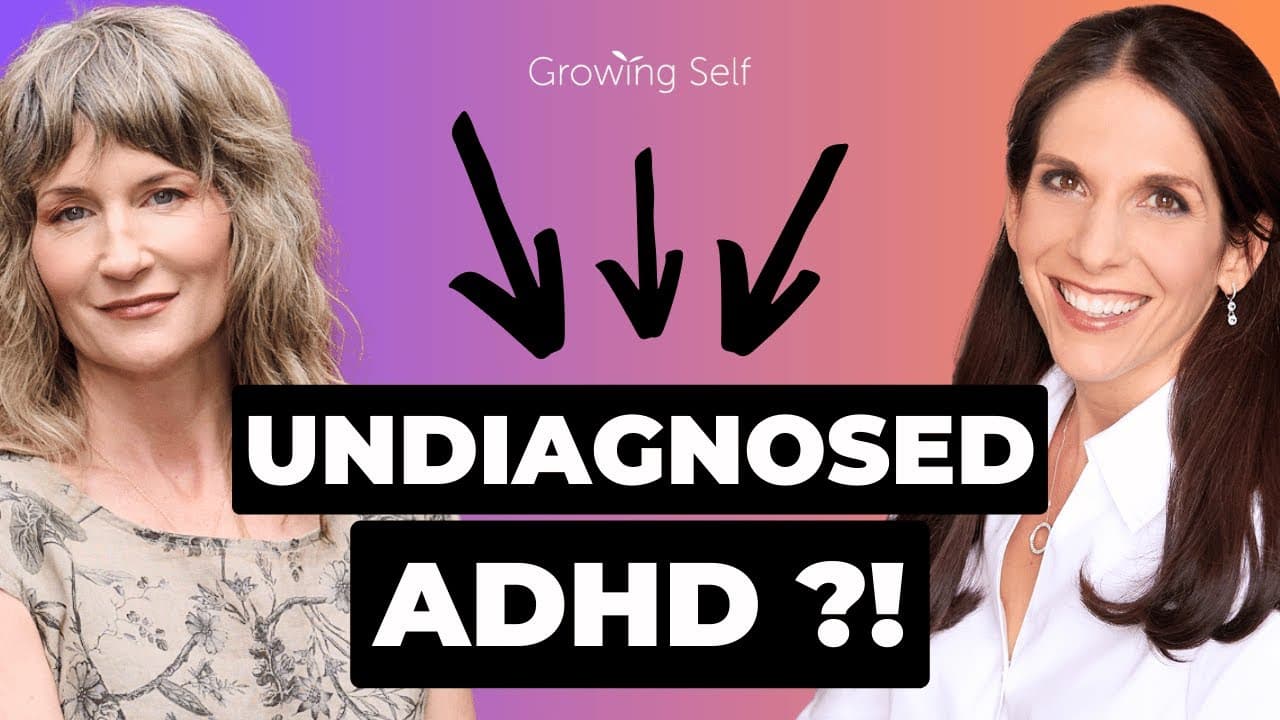
On Love, Happiness and Success, psychologist and Growing Self founder Dr. Lisa Marie Bobby talks with Shanna Pearson, founder of Expert ADHD Coaching and author of the USA Today national bestselling book, Invisible ADHD. Both have ADHD, and they talk about growing up with it undiagnosed, why it is so often mistaken for anxiety or depression, and what a thorough assessment looks like.
In this episode
- Shanna’s story: leading kids on outdoor trips, being misdiagnosed with depression, and finally learning she has ADHD
- Growing up hearing “Why can’t you just…,” and what that does to self-esteem
- Inattentive, hyperactive and combined types, and the hyperactivity many women feel inside their heads
- How the GAD-7 overlaps with ADHD, and why a real assessment takes hours and looks at your history
- Writing out what’s screaming in your head, putting a box around each item, and asking which ones truly can’t wait, plus eye contact and listening to remember as ways to stay present with people
- Why Shanna doesn’t love calling ADHD a superpower, and her view on medication: “Pills don’t teach skills”
Episode links
- The episode page on growingself.com (opens in a new tab), an article version of the conversation with reflection questions and resources
- The video on YouTube (opens in a new tab)
- Apple Podcasts (opens in a new tab) and Spotify (opens in a new tab)
Transcript
Dr. Lisa Marie Bobby (0:00): On the outside, you are capable, creative, high-achieving, but on the inside, you're totally overwhelmed, feel like you're drowning, and like you are a walking disaster. For many people, particularly women, this is the internal experience of having ADHD, and if you're relating to any of this, today's episode is just for you. I'm your host, Dr. Lisa Marie Bobby. This is Love, Happiness, and Success, and with me today is none other than Shanna Pearson, ADHD coach to the stars.
(0:37) Important people come to her for ADHD advice, and now she's bringing it to you, and, Shanna, thank you for being here.
Shanna Pearson (0:44): I'm so happy to be here. This is gonna be fun.
Dr. Lisa Marie Bobby (0:47): We're gonna have a great time-
Shanna Pearson (0:49): Yeah
Dr. Lisa Marie Bobby (0:49): ... because I have ADHD, and you have ADHD.
Shanna Pearson (0:53): Yeah.
Dr. Lisa Marie Bobby (0:53): So anything could happen.
Shanna Pearson (0:55): Who knows where this conversation will go?
Dr. Lisa Marie Bobby (0:57): Many tangents are possible, but we're gonna have fun because I think, personally, that that is an ADHD superpower.
Shanna Pearson (1:04): Yeah. We're definitely amazing at thinking outside the box.
Dr. Lisa Marie Bobby (1:09): So Shanna, I... You are doing all kinds of amazing things with helping people manage ADHD, but I'm guessing that there is an origin story here, and I'm wondering-
(1:21) ... if you could take us into that. Was there a time before you connected some dots and figured things out? And if so, what was that like for you before you really understood or had language to understand what was going on?
Shanna Pearson (1:37): Nobody talked about ADHD when I was growing up. I grew up in the '70s and '80s, and so when we were small, it was a boy problem, right? And problem was the big word. When I was in my 20s, I had the job of a lifetime. So I was one of the directors at this outdoor education center, and I used to basically take kids on hikes, and all day long, and overnights, and wilderness backpacking trips, and it was so fun. And at the beginning, when the schools first got there, the teachers, every week, 'cause it was a new group of kids, the teachers would always take us aside and tell us who the problem kids were.
(2:18) They're like, "Watch out for this kid. Watch out for that. He's gonna cause you problems. She might do this or that." Anyway, every single time this happened, number one, it was usually always boys, and number two, and this was kind of shocking for me, I don't know why, they would give us a brown paper bag with the kids' medication, the problem kids' medication. And something was going... I was in this job for quite a few years. I would always end up with these kids, and they would always end up in my group, and I think it was on purpose 'cause they kind of realized that I was good with these highly rambunctious children. But what I thought was that, "I don't understand what anyone thinks about these kids being problems. This doesn't make any sense." These kids are so alive-
Dr. Lisa Marie Bobby (3:03): Yeah
Shanna Pearson (3:03): ... and so full of life, and questions, and just nonstop-ness, and enthusiasm. And in the outdoor arena that I was in, it was like the, quote-unquote, "good kids" were terrible. They didn't want to participate. They didn't want to get dirty-
(3:19) ... and they just wanted to sit on the side, a lot of them. And my kids, which were the, quote-unquote, "difficult kids," were just off-the-charts outstanding, and these were the kids that other people labeled as problem kids, and I loved them. And my energy-
Dr. Lisa Marie Bobby (3:32): Wow
Shanna Pearson (3:32): ... and their energy just matched perfectly, and this was before I knew anything about ADHD. And so that was kind of... It was always something that I knew I understood how these kids worked. I understood what they needed. I got them. And then many years later, as my life was very quickly falling apart, I ended up being sent to a psychiatrist to be diagnosed, and I think this is gonna be very familiar to, possibly to you and to a lot of women. But I was initially misdiagnosed with depression, which I would love to talk about more in depth later. But when I was finally correctly diagnosed with ADHD and understood what that meant, it felt like the world just opened up, and-
(4:21) ... everything in my life, like all of the challenges, and all of the frustration, and all of the not getting it, and not being misunderstood, and just not matching with what was-
Dr. Lisa Marie Bobby (4:33): Yeah
Shanna Pearson (4:33): ... with the world, I guess-
(4:34) ... just always being a mismatch, everything made sense.
Dr. Lisa Marie Bobby (4:39): Wow. That's amazing.
Shanna Pearson (4:40): And I was just grateful for... I don't know what the... The diagnosis just gave me a lot of gratitude of, "Oh, my gosh."
Dr. Lisa Marie Bobby (4:47): Yeah.
Shanna Pearson (4:47): "That's what's been going on. Now it all makes sense." It also includes why I understood all of those kids that were just, like, those nonstop-
Dr. Lisa Marie Bobby (4:56): Yeah
Shanna Pearson (4:56): ... always, always open to everything new, and interesting, and exciting. It all made sense.
Dr. Lisa Marie Bobby (5:02): I think when you are somebody with ADHD who is trying to conform to a world who really wants you to be different and is kinda mad at you for not being the way that other people tend to be and function, that really takes a toll.
Shanna Pearson (5:16): Oh, my gosh.
Dr. Lisa Marie Bobby (5:16): And so I-
Shanna Pearson (5:16): Yeah
Dr. Lisa Marie Bobby (5:16): ... I could see how that would be affirming to-
Shanna Pearson (5:19): Yeah
Dr. Lisa Marie Bobby (5:19): ... to learn. Yeah.
Shanna Pearson (5:20): And in such a big way. I feel like a lot of us who grew up having ADHD and not knowing it-
Dr. Lisa Marie Bobby (5:28): Yeah
Shanna Pearson (5:28): ... it really takes a toll on us because most of us grew up underneath the words, and I talk about this in my book, of like, "Why can't you just..."
Dr. Lisa Marie Bobby (5:38): Right.
Shanna Pearson (5:38): "Why can't you just"-
Dr. Lisa Marie Bobby (5:40): Yeah
Shanna Pearson (5:40): ... from every, from your teachers, from your parents, from your friends, from your partners. Name it.
Dr. Lisa Marie Bobby (5:45): Yeah.
Shanna Pearson (5:45): Name it.
Dr. Lisa Marie Bobby (5:46): Yeah.
Shanna Pearson (5:46): Our employers, and it's awful because we don't know why we can't just.
Dr. Lisa Marie Bobby (5:52): Right.
Shanna Pearson (5:52): You know?
Dr. Lisa Marie Bobby (5:53): Right.
Shanna Pearson (5:53): It's like, if only somebody could please tell me that, that would be great.
Dr. Lisa Marie Bobby (5:57): Well, let's unpack this a little bit for our friends here listening to this because, Shanna, you and I have thought about this a lot. We have both done work, but let's assume that we have a friend here listening with us today who's maybe just at the beginning of this journey or who hasn't-
Shanna Pearson (6:14): Yeah
Dr. Lisa Marie Bobby (6:14): ... thought about their experience in these terms before. I'm wondering if it would be okay with you if we could share a little bit around-... what that does to you-
Shanna Pearson (6:27): Oh
Dr. Lisa Marie Bobby (6:27): ... I'm happy to talk about what life was like-
(6:29) -for me in my 20s before this all came together. What-
Shanna Pearson (6:31): Yeah
Dr. Lisa Marie Bobby (6:31): -was it like for you? I heard you say that at some point you arrived on the doorstep of a psychiatrist.
(6:38) Like, what the heck is going on? Like, somebody do something. But-
Shanna Pearson (6:41): Yeah
Dr. Lisa Marie Bobby (6:42): ... what led to that?
Shanna Pearson (6:45): There's so much that goes on for a person who doesn't know what's, quote-unquote, "wrong with them."
Dr. Lisa Marie Bobby (6:50): Yeah.
Shanna Pearson (6:51): And it's not just about when you had a bad week in your 20s, and someone broke up with you out of the blue, and it's just... It's not like that. It's your whole life.
(7:00) It's your entire life since the day you were born, being misunderstood-
Dr. Lisa Marie Bobby (7:05): Yeah
Shanna Pearson (7:06): ... not being able to fit in, feeling like you are legitimately living on a different frequency as everyone around you. They're here, you're there, or vice versa, and it's never a match. It's never a fit. Working your butt off to get Bs in school-
(7:28) ... which a lot of us, I mean, some people do get As. A lot of us do. But I would say the majority are just not able to learn specifically in the same way that they teach you to study-
(7:40) ... when you're younger, and it takes such a huge toll on your self-esteem.
Dr. Lisa Marie Bobby (7:47): Yeah.
Shanna Pearson (7:48): And it's impossible to shake it because when your formative years are so mismatched between you and the world, and between you and your caregivers, and between you and your best friends, and the people who care about you the most, and you're still not fitting in, and you're still not being understood, you honestly go through life believing that you never will be understood.
Dr. Lisa Marie Bobby (8:11): Yeah.
Shanna Pearson (8:11): You never will fit in-
(8:12) ... and there's something very different about you in a not-good way.
Dr. Lisa Marie Bobby (8:17): Right. And-
Shanna Pearson (8:18): Yeah
Dr. Lisa Marie Bobby (8:18): ... internalizing this, "What's wrong with me? Why can't I-"
Shanna Pearson (8:23): Yes.
Dr. Lisa Marie Bobby (8:23): - "do what everybody wants me to do?"
Shanna Pearson (8:25): Yeah.
Dr. Lisa Marie Bobby (8:25): Like, what is it about me? And that internalization, I think, of shame and feeling different, and like somebody's always upset with you for something-
Shanna Pearson (8:33): Yeah
Dr. Lisa Marie Bobby (8:33): ... and there's a disconnect and-
Shanna Pearson (8:35): Totally. You've always said the wrong thing.
Dr. Lisa Marie Bobby (8:37): Yeah.
Shanna Pearson (8:37): You're always getting in trouble.
(8:39) I got in trouble a lot, even though I was a very quiet kid.
(8:42) I was not a rambunctious kid. I was silent. I actually... They call it, when my kids were really small, it was called selective mutism.
(8:52) There was a girl in my daughter's class that never spoke. That was me-
(8:56) ... but they didn't have a label for it. I just never talked-
Dr. Lisa Marie Bobby (9:00): Yeah
Shanna Pearson (9:00): ... and I did not know what was going on in class. I was zero problem because I had... I was not disruptive. I didn't say anything.
(9:08) And it's just, it shows up differently for different people. But the fact is you are somewhere else.
Dr. Lisa Marie Bobby (9:15): Yeah.
Shanna Pearson (9:15): You are on a different frequency. You are in a different place, usually somewhere much more engaging and exciting than what's happening-
Dr. Lisa Marie Bobby (9:23): Yeah
Shanna Pearson (9:23): ... right in front of you.
Dr. Lisa Marie Bobby (9:24): Much more interesting.
Shanna Pearson (9:25): Right?
Dr. Lisa Marie Bobby (9:25): Well, so, let me ask you. So with ADHD, there are two types. Primarily, there's a mixed type, but one is that hyperactive-
(9:34) ... like crazy kid, doing things.
Shanna Pearson (9:37): Can't sit still.
Dr. Lisa Marie Bobby (9:38): And the boy, right?
Shanna Pearson (9:39): Yeah.
Dr. Lisa Marie Bobby (9:39): But sometimes girls, but then there's also this inattentive type-
Shanna Pearson (9:42): Yep
Dr. Lisa Marie Bobby (9:42): ... kind of dreamy, spacey, there but not there. Is that more how you identify? That's how I identified as a kid.
Shanna Pearson (9:49): Definitely.
Dr. Lisa Marie Bobby (9:50): Yeah.
Shanna Pearson (9:50): I actually am combined.
Dr. Lisa Marie Bobby (9:52): I see.
Shanna Pearson (9:52): I am combined-
(9:52) ... 'cause I'm very physical. I need to be in my body a lot.
(9:56) And but when I was younger, I was less so, which is interesting, 'cause a lot of us are opposite. We're more internal as women, and then as we're smaller, we're more physical, and then as we grow older, we're-
(10:11) ... just a lot more internal. But for me, I was very hyperactive in my mind.
(10:17) And I think that's the difference, 'cause it's not just like a quiet, slow, daydreaming.
Dr. Lisa Marie Bobby (10:23): Yeah.
Shanna Pearson (10:23): It is a very active, exciting, thrilling-
Dr. Lisa Marie Bobby (10:27): Yes
Shanna Pearson (10:27): ... daydreaming. It is very active, and it... I would call it very hyperactive but very internal.
(10:33) And so that's the difference, is that a lot of women are very, you know, just caught up in their mind.
(10:42) And it's constantly racing, and we're constantly worrying and creating scenarios that may or may not happen but probably will, because that would be much more interesting for our brain.
(10:52) Right? And then we're trying to come up with solutions, and which obviously then can create another problem that we need to internally solve, and it's just nonstop, very exciting.
Dr. Lisa Marie Bobby (11:02): Yeah.
Shanna Pearson (11:02): Not-
Dr. Lisa Marie Bobby (11:02): Yeah, but I hear you-
Shanna Pearson (11:03): Not very calm.
Dr. Lisa Marie Bobby (11:04): No.
Shanna Pearson (11:05): It's very stressful.
Dr. Lisa Marie Bobby (11:06): Well, yeah, and-
Shanna Pearson (11:07): Yeah
Dr. Lisa Marie Bobby (11:07): ... and also I think that there, that can, I think, contribute to this, the sense of anxiety that-
Shanna Pearson (11:16): Oh, yeah
Dr. Lisa Marie Bobby (11:16): ... you're describing around, like, especially I know for me, just feeling like I- wasn't able to manage my life very well, like opening mail-
Shanna Pearson (11:27): Right
Dr. Lisa Marie Bobby (11:27): ... like, make-
Shanna Pearson (11:27): Right
Dr. Lisa Marie Bobby (11:27): ... there are... Especially like moving into adulthood-
(11:31) ... and you talked about having kids. I know for me, when my son was very young, and I was still getting through graduate school-
(11:40) ... I just got to a certain place where many balls were being dropped, and that was in my-
Shanna Pearson (11:45): Yeah
Dr. Lisa Marie Bobby (11:46): ... early 30s, and I still didn't have a diagnosis at that point.
Shanna Pearson (11:49): Right.
Dr. Lisa Marie Bobby (11:49): So I went for, like, a long time, but just getting to this point where you're like, "What is wrong?"
Shanna Pearson (11:55): Right. I-
Dr. Lisa Marie Bobby (11:56): And that's when you went on a journey.
Shanna Pearson (11:57): It's so hard when you're a mom.
Dr. Lisa Marie Bobby (11:59): Yeah.
Shanna Pearson (11:59): It really is. That would've been horrible- I can imagine that being really hard for you because you're responsible for this child, and you're dropping these balls, and you don't know why.
(12:08) And so beyond all of the other "why can't you just" that you probably heard growing up, you've got this incredible guilt 'cause this is your child.
(12:15) I-
Dr. Lisa Marie Bobby (12:16): I know.
Shanna Pearson (12:17): It's really, really hard. So that's why it's important... That was totally me also when with my kids. It still is in some ways.
(12:26) But it's just, when you know what's going on-... it's a game-changer, because-
(12:33) ... then you can obviously learn how to keep the balls-
(12:37) ... not from dropping. But if you don't know what's going on, it's pretty much impossible. Because-
Dr. Lisa Marie Bobby (12:45): Yeah
Shanna Pearson (12:45): ... what works for one problem is not necessarily gonna work for ADHD.
Dr. Lisa Marie Bobby (12:50): That is the truth. Yeah.
Shanna Pearson (12:52): Which is a big deal.
(12:53) And it's really important for women to know this, because if you think something's not going well in your life, and you go to your doctor, okay?
(13:02) And you tell your doctor, like, "I'm really worried about my future. I'm dropping all these balls. I don't know, I can't keep it together-
Dr. Lisa Marie Bobby (13:08): Yeah
Shanna Pearson (13:08): ... I don't know what the heck is wrong with me. I'm not feeling great about myself," they're gonna give you... And you know this, I'm positive you know this: they're gonna give you an assessment, right? And usually the assessment is for anxiety or depression.
(13:20) Have you ever gotten one of those, or do you know-
(13:22) ... that, it's a common-
Dr. Lisa Marie Bobby (13:24): Oh, I'm certainly familiar with the screening instruments.
Shanna Pearson (13:27): Yeah.
Dr. Lisa Marie Bobby (13:27): I don't know that they gave that to me when I rolled in, but-
Shanna Pearson (13:31): Back in the day.
(13:31) They will now.
(13:33) So it's almost standard now. There was actually an article in a major paper, I'm not... I think it's, like, the Times or-
(13:41) ... where they talked about the overdiagnosis of anxiety, 'cause now it's just, like-
Dr. Lisa Marie Bobby (13:44): Yeah
Shanna Pearson (13:44): ... a regular condition, that we're worried about things, and now we have anxiety.
Dr. Lisa Marie Bobby (13:47): Yeah.
Shanna Pearson (13:47): But the problem is that for women who have ADHD, our symptoms, and you're gonna relate to this... Can I show you? Can I show you the-
Dr. Lisa Marie Bobby (13:55): Oh, yeah.
Shanna Pearson (13:55): So they'll give you a clipboard.
(13:56) And on the clipboard has a screening, and sometimes it'll come on an iPad, but still most doctors will give it to you on a clipboard. The questions-
(14:04) ... that they ask you for anxiety, it's called the GAD-7, are all symptoms for ADHD.
(14:11) Feeling nervous, not being able to stop worrying, trouble relaxing. Being restless, it's hard to sit still. Becoming easily annoyed or irritable, we're so impatient, a lot of us are completely, like, this is us. Feeling afraid that something bad might happen. This is anxiety, but this is also ADHD.
Dr. Lisa Marie Bobby (14:31): Yeah.
Shanna Pearson (14:31): So a woman-
Dr. Lisa Marie Bobby (14:32): Oh, that's so interesting
Shanna Pearson (14:32): ... not being diagnosed with ADHD is gonna answer on the high-
Dr. Lisa Marie Bobby (14:35): Yeah
Shanna Pearson (14:35): ... on the high scores, and she's gonna be given an anti-anxiety medication, right?
Dr. Lisa Marie Bobby (14:39): Well, and it's-
Shanna Pearson (14:39): And it's the same with depression
Dr. Lisa Marie Bobby (14:40): ... so confusing, because at the same time, somebody who does actually have an anxiety disorder is going to have problems focusing-
Shanna Pearson (14:49): Yep
Dr. Lisa Marie Bobby (14:49): ... in remembering things-
Shanna Pearson (14:51): Exactly
Dr. Lisa Marie Bobby (14:52): ... in being present.
(14:53) And so an anxiety disorder will also mimic symptoms of ADHD, and so can depression.
Shanna Pearson (14:59): That's right.
Dr. Lisa Marie Bobby (14:59): So-
Shanna Pearson (14:59): Oh, for sure
Dr. Lisa Marie Bobby (14:59): ... so it really requires some nuance in order to figure this out.
Shanna Pearson (15:04): Yes.
Dr. Lisa Marie Bobby (15:04): And so there are also some ways of being able to understand what this is. What do you recommend to people who-
(15:11) ... really want to get clear around what this is? What is the tell-tale difference-
Shanna Pearson (15:17): 100%
Dr. Lisa Marie Bobby (15:18): ... between ADHD or anxiety?
Shanna Pearson (15:19): We have to, because they all overlap.
Dr. Lisa Marie Bobby (15:21): Yeah.
Shanna Pearson (15:21): ADHD, anxiety, and depression all overlap.
(15:24) And right now, we're not really being automatically given screening tools for ADHD. We're not.
(15:30) So if you have ADHD, you will be screened for anxiety or depression.
(15:36) And then when you answer all the questions, it's gonna say that you have anxiety or depression. You're gonna be likely written a prescription for an-
(15:45) ... anti-anxiety or antidepressant and-
(15:47) ... and it's not gonna help your ADHD, which is gonna make you feel-
Dr. Lisa Marie Bobby (15:50): Yeah
Shanna Pearson (15:50): ... possibly worse.
(15:52) So I think it's really important for people to understand that if you have ADHD, especially for women, this is a big deal.
(16:00) If you have ADHD, you've very likely been living in almost, I don't want to say, like, debilitating, but somewhat paralyzing overwhelm.
Dr. Lisa Marie Bobby (16:10): Yeah.
Shanna Pearson (16:11): And you're often in a state of overwhelm, and they don't ask you those questions on the-
(16:15) ... on the anxiety or-
(16:17) ... depression scales, and they don't even ask it on the ADHD assessment, because it's mostly-
(16:22) ... for men.
Dr. Lisa Marie Bobby (16:24): Oh, interesting.
Shanna Pearson (16:24): So for women, if you relate to feeling overwhelmed all the time-
(16:30) ... and you relate to that feeling having been your experience for the majority of your life-
Dr. Lisa Marie Bobby (16:37): There you go
Shanna Pearson (16:37): ... not just now,
(16:39) ... but when you were in school and when you were a kid or in your 20s or whatever, but it's always been your experience-
(16:47) ... that is something to look at.
Dr. Lisa Marie Bobby (16:48): Yeah, definitely.
Shanna Pearson (16:49): That's something to look at.
Dr. Lisa Marie Bobby (16:51): That's- yes, because people don't just develop ADHD at some point in their lives.
Shanna Pearson (16:56): No.
Dr. Lisa Marie Bobby (16:57): It exists-
Shanna Pearson (16:58): Forever
Dr. Lisa Marie Bobby (16:58): ... from childhood. There are these traits. And I will also just say that, just to provide people with information, there is a real difference between going to see a general practitioner physician versus sitting down with a psychologist. And so, when I was finally diagnosed, I spent several hours with a psychologist. We did a... There's a type of intelligence test that does working memory. Processing speed is a big giveaway, doing the detailed history. But even some digital activities-
Shanna Pearson (17:33): Yep
Dr. Lisa Marie Bobby (17:33): ... that can track your memory and attention-
Shanna Pearson (17:37): And time track
Dr. Lisa Marie Bobby (17:37): ... ability to focus, and it is quite thorough.
Shanna Pearson (17:40): Yep.
Dr. Lisa Marie Bobby (17:40): And it is also true that people who have ADHD can also have comorbid anxiety and sometimes depression because of what ADHD does to you.
Shanna Pearson (17:52): Absolutely.
Dr. Lisa Marie Bobby (17:53): It makes you feel scared, because you aren't managing things, and people are mad at you.
Shanna Pearson (17:57): Yep.
Dr. Lisa Marie Bobby (17:57): And it makes you feel depressed because of that, like, "What is wrong with me," right?
Shanna Pearson (18:01): Well, that's the whole problem.
Dr. Lisa Marie Bobby (18:03): And so it's-
Shanna Pearson (18:04): Yeah
Dr. Lisa Marie Bobby (18:04): ... it really does require nuance, and I know that it can be difficult to connect with a psychologist in these moments, but if you have that ability, that could be a smart investment-
Shanna Pearson (18:16): I would highly recommend it
Dr. Lisa Marie Bobby (18:18): ... to get clarity.
Shanna Pearson (18:18): I want to highlight something you just said-
(18:19) ... 'cause I think it's important that everyone hears. It took a few hours.
Dr. Lisa Marie Bobby (18:25): Yeah.
Shanna Pearson (18:25): I don't want anyone to miss that.... my assessment also took a few hours.
Dr. Lisa Marie Bobby (18:29): Yeah.
Shanna Pearson (18:30): It actually took place over two days.
Dr. Lisa Marie Bobby (18:33): It should.
Shanna Pearson (18:33): It was like three hours and three hours. It was just like... And he wanted my report cards from when I was in kindergarten-
(18:40) ... all the way up through. And we happened to have them, but he wanted my history.
Dr. Lisa Marie Bobby (18:44): Yes.
Shanna Pearson (18:44): So if you're getting an assessment, and it's taking 20 minutes, that is not a thorough assessment.
Dr. Lisa Marie Bobby (18:49): Mm-mm.
Shanna Pearson (18:49): It just isn't. So I think that's a really important point. A lot of women with ADHD, because of what it's done to our self-esteem-
(18:58) ... and because of the fact that we are legitimately existing on a different level and frequency and understanding as everyone else in our lives, and because of our history of really not feeling understood by anyone, and our need for relationship-
Dr. Lisa Marie Bobby (19:13): Right
Shanna Pearson (19:13): ... we still need to feel close to people because we're human, and we're women, and we're emotional. Because of all of that, we do... In terms of the- we definitely show symptoms of depression.
(19:26) You can't not. You don't feel great about yourself. You feel disconnected. You feel alone. You feel like your life isn't working out, and you don't know why.
(19:34) And it's very difficult because you're smart.
(19:39) You know you're quick. You know you get it on a certain level, and you know you understand things that a lot of people don't understand, and yet you just can't figure out how to make it in this world.
(19:50) And so, of course, you're gonna be diagnosed with depression, and-
Dr. Lisa Marie Bobby (19:54): Yeah
Shanna Pearson (19:54): ... and you may even be given medication for that, and it's not gonna help your ADHD.
Dr. Lisa Marie Bobby (19:59): Right.
Shanna Pearson (19:59): Right?
(20:00) And the management tools will help you on some level but certainly not on the deeper level if what you're actually dealing with is ADHD.
Dr. Lisa Marie Bobby (20:08): Yeah.
Shanna Pearson (20:09): So.
Dr. Lisa Marie Bobby (20:09): Okay.
Shanna Pearson (20:10): But I think it's... There's hope, right? Because if you do get correctly diagnosed, if you have ADHD, and then you know you have ADHD, I can promise you 100% that it's manageable. It is manageable. This is not like an incurable anything.
(20:24) You will always have ADHD, but you'll be able to manage the symptoms.
Dr. Lisa Marie Bobby (20:28): Well, let's talk a little bit more about that. So step one of this conversation is to get properly diagnosed. There's nuance there, but then you have that conversation, and you walk out the door with that diagnosis. Now what? Where would you recommend somebody even start figuring out how to manage themselves and their lives in a different way?
Shanna Pearson (20:54): I think one of the easiest places to start is there's so many places to start. That's why... But the easiest is to start doing less-
(21:06) ... at a time, and I feel like that is something which would require... It's like why we do coaching. We don't just tell people, "Do this. Do this, do this, do this," and check it all off. It's like, well, you're like, "I can't do less. You have no idea what's going on in my life. I have 50,000 things I need to do today by 4:00 PM."
Dr. Lisa Marie Bobby (21:25): Right.
Shanna Pearson (21:25): Right? So it's like, what are you trying to say? But the truth is by keeping yourself flooded-
(21:31) ... in overwhelm, it is such a sabotaging effect, and you will never get out. It literally is like quicksand.
Dr. Lisa Marie Bobby (21:40): Yeah. That's so hard, though, because I think the experience is that there are all of these ideas, and it's difficult to prioritize things, that that is literally one of the symptoms.
Shanna Pearson (21:51): It is.
Dr. Lisa Marie Bobby (21:51): And so when you have people who are like, "But I have to," how do you help them just get through that, the mental obstacle of being able to put something down that feels like-
Shanna Pearson (22:03): Yeah
Dr. Lisa Marie Bobby (22:04): ... everything's gonna fall apart if I do that?
Shanna Pearson (22:05): So I love- 'cause when everything is in our head-
(22:08) ... as you know, we have a hard time compartmentalizing, right? It's everything all at once right now.
Dr. Lisa Marie Bobby (22:14): Yeah.
Shanna Pearson (22:15): And so that is how it is in our brain.
(22:18) So by writing out, in pen, not on your phone, not on a computer-
(22:25) ... but by writing it out with your hand with a pen what you have to do, and I'm not just saying make a to-do list.
(22:31) I'm saying, write out the big things that are screaming in your brain. You will then be able to put boxes around them-
(22:39) ... and see them as individual items, which is very important.
(22:44) And figure out which of these needs to get done yesterday. Which ones are actually urgent-
(22:50) ... and the most important in terms of priorities, and which one, if they never happen, am I going to actually die or end up in the ICU?
(23:00) Which it sounds extreme-
Dr. Lisa Marie Bobby (23:02): Yeah
Shanna Pearson (23:02): ... but when you have ADHD-
Dr. Lisa Marie Bobby (23:04): Oh, yeah
Shanna Pearson (23:04): ... that's how it feels.
Dr. Lisa Marie Bobby (23:05): It feels that way.
Shanna Pearson (23:06): If this doesn't happen, I'm not-
Dr. Lisa Marie Bobby (23:07): Right
Shanna Pearson (23:07): ... gonna be okay.
Dr. Lisa Marie Bobby (23:08): Yeah.
Shanna Pearson (23:09): And I really need people to see by doing these, by writing things out, putting boxes around them-
(23:15) ... and seeing, like, if this isn't done, if this isn't done, will I be okay? Am I gonna end up in the hospital? Because I think something so extreme like that takes us out of our overflowing-
(23:26) ... nonstop catastrophizing-
(23:29) ... mindset, and it gives us a lot more objectivity, which is-
(23:33) ... really important. And when you have that objectivity, it's at that point that it's easier to start prioritizing.
Dr. Lisa Marie Bobby (23:41): Yeah. This is such good advice. And I think what people don't realize, people with ADHD do not realize this about normal people.
(23:52) Normal people do not realize this about people with ADHD, is that people... I think that people who are not- wait, neurotypical people-
(24:03) ... are able to sift through things in their minds and prioritize things in their minds.
Shanna Pearson (24:10): Yes.
Dr. Lisa Marie Bobby (24:10): And people with ADHD really struggle to do that, and so that's why this technique, externalizing, putting it down-... putting a box around it, and then making yourself sit there and actually think about what's most important is incredibly helpful and really vital-
Shanna Pearson (24:29): It's vital
Dr. Lisa Marie Bobby (24:29): ... because until you do that, you're-
Shanna Pearson (24:31): You're swimming in it.
Dr. Lisa Marie Bobby (24:32): Yeah.
Shanna Pearson (24:33): And it's literally taking over your life.
Dr. Lisa Marie Bobby (24:36): Yeah.
Shanna Pearson (24:37): And you can't sift through it because all of the 50,000 things are taking over your life all at the same time, and it's-
(24:43) ... it's painful.
Dr. Lisa Marie Bobby (24:44): Yeah.
Shanna Pearson (24:44): So I don't want anyone to think, "Well, then nothing's important because nothing's gonna actually put me in a hospital," but the point is to cut the emotional pain-
(24:54) ... around the grip that these things all have on you at the same time.
Dr. Lisa Marie Bobby (24:59): Yeah.
Shanna Pearson (24:59): And so by doing that, it's basically cutting the cord of that pain and the intensity of it-
(25:04) ... and allowing you to then prioritize.
Dr. Lisa Marie Bobby (25:07): Yeah.
Shanna Pearson (25:08): And seeing-
Dr. Lisa Marie Bobby (25:09): Such goodness
Shanna Pearson (25:09): ... each item for what it is. Like, I do need to do that, but I can do it tomorrow, or I do need to do that, and it does need to get done today. Okay, what else do I need to do?
(25:18) ... and it just takes that-
Dr. Lisa Marie Bobby (25:19): Yeah
Shanna Pearson (25:19): ... it takes the... I don't know how to say it. I don't wanna say angst, but it does take the pain away.
Dr. Lisa Marie Bobby (25:24): It's frenetic.
(25:25) I've tried to explain to my husband as, like, the old game musical chairs, and then the music stops, and there's one seat, and all the kids try to-
Shanna Pearson (25:35): Right
Dr. Lisa Marie Bobby (25:35): ... jump on it, right? Is that it feels like I have one open chair and 75 thoughts all trying... I only have one thing that I am able to do in a present moment, and then all this stuff it feels like-
Shanna Pearson (25:45): Right
Dr. Lisa Marie Bobby (25:45): ... is crowding into that same spot, and you can't do it all.
Shanna Pearson (25:48): You can't.
Dr. Lisa Marie Bobby (25:48): And it's crazy making.
Shanna Pearson (25:48): And when that happens-
Dr. Lisa Marie Bobby (25:50): Yeah
Shanna Pearson (25:50): ... you end up doing nothing.
Dr. Lisa Marie Bobby (25:51): Oh, yeah.
Shanna Pearson (25:52): Right?
Dr. Lisa Marie Bobby (25:52): Okay, that paralysis.
Shanna Pearson (25:53): You end up doing nothing.
Dr. Lisa Marie Bobby (25:55): Let's talk about that.
Shanna Pearson (25:55): You're just sitting there, gripping your chair, staring at, I don't know what, Netflix? Just doing nothing-
Dr. Lisa Marie Bobby (26:01): Yeah
Shanna Pearson (26:01): ... 'cause you can't.
(26:02) You can't figure out what to do.
Dr. Lisa Marie Bobby (26:04): It's overwhelming. Yeah, and there's this-
Shanna Pearson (26:06): That's the overwhelm that we live with
Dr. Lisa Marie Bobby (26:07): ... paralysis.
Shanna Pearson (26:07): And that's the overwhelm-
(26:09) ... that you and 90-something percent of all women with ADHD-
(26:13) ... have lived with their whole life.
Dr. Lisa Marie Bobby (26:15): Yeah. Now, just out of curiosity, do you feel like it is a different experience for men?
Shanna Pearson (26:23): I do.
Dr. Lisa Marie Bobby (26:24): Tell me.
Shanna Pearson (26:24): I do-
Dr. Lisa Marie Bobby (26:24): No, 'cause-
Shanna Pearson (26:24): ... but I don't think it's better or worse-
Dr. Lisa Marie Bobby (26:26): Yeah
Shanna Pearson (26:26): ... because we have 51... It's so bizarre that it's 51. 51% of the clients in my coaching company are men.
(26:34) It's almost half and half but not quite. And they come here, and these are men who are, on the outside, many of them are quite successful-
(26:45) ... in the term of what society thinks of success, and they're in a lot of pain.
(26:51) Because it's almost like they can't focus on anything else outside of their work.
Dr. Lisa Marie Bobby (27:02): The hyperfocus thing-
Shanna Pearson (27:04): Yeah
Dr. Lisa Marie Bobby (27:04): ... is what they're doing.
Shanna Pearson (27:04): And they just stay glued into it because-
(27:07) ... they're... I don't know if it's how men are raised in terms of, you know, you have to provide. I feel like we're so past that at this stage, and yet-
Dr. Lisa Marie Bobby (27:16): Huh
Shanna Pearson (27:16): ... and yet there are so many 40, 50, 60-year-olds who are... That's their mission.
(27:23) And it's really because they also have a hard time compartmentalizing because they have ADHD. It is so hard for them to be able to remember anything that has to do with their relationship, birthdays-
(27:35) ... anniversaries, remembering to take the trash out, remembering to get something for their kid, remembering to show up for a game. It is so hard because-
(27:45) ... those things are not screaming-
Dr. Lisa Marie Bobby (27:48): Right
Shanna Pearson (27:48): ... in their brain as a survival tool, even though it is.
(27:53) Even though it's like their whole family is dependent on-
(27:56) ... on their dad being present, or what a woman is dependent on her, or her spouse being present. It's really hard for them.
(28:06) And I feel like they're trying so hard, and they're not succeeding, and they feel like they're not succeeding in the most important areas of their life, which is-
Dr. Lisa Marie Bobby (28:15): Yeah
Shanna Pearson (28:15): ... which is awful. It's awful.
Dr. Lisa Marie Bobby (28:18): Right.
Shanna Pearson (28:18): And heartbreaking, in a way. And so I love... In our coaching program, we always have spouses and family members-
(28:26) ... join, if it's okay with the client, just so they understand what's going on for this person-
Dr. Lisa Marie Bobby (28:34): Right
Shanna Pearson (28:34): ... just so they understand how hard they're trying.
Dr. Lisa Marie Bobby (28:36): Right.
Shanna Pearson (28:37): And how-
Dr. Lisa Marie Bobby (28:37): I think that that's so important.
Shanna Pearson (28:39): Yeah.
Dr. Lisa Marie Bobby (28:39): Yeah.
Shanna Pearson (28:39): It's really hard for them, and so... And for women, I feel like for women it's very different because first of all, a lot of us still don't know that we have ADHD.
(28:50) And for the men, a lot of them do know. So there's a big difference-
(28:55) ... is the women just don't know what's going on. It also is, in terms of our executive functioning, we're trying to do so many things because women in general try to do so many different things. It's never been just about our career, ever. It's who we are in our relationships, who we are as friends, who we are as parents. It's like we're the mom. Word, whatever, gender- women- a person wants to identify with, if you're a mom, you're a mom, right? That's a big deal, and then there's all that guilt, like what we were talking about-
(29:31) ... before when you were talking about your son. And so there's so many different categories for us that we have to be superstars in.
(29:38) It's... That's difficult. That's difficult to navigate, and so what do you do? And then as a woman, you're also faced with hormonal shifts that men are not faced with.
(29:49) And that's a game changer because estrogen...
Dr. Lisa Marie Bobby (29:54): Yeah. Oh, that-
Shanna Pearson (29:55): Don't even get me started on this
Dr. Lisa Marie Bobby (29:56): ... it really affects cognition. Yeah.
Shanna Pearson (29:58): It does, and it affects your dopamine levels.
(30:00) you're going through perimenopause or menopause, and your estrogen levels are dropping, your dopamine levels are dropping, and you already have lower levels of dopamine in your brain. So even if you're a person- a woman with ADHD who's been able to figure systems out or just get by, when you're going through perimenopause or menopause and your dopamine levels are even lower-
(30:25) ... every system that you've created that's worked for you up until then effectively stops working.
Dr. Lisa Marie Bobby (30:30): Wow.
Shanna Pearson (30:31): And that's really hard, which is why-
Dr. Lisa Marie Bobby (30:33): It is
Shanna Pearson (30:33): ... so many women now are being diagnosed later-
(30:36) ... like, 50s and 60s when they're going through-
(30:38) ... these hormonal shifts because it's literally like when everything just exploded-
Dr. Lisa Marie Bobby (30:45): Totally
Shanna Pearson (30:45): ... in their life.
Dr. Lisa Marie Bobby (30:45): Well, and then so many women, too, start struggling to sleep, and that has such an impact on-
Shanna Pearson (30:53): It's
Dr. Lisa Marie Bobby (30:53): ... the way that our brains work, too. So it's like a-
Shanna Pearson (30:55): Right
Dr. Lisa Marie Bobby (30:55): ... convergence of things.
Shanna Pearson (30:57): It's true.
Dr. Lisa Marie Bobby (30:57): Well, let's go deeper into to some of that, but before we veer way too far, I'm also just thinking about the friend, Shanna, who might be listening to this right now-
(31:08) ... who may not herself have ADHD, but who is partnered with perhaps a man who does, who's showing up in that hyper-focused, obsessive, can't-turn-it-off kind of way. Are there any recommendations that you would have for somebody who's stuck in that space? Like, try this first. The way that you talked about for people who are in that overwhelm thing, just write the things down. Is there something that tends to help-
Shanna Pearson (31:37): Okay, this is-
Dr. Lisa Marie Bobby (31:37): ... knock people out of the obsession?
Shanna Pearson (31:38): This is gonna sound super simplistic, but it is... It is game-changing.
Dr. Lisa Marie Bobby (31:44): I can't wait to hear it.
Shanna Pearson (31:47): When you have a person, and I don't just want to say... I want to go away from the man thing because women-
(31:53) ... do the exact same thing. Especially-
Dr. Lisa Marie Bobby (31:55): I can show up that way, honestly.
Shanna Pearson (31:57): Right.
Dr. Lisa Marie Bobby (31:57): Yeah.
Shanna Pearson (31:57): Me, too.
(31:58) Me, too, and it's like you're sitting across the table from somebody, and their eyes are just everywhere else except for on you.
(32:05) And they're just not there, and they're not present, and we're like that with our kids, too, right? Where we're looking at our phone, and-
Dr. Lisa Marie Bobby (32:11): It's awful
Shanna Pearson (32:11): ... you think you're looking at your phone for five seconds, and it's really not five seconds, right? And you're... It's awful. I'm a big believer in eye contact.
(32:20) And I'm a big believer in everything physical, honestly. I think when we do things with our physical body, our mind follows.
(32:28) And so if you're- in a relationship with a man who's just not present and focusing on a billion things except for you, a really great... And he loves you, and so he wants things to work out, and he doesn't know how, a great place to start is just eye contact.
Dr. Lisa Marie Bobby (32:48): Yeah.
Shanna Pearson (32:48): And have him, just have that be a thing, an exercise. It's five seconds of eye contact.
Dr. Lisa Marie Bobby (32:56): That is so great. Like, "I'm taking your phone away. Look in my eyes."
Shanna Pearson (33:02): Yeah.
Dr. Lisa Marie Bobby (33:02): Make it a thing.
Shanna Pearson (33:03): Make it a thing.
Dr. Lisa Marie Bobby (33:03): I have to do that with my husband sometimes. He tries to talk to me, and I'm bouncing around, and I am not processing anything he's saying, and-
Shanna Pearson (33:10): Correct
Dr. Lisa Marie Bobby (33:10): ... I have to stop-
Shanna Pearson (33:11): Yeah
Dr. Lisa Marie Bobby (33:11): ... and look at him and, like, "Okay, I'm listening." And it is a-
Shanna Pearson (33:14): Right
Dr. Lisa Marie Bobby (33:14): ... a physical listening because without that-
Shanna Pearson (33:16): That's right
Dr. Lisa Marie Bobby (33:17): ... I'm like, I'm not there.
Shanna Pearson (33:18): You're not there.
Dr. Lisa Marie Bobby (33:18): So-
Shanna Pearson (33:19): You're thinking about something else.
Dr. Lisa Marie Bobby (33:20): Yeah, totally.
Shanna Pearson (33:20): And your voice is very loud, and it's very entertaining, and it's really smart, and it's very engaging, and what about with your kids, right?
(33:27) 'Cause what you're thinking about, and they're trying to talk to you, and you want to be-
Dr. Lisa Marie Bobby (33:31): Oh, my
Shanna Pearson (33:31): ... paying attention. You want to be, but you're-
Dr. Lisa Marie Bobby (33:35): Right
Shanna Pearson (33:35): ... but you've got a lot of things you're thinking about. Eye contact. Force yourself. Just make... Just tell yourself, like, "Just look at their eyes-
Dr. Lisa Marie Bobby (33:43): Yeah
Shanna Pearson (33:43): ... without being creepy about it."
Dr. Lisa Marie Bobby (33:46): I'm aware that I'm-
Shanna Pearson (33:47): Don't look in their eyes for too long
Dr. Lisa Marie Bobby (33:47): ... looking right in your eyes right now, Shanna.
Shanna Pearson (33:49): Yeah, yeah.
(33:49) It's like, "Okay, all right, that's enough."
Dr. Lisa Marie Bobby (33:51): Blink-
Shanna Pearson (33:52): Back away
Dr. Lisa Marie Bobby (33:52): ... once in a while. Just blink.
(33:54) Okay.
Shanna Pearson (33:54): Yeah.
Dr. Lisa Marie Bobby (33:54): Oh, my gosh, that's hilarious.
Shanna Pearson (33:55): But just really focus on the person's eyes. Try to remember, if you're in-
Dr. Lisa Marie Bobby (33:58): Yeah
Shanna Pearson (33:58): ... a meeting, if you're trying to talk to somebody that is talking about something super boring, just try to catch the color of their eyes.
Dr. Lisa Marie Bobby (34:05): Nice.
Shanna Pearson (34:05): Make it a game. Like, try to figure something else out about them, even if it's, like, not... And also try to figure out what they're talking about as if you're gonna be tested on it.
Dr. Lisa Marie Bobby (34:15): Oh, pop quiz.
Shanna Pearson (34:16): Yes.
(34:17) That's really important.
Dr. Lisa Marie Bobby (34:19): Yeah.
Shanna Pearson (34:19): Just listen to remember, and that makes it a little bit more engaging. Even if what they're talking about is the most boring thing on the planet, and you're not interested in it, listen to remember.
Dr. Lisa Marie Bobby (34:31): That's good advice.
Shanna Pearson (34:33): Right.
Dr. Lisa Marie Bobby (34:33): That really is. I have to do that with my kid. I have a... We have two kids. One of them has-
Shanna Pearson (34:38): How old are they?
Dr. Lisa Marie Bobby (34:40): ... ADHD!
Shanna Pearson (34:40): There we go.
Dr. Lisa Marie Bobby (34:40): I have a 17-year-old. Our love child is 17.
(34:44) And we also have a seven-year-old.
Shanna Pearson (34:46): Oh, wow!
Dr. Lisa Marie Bobby (34:46): It's crazy, like, 10 years apart. I know.
Shanna Pearson (34:48): Great.
Dr. Lisa Marie Bobby (34:48): It's wild. But the love child has blazing ADHD because... And also, it's runs in families.
Shanna Pearson (34:55): It does.
Dr. Lisa Marie Bobby (34:56): My mom had it, and I actually need to do that with him. I will be saying something, and he's like, "Mm-hmm, mm-hmm."
(35:04) And I'm like, "What did you just hear me say?" Not in a mean way, but just like-
Shanna Pearson (35:07): Yeah
Dr. Lisa Marie Bobby (35:08): ... "What did you take in?" And he's like, "Wait, what?"
Shanna Pearson (35:11): Yeah.
Dr. Lisa Marie Bobby (35:11): Because-
Shanna Pearson (35:12): Sorry, can you repeat that?
Dr. Lisa Marie Bobby (35:12): ... he's needing to listen to understand.
(35:15) And it's a thing at school.
Shanna Pearson (35:17): Yeah.
Dr. Lisa Marie Bobby (35:17): So many, so many good points, and I bet that your book is chock-full of all these tips, The Invisible ADHD.
Shanna Pearson (35:27): I literally took our coaching manual, and-
(35:29) ... I distilled it to the tips and techniques that we use on our clients that have-
(35:35) ... legitimately been proven to work.
Dr. Lisa Marie Bobby (35:38): Yes.
Shanna Pearson (35:39): Year after year, through worldwide pandemics and through God knows what, like, crazy political situations, when everyone's super distracted, this stuff works. And I put over 100 tools into my book-
Dr. Lisa Marie Bobby (35:52): Wow
Shanna Pearson (35:52): ... because I honestly, I'm not a writer, okay? And I wasn't... I'm not like, "Oh, I want to write lots of books, so let me just focus on one tool at a time," or five or... Some people- a lot of people do that. A lot of books are based on one idea. But I put so many tools into this book because I really just want everyone-... as many people as possible to have access to this information, because so many people don't.
Dr. Lisa Marie Bobby (36:16): Yeah.
Shanna Pearson (36:16): And a lot of people cannot, for a million different reasons, participate in our coaching program. And so-
(36:22) ... here, take these tools. Please use them.
(36:26) Do not just read about them.
Dr. Lisa Marie Bobby (36:27): Yeah.
Shanna Pearson (36:28): Implement at least one. Just do one. Pick your favorite, and your life will absolutely become easier and better.
(36:36) And so-
Dr. Lisa Marie Bobby (36:36): I can't wait-
Shanna Pearson (36:37): You know
Dr. Lisa Marie Bobby (36:37): ... to read this book.
Shanna Pearson (36:38): Oh, good.
Dr. Lisa Marie Bobby (36:38): I might make my kid read this book.
Shanna Pearson (36:39): There you go. Yes!
Dr. Lisa Marie Bobby (36:40): Yeah.
Shanna Pearson (36:41): Yes.
Dr. Lisa Marie Bobby (36:41): Okay.
Shanna Pearson (36:42): Yeah.
Dr. Lisa Marie Bobby (36:42): Well, so and I don't know if you speak about this in your book or in your coaching program, but I hope you could share a little bit of your insight onto this other variable. Do you believe or have you experienced with your coaching clients... You work with people who are operating at high levels.
Shanna Pearson (37:03): Yep.
Dr. Lisa Marie Bobby (37:03): And is there a part of you that suspects that their thinking differences are part of what has allowed them to be as successful as they are? Are there superpowers that come along with that or abilities that they have access to that maybe not everybody does?
Shanna Pearson (37:21): Okay, so here we go.
Dr. Lisa Marie Bobby (37:22): Okay.
Shanna Pearson (37:23): This is my honest truth. Number one, I don't love the term superpower-
Dr. Lisa Marie Bobby (37:29): Okay
Shanna Pearson (37:30): ... being attributed to anyone who's neurodivergent.
(37:33) And the reason is really... The reason is this: having ADHD is very difficult. It just is.
Dr. Lisa Marie Bobby (37:44): Yeah.
Shanna Pearson (37:45): As much as we wanna minimize it and lighten it up and just so, everyone thinks that they have ADHD because they're feeling really stressed out and super chaotic, no, that's not ADHD. When you have ADHD, and you're overwhelmed literally all the time, and you're-
(37:58) ... constantly not able to cycle through the very basics of what you need to be doing, it's difficult, it's painful, and honestly, it sucks.
(38:10) And so when we attribute the word superpower to ADHD, a lot of-- and I've learned this through my clients as well as feeling it myself, a lot of people feel like we're not even living up to-
(38:21) ... the superpower that we're supposed to have.
Dr. Lisa Marie Bobby (38:23): I can't even do that right.
Shanna Pearson (38:24): I can't even have a superpower.
(38:26) Like, my life is falling apart, and I'm supposed to have this superpower?
Dr. Lisa Marie Bobby (38:29): Right.
Shanna Pearson (38:29): You know? Like-
Dr. Lisa Marie Bobby (38:30): That's... You know what?
Shanna Pearson (38:31): Oh, my gosh.
Dr. Lisa Marie Bobby (38:31): That's a good point.
Shanna Pearson (38:32): Yeah.
Dr. Lisa Marie Bobby (38:32): And that it is minimizing and maybe invalidating the struggle and make just another reason for people to feel like they are not-
Shanna Pearson (38:40): Like they're not... If they're broken-
Dr. Lisa Marie Bobby (38:42): They're not doing it right. Yeah.
Shanna Pearson (38:42): They're not doing it right. I don't have a superpower.
Dr. Lisa Marie Bobby (38:45): Yeah.
Shanna Pearson (38:45): I really don't have a superpower. I've learned to manage a lot of my most challenging ADHD symptoms.
(38:52) That's it. That's all I've done. And our clients have learned to manage a lot of their most challenging ADHD symptoms. Now, I believe that our, some, our clients are superstars-
(39:04) ... because of what they do in the world, and where they're at, and their intentions, and their passion. And the people who I know who have ADHD, I just love them so much for who they are, but it's not the ADHD that makes them-
Dr. Lisa Marie Bobby (39:20): Yeah
Shanna Pearson (39:20): ... that gives them a superpower. It's them. It's their soul. It's what they have. It's their potential, whether they've realized it or not.
(39:29) It's what they have inside of them that makes them flippin' awesome-
Dr. Lisa Marie Bobby (39:34): Yeah
Shanna Pearson (39:34): ... you know?
Dr. Lisa Marie Bobby (39:35): Well, and I think they-
Shanna Pearson (39:36): But and the-
(39:36) ... super successful people that you were talking about before who are neurodivergent, I do think that when you have a brain that doesn't compartmentalize very well, and everything is kind of everywhere all at once, it does allow you to be extremely creative because there are no walls.
(39:54) There's no walls. We need the walls, but we don't have the walls, which allows us to be able to think in-
(40:00) ... every possible direction.
(40:04) Right? And I think that that does allow us to create things that are extraordinary when we're able to-
(40:11) ... implement the steps we need to take to actually create them, right?
Dr. Lisa Marie Bobby (40:14): That's the hard part.
Shanna Pearson (40:16): That's it.
Dr. Lisa Marie Bobby (40:16): That's right.
Shanna Pearson (40:16): We have lots of great ideas.
Dr. Lisa Marie Bobby (40:18): Great ideas.
Shanna Pearson (40:19): Yeah.
Dr. Lisa Marie Bobby (40:19): It's the execution-
Shanna Pearson (40:20): Yeah
Dr. Lisa Marie Bobby (40:21): ... that, you know?
Shanna Pearson (40:21): But I think-
(40:22) ... that a lot of people who are neurodivergent are, you know, who became very famous, because that... It's great that they've created what they were able to create. But there's also a lot of people who are not neurodivergent who've created phenomenal things as well.
Dr. Lisa Marie Bobby (40:37): Yeah.
Shanna Pearson (40:37): And so I think it's a person thing versus-
Dr. Lisa Marie Bobby (40:40): Yeah
Shanna Pearson (40:40): ... a neurodivergence thing.
Dr. Lisa Marie Bobby (40:42): That's awesome, and I can just tell from the way that you're talking, Shanna, like you have so much respect and empathy for your clients.
Shanna Pearson (40:50): Oh.
Dr. Lisa Marie Bobby (40:50): And that you really love them and care about them so much, and I can acknowledge that somebody who is able to achieve great things in the world,
Shanna Pearson (41:03): Yeah
Dr. Lisa Marie Bobby (41:03): ... was fighting an uphill battle, in some ways to get there.
Shanna Pearson (41:08): Yeah.
Dr. Lisa Marie Bobby (41:08): And not that they, yes, have great ideas and can perhaps make associations between things, but that it's still difficult to manage and-
Shanna Pearson (41:19): It's difficult
Dr. Lisa Marie Bobby (41:19): ... make things happen.
Shanna Pearson (41:20): It's not easy.
Dr. Lisa Marie Bobby (41:21): Yeah.
Shanna Pearson (41:21): Yeah, it's not.
(41:22) And I feel like the popularity of ADHD as... I think it's amazing because it's really gotten rid of-
Dr. Lisa Marie Bobby (41:30): Yeah
Shanna Pearson (41:30): ... a lot of the stigma-
(41:31) ... which is wonderful, but it's also minimized the-
Dr. Lisa Marie Bobby (41:35): Yeah
Shanna Pearson (41:35): ... the challenge of living with ADHD-
Dr. Lisa Marie Bobby (41:37): Yeah
Shanna Pearson (41:37): ... having lived with ADHD your whole life. And so I think it's important for people who have ADHD to know that this is not easy.
Dr. Lisa Marie Bobby (41:48): Yeah.
Shanna Pearson (41:49): It's not.
Dr. Lisa Marie Bobby (41:49): Which is-
Shanna Pearson (41:50): So don't worry if you're having a hard time.
Dr. Lisa Marie Bobby (41:51): Yeah.
Shanna Pearson (41:52): That's completely normal.
Dr. Lisa Marie Bobby (41:54): Yeah.
Shanna Pearson (41:54): You should be having a hard time, and now let's figure out how to manage it so that you're not having a hard time anymore.
Dr. Lisa Marie Bobby (41:59): Yeah. That's- yes.
Shanna Pearson (42:02): That's it.
Dr. Lisa Marie Bobby (42:02): That's the experience. Just out of curiosity, though, how do you manage some of that? I, not that I look at social media that much, 'cause I can't really handle it, but-
(42:12) ... I think that there is this thing in the zeitgeist where there's a lot of self-diagnosis happening that often does come from people putting information out on social media.
Shanna Pearson (42:22): Yeah.
Dr. Lisa Marie Bobby (42:22): And I think that, so people start throwing around ADHD or anxious attachment style, all kinds of things that are... They mean something when they are real deal in a clinical sense.
Shanna Pearson (42:39): Yeah.
Dr. Lisa Marie Bobby (42:39): And-... You talk about being concerned that it minimizes the lived experience of people who are really struggling with these things day to day.
Shanna Pearson (42:50): Day to day.
Dr. Lisa Marie Bobby (42:51): How do you manage that when you encounter it online? Does it-
Shanna Pearson (42:56): Oh, well-
(42:57) ... first of all, you're gonna find this maybe hard to believe, but I'm not on social media. I'm one of, I kind of really-
Dr. Lisa Marie Bobby (43:04): Well, see, I wouldn't even know that, 'cause I'm not either.
Shanna Pearson (43:07): Me neither. Right.
Dr. Lisa Marie Bobby (43:08): So-
Shanna Pearson (43:08): So I don't encounter anything online.
Dr. Lisa Marie Bobby (43:10): Okay.
Shanna Pearson (43:11): And I love that.
Dr. Lisa Marie Bobby (43:14): Yeah.
Shanna Pearson (43:14): So that is a very thick wall that I've-
Dr. Lisa Marie Bobby (43:16): Okay
Shanna Pearson (43:16): ... built for myself.
Dr. Lisa Marie Bobby (43:18): Yeah.
Shanna Pearson (43:18): Is... And it might change now that I have this book coming out.
(43:22) I'm like, "Oh, no." So am I gonna have to take down the wall and... 'Cause that could be very distracting. But I know that in our company-
Dr. Lisa Marie Bobby (43:32): Culture.
Shanna Pearson (43:32): ... in our company-
Dr. Lisa Marie Bobby (43:34): Oh.
Shanna Pearson (43:34): ... there are so many people who come in thinking that they have all of these things that they heard about on TikTok or-
Dr. Lisa Marie Bobby (43:42): Yeah
Shanna Pearson (43:42): ... usually it's TikTok, actually, which is fine. I always wanna know, how long has this been happening for you?
(43:48) How is it affecting you?
Dr. Lisa Marie Bobby (43:50): Right.
Shanna Pearson (43:51): How is it affecting you? You wanna talk about anxious attachment style? Let's talk about who you're attached to.
(43:58) And I wanna get right into it. I wanna get right into the specifics and help them with that.
(44:03) I don't care about the label-
(44:04) ... that they wanna give it based on today's label.
Dr. Lisa Marie Bobby (44:07): Yeah. No, that's great.
Shanna Pearson (44:07): 'Cause every label... Labels change all the time. When I was growing up, Asperger's was a thing.
Dr. Lisa Marie Bobby (44:13): Yes.
Shanna Pearson (44:14): Now it's high-functioning autism.
(44:16) So who cares what the label is? Because by the time you and I- like, in 20 years from now, all the labels are gonna be different.
Dr. Lisa Marie Bobby (44:22): Yeah.
Shanna Pearson (44:23): So just tell me what the problem is that you're struggling with-
(44:26) ... and let's fix that.
Dr. Lisa Marie Bobby (44:27): Nice. What does it mean to you? How is it showing up in your life, and-
Shanna Pearson (44:31): Yeah
Dr. Lisa Marie Bobby (44:31): ... what would you wanna be different?
Shanna Pearson (44:31): Whatever you wanna call it, yeah.
Dr. Lisa Marie Bobby (44:33): Yeah.
Shanna Pearson (44:33): Call it whatever you want to call it.
(44:35) 'Cause it's always gonna change.
Dr. Lisa Marie Bobby (44:37): Yeah.
Shanna Pearson (44:38): Yeah.
Dr. Lisa Marie Bobby (44:38): Well, you have so many solutions and opportunities for people to make improvements in their lives when ADHD is the real thing. Tell us a little bit more about your work. So I know that you have the book-
(44:52) ... but really, the book, it sounds like, is a manual that comes-
(44:57) ... from this coaching program.
Shanna Pearson (44:59): Yeah.
Dr. Lisa Marie Bobby (44:59): So tell us about it. Is this something that you developed, or over the years?
Shanna Pearson (45:02): Oh, my gosh-
Dr. Lisa Marie Bobby (45:03): Tell us about it
Shanna Pearson (45:03): ... the coaching company-
(45:05) ... is kind of an accident. I didn't mean to. I've never taken a business course in my life.
(45:11) I don't know how to run a company, but that's what I'm doing, and it really just happened... I think this happens for a lot of people, where you just-
Dr. Lisa Marie Bobby (45:20): Yeah
Shanna Pearson (45:20): ... you do what you know, right?
(45:22) And so I figured out that I had ADHD, thank goodness. And then it took me a little while, but I figured out the tools that worked just for me-
(45:32) ... just for me. I knew this would work, especially being in my body and writing a lot of things down and really focusing on one thing at a time and breaking things down into teeny, tiny, little steps, all of these little things. And I was just getting better, and people, my friends, who, as you probably know, are a lot like ourselves, we tend to attract people who are like us. So my friends wanted to learn what I was doing, and then that started... Then I started getting clients, and then that was it. I was full, and then I had to start hiring another coach and teaching them absolutely everything I knew-
(46:11) ... so that we could keep helping people.
Dr. Lisa Marie Bobby (46:13): Yeah.
Shanna Pearson (46:13): 'Cause whatever I was doing was helping. But I couldn't just stop at the people I could help, because that's such a little small amount of people.
Dr. Lisa Marie Bobby (46:19): It's so limited, yeah.
Shanna Pearson (46:21): It's so limited, and here's the other thing: I didn't wanna make it into a product.
(46:27) Because if you make something into a product, that could technically help millions and millions of people. Except what I was doing was so individualized.
Dr. Lisa Marie Bobby (46:35): Yeah.
Shanna Pearson (46:35): It was impossible.
(46:36) You understand this 'cause you're a therapist. You... I couldn't bottle it. I... And I still can't.
Dr. Lisa Marie Bobby (46:42): Yeah.
Shanna Pearson (46:42): I still can't. But the book is my first attempt-
(46:45) ... But otherwise, it's so individualized, what we do, that your coaching would be so different than my coaching-
(46:52) ... as a client, if we were both clients, right?
Dr. Lisa Marie Bobby (46:55): Yeah.
Shanna Pearson (46:55): And so I had to train a coach, and then we're just training other coaches, and it was very organic.
Dr. Lisa Marie Bobby (47:01): Right.
Shanna Pearson (47:01): And it just... And then doctors started referring patients to us all the time, and then their-
(47:07) ... patients went back to them, and their... It's working, so they referred more patients to us, and then a lot of... This is so funny. It was funny to me. Some of the doctors that were our referral partners started becoming clients.
(47:19) Which is so awesome.
Dr. Lisa Marie Bobby (47:20): Like, "Can I get some of that?"
Shanna Pearson (47:22): Yeah. No, that-
Dr. Lisa Marie Bobby (47:23): That's amazing
Shanna Pearson (47:23): ... it was the coolest thing ever.
Dr. Lisa Marie Bobby (47:24): Yeah.
Shanna Pearson (47:24): The first time that happened, I'll never forget. I'm like, "Are you serious?" 'Cause they wanted to talk to me privately, and, "Listen, I just wanna know if I can do this." And then-
(47:33) But then it just started becoming... It just grew and grew and grew.
(47:38) And so all I want to do... And it's a very bad business model, because it's so individualized, right? You can't- you can scale it to a point, but you can't scale it like a business-
Dr. Lisa Marie Bobby (47:47): I agree
Shanna Pearson (47:47): ... 'cause it's just not. And I don't want to.
Dr. Lisa Marie Bobby (47:52): Yeah.
Shanna Pearson (47:52): I don't want to. I don't wanna water it down. I want people to come here and, honest-to-goodness, just change how they do things-
(48:02) ... so that their life works beautifully. That's what I want, and then just give them a big virtual hug and send them on their beautiful way and have them affect their families in great ways. Just... And I can't figure out how to do that as a product, so that's it. I just wanna keep-
Dr. Lisa Marie Bobby (48:18): I-
Shanna Pearson (48:18): I just wanna keep helping people-
Dr. Lisa Marie Bobby (48:19): Yeah
Shanna Pearson (48:20): ... one-on-one.
Dr. Lisa Marie Bobby (48:21): Perfect. And it's just so beautiful, your mission and the caring that goes into it. Because I understand how it could be tempting to try to manualize these things, and everybody is so different.
Shanna Pearson (48:33): Yep.
Dr. Lisa Marie Bobby (48:34): And can I-
(48:35) So one thing did pop into my head when you were talking about doctors and those referrals.
(48:41) Do you have a stance on medication in conjunction-
Shanna Pearson (48:45): Oh
Dr. Lisa Marie Bobby (48:45): ... with coaching, or-
Shanna Pearson (48:46): Totally.
Dr. Lisa Marie Bobby (48:47): Yeah.
Shanna Pearson (48:47): Oh, yeah.
(48:48) I think medication is great-
(48:51) ... when given in the right dose. And the right medication and the right amount is-... awesome in conjunction with coaching, because, and this is a line that you're gonna- oh, I don't know if any listeners have ever heard me in any other forum before, but my line is this: medication helps you focus. It does not help you focus on the right things, period. So you could take your medication and be super focused on organizing your kitchen cupboards for six hours straight, no problem whatsoever, and get absolutely nothing else done that day.
(49:28) And so it puts- medication lit- especially the stimulant medication-
(49:33) ... it literally puts blinders on you. And you just stay focused on whatever you happen to be looking at-
(49:39) ... even if you have, like, three important things that you need to do today. So I think coaching... That's why I say, "Pills don't teach skills," right? 'Cause the-
Dr. Lisa Marie Bobby (49:48): That's a great saying, pills don't teach skills.
Shanna Pearson (49:50): They don't.
Dr. Lisa Marie Bobby (49:50): I love that.
Shanna Pearson (49:51): But the pills are still fine.
Dr. Lisa Marie Bobby (49:53): Yeah
Shanna Pearson (49:53): ... I have nothing against the medication, but they do not teach you the skills.
(49:57) And so then what do you do if you can't take the medication, or if there's a shortage where you live, which is totally the case for ADHD medication, or if you're pregnant and you can't take medication?
Dr. Lisa Marie Bobby (50:07): Yeah.
Shanna Pearson (50:07): You need the skills, and the skills-
Dr. Lisa Marie Bobby (50:09): Totally
Shanna Pearson (50:09): ... the skills will last your entire life.
Dr. Lisa Marie Bobby (50:12): Yeah.
Shanna Pearson (50:12): They don't expire. They don't go bad. They don't go out of production. They're just with you forever.
Dr. Lisa Marie Bobby (50:17): And they're not gonna stop your heart.
Shanna Pearson (50:18): Yeah.
Dr. Lisa Marie Bobby (50:18): And but also, if you have this overfocusing, obsessive iteration of ADHD, taking medication might make that worse.
Shanna Pearson (50:28): It can.
Dr. Lisa Marie Bobby (50:29): Yeah.
Shanna Pearson (50:29): It definitely-
Dr. Lisa Marie Bobby (50:29): Amplify it.
Shanna Pearson (50:30): It can.
Dr. Lisa Marie Bobby (50:31): So-
Shanna Pearson (50:31): And it does for some people.
Dr. Lisa Marie Bobby (50:32): Yeah.
Shanna Pearson (50:33): A lot of... One thing I've learned over time is that a lot of people are initially given a dose that's higher than what they need.
Dr. Lisa Marie Bobby (50:41): Interesting.
Shanna Pearson (50:42): And that's why people feel like zombies.
Dr. Lisa Marie Bobby (50:44): I see.
Shanna Pearson (50:45): So you hear that a lot, right? Like, "I took this medication, and I felt like such a zombie." But the truth is that if you cut that dose in half, most likely you won't feel like a zombie, and you'll just be able to focus. And then you have to learn about what to focus on, how to prioritize, all of that good stuff.
Dr. Lisa Marie Bobby (50:59): Oh.
Shanna Pearson (50:59): How to move forward in your life.
Dr. Lisa Marie Bobby (51:01): Oh, but there's so much to learn, Shanna.
Shanna Pearson (51:03): Yes.
Dr. Lisa Marie Bobby (51:04): And you have so much wisdom to share. So obviously, the book, which is coming out right around the time we're released, Invisible ADHD.
Shanna Pearson (51:14): Yeah.
Dr. Lisa Marie Bobby (51:14): And now, it's called Invisible because it's not always obvious with women-
Shanna Pearson (51:18): It's not obvious.
Dr. Lisa Marie Bobby (51:19): Yeah?
Shanna Pearson (51:19): Number one, ADHD for women-
(51:22) ... because we tend to be on the quieter, less obvious side of it-
Dr. Lisa Marie Bobby (51:25): Yeah
Shanna Pearson (51:25): ... we are invisible, but also we feel invisible.
Dr. Lisa Marie Bobby (51:28): Right.
Shanna Pearson (51:28): The ADHD is invisible, and we feel invisible and very, like I was saying before, misunderstood-
(51:34) ... by everyone. So there's a couple-
Dr. Lisa Marie Bobby (51:36): Right
Shanna Pearson (51:36): ... of reasons for that title.
Dr. Lisa Marie Bobby (51:39): Well, that's gonna be widely available here in a second.
(51:42) And then how would people learn more about you and your coaching program-
Shanna Pearson (51:47): Oh
Dr. Lisa Marie Bobby (51:47): ... and maybe get involved with that? Is there a best way to contact you?
Shanna Pearson (51:50): Yeah.
Dr. Lisa Marie Bobby (51:50): Is it... You're not on social media, so-
Shanna Pearson (51:52): I'm not on social media.
Dr. Lisa Marie Bobby (51:53): Send a passenger pigeon.
Shanna Pearson (51:54): There might be a way to find me on social media eventually, but for now, it's very easy, adhdcoaching.com.
Dr. Lisa Marie Bobby (52:02): Okay, fair enough.
Shanna Pearson (52:03): That's my company.
Dr. Lisa Marie Bobby (52:04): Okay.
Shanna Pearson (52:04): That's where you'll find us. That's where you will get the best care in the world. We do not let you go. We are on you.
(52:11) We're all over. It's like it's virtual, but we're on you. Like, "I'm gonna be checking in with you, and I'm gonna be making sure you're doing what you said. I'm gonna require proof that you're doing what you say-"
(52:21) ... which is so cool.
Dr. Lisa Marie Bobby (52:22): That is so good. No, I love it.
Shanna Pearson (52:25): It is.
Dr. Lisa Marie Bobby (52:25): That's next level because the follow-through-
Shanna Pearson (52:27): It is next level
Dr. Lisa Marie Bobby (52:27): ... thing is really important.
Shanna Pearson (52:29): It's number one-
Dr. Lisa Marie Bobby (52:30): Yeah
Shanna Pearson (52:30): ... because you can say anything you wanna say during a session.
(52:33) And you can promise me to the hills that you're gonna do exactly what you say you're gonna do.
Dr. Lisa Marie Bobby (52:37): Yeah.
Shanna Pearson (52:37): And then you're gonna leave, and you're gonna get a phone call and get completely distracted and go home, and that session is just gone.
Dr. Lisa Marie Bobby (52:43): Yeah.
Shanna Pearson (52:43): Gone.
(52:44) Boom. So we are on you.
Dr. Lisa Marie Bobby (52:47): Amazing.
Shanna Pearson (52:47): And I love that we do that because it's... There's a tremendous amount of love in what we do, and I really-
Dr. Lisa Marie Bobby (52:54): Yeah.
Shanna Pearson (52:54): It comes... It's top down, right? I love our clients, I love my coaches, and everyone feels it. And all the clients will tell you they know that we're there for them 100%, and it's... There's nothing automated. That's why it's a bad business model. Don't ever do this. But there's nothing automated about our program.
Dr. Lisa Marie Bobby (53:12): But I know-
Shanna Pearson (53:13): It's just love
Dr. Lisa Marie Bobby (53:13): ... exactly what you're talking about.
Shanna Pearson (53:15): It's true, right?
Dr. Lisa Marie Bobby (53:16): That's... Yeah.
Shanna Pearson (53:16): Yeah, you get it.
Dr. Lisa Marie Bobby (53:17): Yeah.
Shanna Pearson (53:17): So imagine if there were, like, 50 of you, and you had all of these clients. How are you... But it has to be individualized.
Dr. Lisa Marie Bobby (53:24): Yeah.
Shanna Pearson (53:24): It has to-
(53:25) ... 'cause everyone's got their own story, and everyone's got their own pain points, and their own goals, and their own obstacles, right?
(53:33) And it's different for everyone, and it's beautiful to be able to cut through all of it and just get people, break them free.
Dr. Lisa Marie Bobby (53:39): Oh, so you do have clients.
Shanna Pearson (53:41): And you do that also.
Dr. Lisa Marie Bobby (53:42): Yes, I do, and-
Shanna Pearson (53:43): Yes, you do
Dr. Lisa Marie Bobby (53:44): ... I can attest to the fact it's a terrible business. Don't do it.
Shanna Pearson (53:48): Right? I know.
(53:50) But yet, you love it, right? You love this.
Dr. Lisa Marie Bobby (53:53): It's such a joy-
Shanna Pearson (53:55): Yeah
Dr. Lisa Marie Bobby (53:55): ... to be able to work with people, especially couples.
Shanna Pearson (53:57): Right.
Dr. Lisa Marie Bobby (53:58): Yeah.
Shanna Pearson (53:58): That's so good.
Dr. Lisa Marie Bobby (53:59): Yeah.
Shanna Pearson (53:59): Oh, we didn't even talk-
Dr. Lisa Marie Bobby (54:00): That's what I-
Shanna Pearson (54:00): ... about relationships. That'll be on part two.
Dr. Lisa Marie Bobby (54:02): Oh, well, you'll have to come back.
Shanna Pearson (54:03): There we go.
Dr. Lisa Marie Bobby (54:03): And we will have more fun.
(54:05) But thank you so much just for sharing your perspective and your advice, but also the love-
(54:12) ... with our people here today.
(54:13) And it sounds like you're up to really great things, and I appreciate you.
Shanna Pearson (54:17): Aw, thanks, Lisa. I appreciate you, too. I really do. I love what you're doing.
Dr. Lisa Marie Bobby (54:21): Thank you.
Shanna Pearson (54:22): Thank you.
Transcribed from the episode audio and lightly edited for readability.