

ADHD in Women: Catastrophic Thinking, Hormones, and Gamification
Podcast · The Joel Evan Show
Hosted by Joel Evan · Guest: Shanna Pearson · · 43 min watch
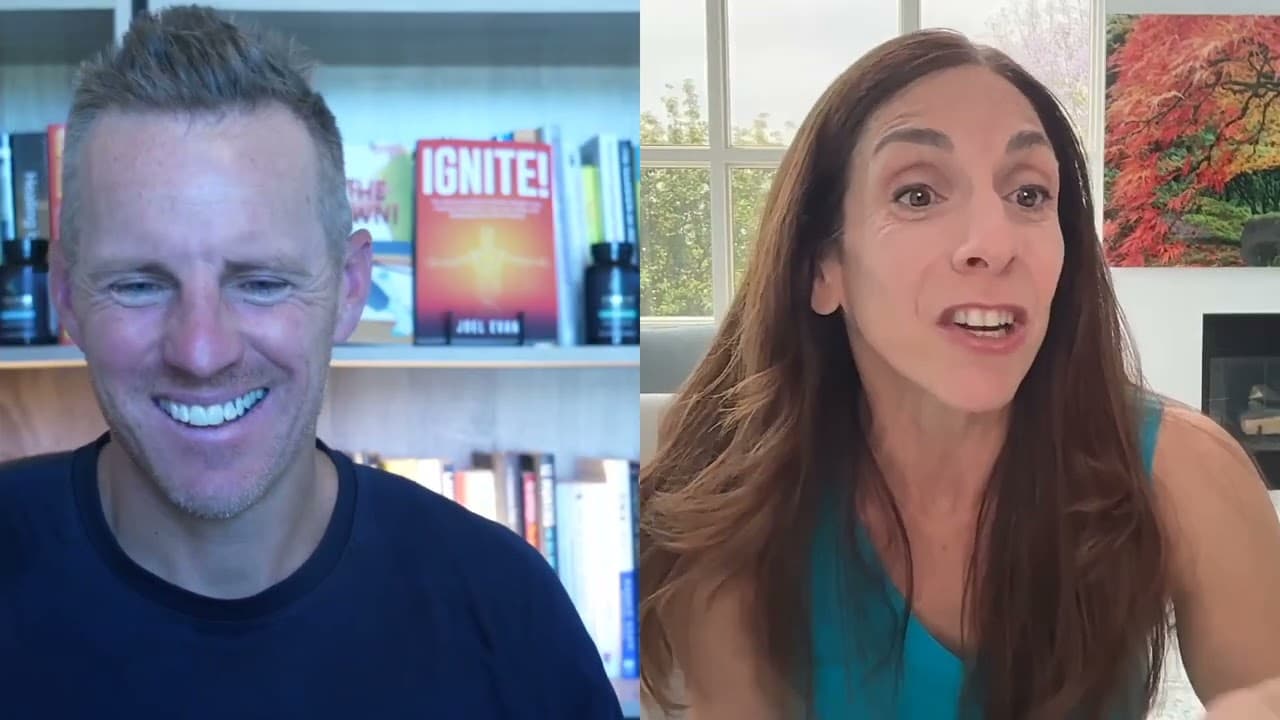
On The Joel Evan Show, Joel Evan talks with Shanna Pearson, founder of Expert ADHD Coaching and author of Invisible ADHD, about why women with ADHD are so often told they have anxiety or depression, why the ADHD brain drifts toward catastrophic thinking, and how a drop in estrogen lowers dopamine and makes ADHD harder to manage.
Shanna also describes how her coaching business started almost by accident, and why she stays off social media.
In this episode
- How Shanna began coaching friends with the systems she built for herself after her own diagnosis as an adult
- Why the self-report questionnaires used in a doctor’s office so often point women with ADHD to anxiety or depression
- ADHD as a lifelong condition whose common thread is constant overwhelm, and why a real assessment looks at your past, down to old report cards
- Why an ADHD brain that seeks stimulation goes to the worst-case scenario, and why a long to-do list backfires
- How lower estrogen means lower dopamine, why to keep big decisions off the days before your period, and how a partner can help without taking it personally
- Gamification, physical state changes and friendly competition, and the basics of sleep, food and movement that come first in coaching
Episode links
- The video on YouTube, titled “Hormones, Dopamine, and ADHD: The Missing Link for Women,” with chapter times
- The episode page on Spotify for Creators, where the show is published
- Apple Podcasts and Spotify, where the episode has a different title
Transcript
This transcript follows the video above. Times are minutes and seconds into it. The audio episode is the same recording, so its times match.
Joel Evan (0:00): All right, I got Shanna Pearson on the show today. She's the founder and director of Expert ADHD Coaching. This is the world's largest one-on-one ADHD coaching company, and they've successfully administered 500,000 coaching sessions, I don't know how you do that, Shanna, for tens of thousands of clients. They've worked with companies like Google, Apple, Yale, um, the School of Medicine, Disney, Meta, SpaceX, and much more. And also, the author of the book Invisible ADHD: Proven Mood and Life Management for Smart Yet Scattered Women. Shanna, welcome to the show.
Shanna Pearson (0:32): Thank you. It's really good to be here, Joel.
Joel Evan (0:34): Yeah.
Shanna Pearson (0:34): It's great. Yeah.
Joel Evan (0:36): Yeah. Excited to have you. You know, I wanted to just jump into things right away. Like, you know, how did you, uh, how-- First, before we even go anywhere, like, what is kind of your journey into the ADHD world that made you feel like, "You know what? I'm gonna launch a coaching, uh, business so that-- 'cause people need this, and now I'm gonna write a book so people can really understand it even better"?
Shanna Pearson (0:55): Well, like most things- (chuckles)
Joel Evan (0:56): Yeah
Shanna Pearson (0:56): ... in my life, everything was an accident.
Joel Evan (0:59): Yeah.
Shanna Pearson (0:59): Um, I didn't mean to start a business. I've never done anything involving business before in my life. (chuckles) Um, it was... What, what started it was really, um... I was-- I had been diagnosed quite late in life. At, at, at that time it was like, it wa- it was considered old (chuckles) to be diagnosed with ADHD. Now, thank goodness, women are being diagnosed much more, um, much more often, um, you know, in middle of, in the middle of their life. But it was just really, I had been designing and creating a coaching program completely different for the, for the government in Canada.
Joel Evan (1:37): Wow.
Shanna Pearson (1:37): It was a health and wellness coaching program, and I didn't know anything really about health or wellness, but I did know about how to get people into action. Um, and at the same time, my life was a complete and total disaster in every category. It's like you know how in-- You're a coach, right? So you know how in coaching they have the wheel of, you know, all of the, you know, the relationships-
Joel Evan (1:58): Yeah
Shanna Pearson (1:58): ... and the professional and personal and health, and it was just all over the place in a terrible spot. Um, and something, you know, happened, and I had to go get, go figure out what was going on, and that's when I was diagnosed with ADHD. Um, which-
Joel Evan (2:15): Wow
Shanna Pearson (2:15): ... I was first misdiagnosed actually with depression, but that's like a different, that's a different conversation and question maybe later.
Joel Evan (2:22): Yeah, yeah.
Shanna Pearson (2:22): But, um, the diagnosis with, for me it was pretty earth-shattering and, um, and made a lot of sense.
Joel Evan (2:30): How old were you when you got diagnosed, just out of curiosity?
Shanna Pearson (2:31): In my, in my 30s. Like-
Joel Evan (2:33): Yeah
Shanna Pearson (2:33): ... you know, I was, I was 32, and I wish, like, anyone who's getting diagnosed as a kid, thank, like, just be so grateful. (chuckles) If you have a kid that, that's getting diagnosed, like, just be grateful that, that they're getting diagnosed at a young age so they know what's going on. Um, but the thing is, is, is basically I had been designing this coaching program in a totally different arena, and I was diagnosed, and I started, I started learning everything under the sun about ADHD and also everything about myself and what would work for me and what does already work for me and what doesn't work-
Joel Evan (3:10): Mm-hmm, mm-hmm
Shanna Pearson (3:11): ... (chuckles) which is, which is, I think, huge. So I designed some-- Basically I just designed some systems for myself, and after a few months I noticed that they were really working. Um, you know, and slowly, slowly people start-- Like, my friends were also just as, just as scattered as I was. Um-
Joel Evan (3:29): Yeah
Shanna Pearson (3:29): ... and I just started helping them, and it was working. Whatever I was doing was working. So I just started, I started really, you know, I'd like, I'd put like signs up in Starbucks, like, "ADHD help," (chuckles) "coaching," or just I didn't even know what to call it, but-
Joel Evan (3:44): Yeah
Shanna Pearson (3:44): ... that's how it-- And I just slowly, slowly, I got one client and then two clients, (chuckles) and then, you know. And it was just like this job that I was doing that was coaching in the health and wellness arena made me, I guess, gave me the confidence to know that I know how to help people get results. Um, but I didn't know. (chuckles) I didn't, I didn't know anything other than that, so I just, I was, I was getting results in my own life, in my friends' life, and then I s- started doing it outside of that. And whatever I was doing was working, and then it just started growing accidentally. I, (chuckles) I wasn't-
Joel Evan (4:17): Next thing you know, you've helped over half a million people.
Shanna Pearson (4:19): I didn't mean for this to happen.
Joel Evan (4:20): Yeah, half a million people now have been helped by you, and you just accidentally.
Shanna Pearson (4:22): Well, half a million sessions. Yeah, sessions, not clients. But half a million, ov- almost half a million coaching sessions that-
Joel Evan (4:29): Yeah
Shanna Pearson (4:29): ... that I've been managing. Yeah.
Joel Evan (4:31): Yeah.
Shanna Pearson (4:31): Which is a lot. Over, like, tens of thousands of clients.
Joel Evan (4:34): That's a lot of reps, right? That's what I mean. That's a lot of reps. And that's really cool.
Shanna Pearson (4:37): It's insane. And there, I feel like at this point there's truly nothing I haven't heard. And it's also amazing, um, and I think everyone, it would be good for people to know, like, ADHD is, is very multifaceted, and it shows up quite differently for, for everyone. So, you know, if you have, if you have a child who has ADHD, that means you understand, or you might not actually yet, (chuckles) but you will, um, understand that particular individual. But it doesn't mean you, you know, you understand everything about ADHD, which, which I think is why, like a lot of people who go into helping people with ADHD do so based on their own personal life experience. It's like, well, I know myself and I know my own ADHD, so now I can help all of these other people.
(5:24) And I feel like there's, there's a lot of knowledge that has to go into helping everyone-
Joel Evan (5:29): Yeah
Shanna Pearson (5:29): ... 'cause we're all so different, so different. And, um, yeah, so the book also was kind of an accident. They came to me. I did not intend to write a book. I, I didn't do that, "Let's write a book and hel- sell it to a publisher and hope somebody buys it." It wasn't that. I, they, they wanted me to write this book, so, so I did.
Joel Evan (5:47): Yeah.
Shanna Pearson (5:47): I did. Yeah.
Joel Evan (5:49): Wow. I wanted to ask you, 'cause you say that up to 75% of women with ADHD are undiagnosed. You were one of them. Why do you think women specifically are f- you know, falling through the cracks? And, like, what are some of the signs that are absolutely being completely missed?
Shanna Pearson (6:05): So I feel like- I, I really believe this is true. Number one, have you, like, have you ever yourself or have you ever known anyone who's gone to their doctor and asked for a diagnosis for like any kind of mental health anything? Like if you... Do you know anyone that's done that?
Joel Evan (6:21): I, I can tell you my brother in his early 20s developed chronic fatigue and the doctor spent 10 minutes with him, asked him 10 questions and said, "You're depressed. See you later. Here's some meds," and walked away.
Shanna Pearson (6:33): Okay.
Joel Evan (6:33): And I remember my brother calling me that day and he said, "Joel, I'm not depressed. Something's wrong with my body physically."
Shanna Pearson (6:38): Wow.
Joel Evan (6:38): "I can't tell you what it is, but something is wrong. I don't need these meds. I need something else." So I can rec-
Shanna Pearson (6:43): I just got goosebumps when you said that. I really did. That's, that's-
Joel Evan (6:47): Yeah. So I-
Shanna Pearson (6:48): ... that's exactly what happens.
Joel Evan (6:49): Yeah. I've never had it me personally but I, and I hear that from a lot of clients too that one of the big things too is, you know, when I'm spending time with folks it's like we're talking for 60 minutes and they're always like, "This has been so great," (chuckles) just this alone because like you're actually listening to me and it's like, yeah, I wanna understand your situation. I don't even know if I can help you. I actually wanna... I'm curious, right? And then doctors and the way insurance and everything's set up, they just don't have the time. It's literally 10 minutes and the next, it's a revolving door and so.
Shanna Pearson (7:14): It, it totally is. They have no time. They, they see like 50 people a day. They have like 10 minutes per person. But with a diagnosis what, what likely, I mean partially what may have happened with your brother, but I know it happens with, um, with ADHD diagnoses at a, in a doctor's office and also with depression and anxiety because that, those are the two things that women with ADHD get misdiagnosed with the most.
Joel Evan (7:41): I bet.
Shanna Pearson (7:42): A woman with ADHD will almost, almost every woman in their 40s or 50s was, uh, that I've spoken to was, was, was told at some point that it's probably anxiety or depression before they realized that they had ADHD. And so the tests that they give you in the doctor's offices that are, they're all subjective. You have to answer them yourself. So I'm going to the doctor because I'm not feeling good. I feel like my life is falling apart. I feel like crap every single day of my life. My, things are harder for me than they are for everyone else around me. I have a hard time with my relationships. I can't keep a job. I'm losing everything.
(8:22) I don't know what to do. I'm like, (chuckles) I feel... And I'm going to the doctor. They're giving me this test that I have to answer. So my answers are going to align very much so with a person who's depressed and that's what happens because I don't feel good. I feel hopeless. I don't necessarily wanna get out of bed. All of those same questions, not all of them but a lot of them, will be answered. It's like you'll, it looks like you're depressed or if you're a person who has ADHD and you're constantly, your mind will not stop and you're always going to the worst case scenario which is extremely common for people with ADHD because it's stimulating and you're, you're in the what ifs nonstop and it's never a good what if, you'll be diagnosed with anxiety.
Joel Evan (9:07): Yep.
Shanna Pearson (9:08): And that's what's gonna happen and then you'll be given a prescription and you'll be-
Joel Evan (9:13): And that's the end of the story right there
Shanna Pearson (9:14): ... and that's it.
Joel Evan (9:14): Yeah.
Shanna Pearson (9:14): And so now you've got this prescription in hand and you're gonna, and you're gonna, you're gonna fill it and you'll start it and it's not gonna work for you because you don't have anxiety or maybe you do but you also have ADHD. You know?
Joel Evan (9:28): Yeah.
Shanna Pearson (9:28): Maybe you don't have depression at all and you only have ADHD but if you have both it's only gonna, it's gonna help, the antidepressant will help your depression but not your-
Joel Evan (9:35): Yeah
Shanna Pearson (9:35): ... ADHD.
Joel Evan (9:37): By the way, okay that makes total sense. By the way, you know, I should have asked you in the beginning, how would you even describe or define ADHD because it's been so broad, it's so broad now. Everybody, you know, and now it's like almost a running joke and I know you work with a lot of people in Silicon Valley.
Shanna Pearson (9:51): Yes.
Joel Evan (9:51): It's like every one of us just says, "Yeah, I have ADHD." Like I just, 'cause we're all, you know, but a lot of those people are some of the most successful people in the world 'cause their brain is always going, right? So yeah how would you even describe it or define it now? What's like the definition?
Shanna Pearson (10:05): I think that's an amazing question and I, I first wanna say that I f- the fact that everyone says that they have ADHD it's great for business.
Joel Evan (10:15): (chuckles) Yeah.
Shanna Pearson (10:16): But it's not good. It's just not good because it minimizes ADHD and a lot of people who, you know, who like joke around and like, "Oh my God I feel so ADHD today," I mean I get it and I understand what they're, what they're, what they're thinking but the fact is is it's not just about, you know, being overwhelmed and, and forgetful and like chaotic. ADHD is a lifelong condition and that's like the first thing that really needs to land. When you have ADHD you've had it forever.
(10:49) You don't have, there's no time in your life where you haven't been this way and so a lot of people who are being diagnosed later in life it's because their symptoms get worse but it's never that they never had the symptoms you know?
Joel Evan (11:06): Mm-hmm.
Shanna Pearson (11:06): So ADHD if I had to come up with like a super quick, you know, how do you know what is it? It looks different for everyone which is what I was expressing earlier but the one thing that all of us have in common is that we are perpetually nonstop overwhelmed and you're just constantly living in that deluge of everythingness, drowning in it and that's, that's your life. That's your reality. And so how we-
Joel Evan (11:39): Mm-hmm
Shanna Pearson (11:39): ... and, and if you think about what ADHD is which is like, you know, you're disorganized, you can't manage your time, you're, you know, you, you, you're, you're, you have a hard time managing your emotions a lot of that is a result of being perpetually incredibly overwhelmed.
Joel Evan (11:58): Yeah, and the, the thing about it too is I was, I've been listening to you talk, the destruction there too is if I just pass it off casually, (chuckles) "Ah, that's just my ADHD," you never really get-- you actually dismiss it. And because you-
Shanna Pearson (12:09): Yeah
Joel Evan (12:09): ... dismiss it as it's just a thing, you actually never get clarity on why, what's driving it, and because you just easily deflect that it's this ADHD thing, but that's really nebulous, so you-- there's no investigation to actually how to get better.
Shanna Pearson (12:23): Exactly.
Joel Evan (12:23): To actually, you know, prevent it. It's like, "Oh, yeah-"
Shanna Pearson (12:24): Right
Joel Evan (12:25): ... "It's ADHD." And that can be catastrophic, so.
Shanna Pearson (12:28): It really could be. A lot of people are self-medicating and, you know, to help them, to help them, not even knowing that they even have ADHD, but just to help them feel a little bit more grounded or more connected to themselves. They do other things that may not be good for them in the long run, likely are not good for them in the long run. It, it takes away a lot of the, the s- basically just claiming that you have ADHD and, you know, even whether you take medication or not, and just, like, brushing it off to that, um, you're not gonna, you're not gonna move forward in the way that you want to move forward, because you're not gonna know what you need to do.
Joel Evan (13:11): Is there a rubric or something people can use, either at your website or in the book or anything that they can use to actually say, "Okay, I, I think this is valid what you're saying. I think I might have it, but I do wanna be, have some discernment and see if this is what's going on with me." Is there a way that you've kind of figured out after doing-
Shanna Pearson (13:27): Oh
Joel Evan (13:27): ... 500-
Shanna Pearson (13:28): There's one, there's one way-
Joel Evan (13:29): Yeah
Shanna Pearson (13:29): ... and I, and I'm, I'm a huge advocate for this. You have to go to a real doctor. (chuckles) You can't have your friends tell you and you can't have your spouse tell you, and you certainly can't have your, you know, parents tell you, "You have ADHD." Like, what are you? Like some ADHD kid? Which I've heard so many times.
Joel Evan (13:45): Yeah.
Shanna Pearson (13:45): Just you have to go to a doctor, and the doctor does not give you those little, like, 10-question subjective, you know, like, let's see how you feel today. It's a doctor who's gonna spend at least three hours with you giving you a very in-depth diagnosis, and that diagnosis should always include your past.
(14:10) They should be asking you about your past, because that's how you're gonna know if it's ADHD or if it's just how you're feeling today or-
Joel Evan (14:18): Mm-hmm
Shanna Pearson (14:18): ... this month or, you know, during COVID, right? It was like, you know, everyone became (chuckles) like-
Joel Evan (14:24): Yeah, yeah
Shanna Pearson (14:24): ... it's like, well, wait a minute, did this just start this year? Or... Yeah. So-
Joel Evan (14:28): Yeah
Shanna Pearson (14:28): ... it really is a lifelong thing. So, um, my doctor wanted to see-- Well, after the big misdiagnosis, which was a, which was horrible, my doctor wanted to see all of my report cards, which my mom happened to have kept, which blew me away.
Joel Evan (14:45): Sounds like my mom. Yeah.
Shanna Pearson (14:45): But real- does your mom have your report cards?
Joel Evan (14:48): I th- I, I bet you she does.
Shanna Pearson (14:49): See? That's real-
Joel Evan (14:50): She saves, she saves everything. Yeah.
Shanna Pearson (14:52): Save your kids' report cards. (chuckles) You never know. No, but I, I had them, and that was, that was so helpful because I certainly didn't know what my kindergarten teachers were saying about me.
Joel Evan (15:03): Yeah.
Shanna Pearson (15:03): I would never be able to know that. But-
Joel Evan (15:04): Yeah
Shanna Pearson (15:05): ... when I looked at it, it was like, eh, it was, like, all the same things, you know?
Joel Evan (15:09): Mm-hmm.
Shanna Pearson (15:09): Daydreaming, just, like, silent, lost, doesn't know what's going on. Those kind of things that just show that I was just, like, not, I was not present in any way.
Joel Evan (15:19): Yeah. Yeah. This is great. Talk to me about, uh, catastrophic thinking, because I thought this was interesting. You said that the ADHD brain is actually wired for catastrophic thinking. Why is it always on this edge, I guess, and is there a way to actually break that pattern?
Shanna Pearson (15:34): Yeah. The, it's, it's, it's natural to go towards that way of thinking because when you have ADHD, your brain seeks stimulus. It just does, just to feel balanced. It's like, you know, when we talk about the dopamine hit, right?
Joel Evan (15:52): Mm-hmm.
Shanna Pearson (15:53): We need a little bit more dopamine. We need a little bit more (chuckles) of these neurotransmitters that we don't have quite enough of in order just to have this, like, I don't know, this feeling of homeostasis.
Joel Evan (16:04): Mm.
Shanna Pearson (16:04): So our brain seeks stimulus, and one of the easiest ways for our brain to do that, even though it makes us miserable, is with catastrophic thinking. It just naturally goes there because it's like, it's just like, it's dopamine. Boom, creation. And it's just like, w- it keeps you on edge and it keeps your brain engaged, and your brain wants to be engaged. So this is just, like, this constant wake-up. Um-
Joel Evan (16:31): Wow
Shanna Pearson (16:31): ... it sucks. And that is on... No, I (chuckles) it is one of the biggest reasons why ADHD sucks, because you can't escape the, you can't escape your thoughts. And if you're, if you have a brain that, that needs to go towards, you know, the worst type of possible scenarios all the time or do things in a, you know, in a way that makes things very stressful and very chaotic, you have to live with that brain.
Joel Evan (16:57): Yeah.
Shanna Pearson (16:58): It's, it's, it's awful. It's, it's like (chuckles) it's awful and it's not, it doesn't make people happy. And so obviously-- and it doesn't even make us effective.
Joel Evan (17:10): Yeah.
Shanna Pearson (17:10): You know? And then we do things to try to escape that, the, the catastrophic thinking. But at the end of the day, it's because our brain wants to be engaged, and that's very engaging. It's, it's like a, a really high-intensity Netflix drama.
Joel Evan (17:26): Yeah. That's so interesting, 'cause the brain is a prediction machine. It's always looking to predict and calculate anyways what the future is. But for some of us, it sounds like it's just on steroids. It's just revved up. (chuckles)
Shanna Pearson (17:38): Yeah. It's like 100 times-
Joel Evan (17:39): Yeah
Shanna Pearson (17:39): ... more, and it's always the negative. It's, it's like the negative first. I'd say, like, probably a third of our clients are, like, perpetual (chuckles) catastrophic thinkers. They can't get out of it. Nothing, and nothing will ever work for them.
Joel Evan (17:56): Yeah.
Shanna Pearson (17:56): Even though they come to coaching. (chuckles) Like, so thank God. Like, like they, we can prove them wrong, but they come, it takes, it could take a year to turn them around with proof of what they've actually done in terms of, like, their progress that something can work for them, but they just can't. It's so hard for them to get out of that.
Joel Evan (18:13): Mm.
Shanna Pearson (18:14): It's so hard for them to ch- 'cause it's also a habit Catastrophic thinking, once you've reached, you know, your 40s or 50s and that's how you think, it becomes a habitual way of being. And so even when you're, you know, when you're doing all of the things you need to do, whether it's medication or lifestyle or just all of the, the tools to manage, you know, mindfulness, whatever it is you're doing, it is really, really hard to get out of it. But you can. It's just difficult. It's work.
Joel Evan (18:44): Yeah. How does this tie in? 'Cause I know this I thought was really interesting, the to-do list, and that you were saying that a to... I would think a to-do list would help someone with ADHD, like get their ideas on paper and then be able to stick to that. Okay, good. Like I'm clear, I have clarity, I know where I'm going. But you say that actually makes it worse. Like why does this type of productivity backfire?
Shanna Pearson (19:07): It depends on your to-do list. Like I'd s- probably like 95% of the people who come to us have these to-do lists that are like over 100 items long. You can't, like you're gonna look at this list and be like, you, all you're gonna wanna do is like jump on the next game or go watch TV or get out of the house or like get out of your office. Just you can't, you can't look at these. A person who is perpetually in overwhelm, so they're just like nonstop, nonstop, nonstop, nonstop overwhelm. You're drowning, you're sinking. Imagine you're in quicksand and you can't get out of it, and now you're looking at this, you know, and, and the, there's no rope.
(19:48) There's just more quicksand, and that's what-
Joel Evan (19:49): Mm-hmm
Shanna Pearson (19:49): ... the to-do list is with like the really long to-do list, which is why I always talk about keeping it to three.
Joel Evan (19:56): Gotcha.
Shanna Pearson (19:56): Just keep your to-do list to three. I don't care if you have 500 things on your list. Just write-
Joel Evan (20:03): Yeah
Shanna Pearson (20:03): ... down three on a separate piece of paper and only look at that.
Joel Evan (20:09): Why, and you know, I didn't even think of this. Why do you see that ADHD, why do you think it's actually affecting more women than men? What's the reasoning behind that?
Shanna Pearson (20:19): It doesn't affect more women than men. It's actually 50/50.
Joel Evan (20:23): Okay.
Shanna Pearson (20:23): And it used to be that, I mean, when I first started this work, it was t- three times the, uh, the, three times the amount of men were being diagnosed with ADHD than women, and that's a huge difference. Um, we're starting to even out at this point, starting to, but women are still being diagnosed with anxiety and depression when they actually have ADHD. (chuckles)
Joel Evan (20:50): Yeah.
Shanna Pearson (20:50): So that is definitely still happening.
Joel Evan (20:53): Yeah.
Shanna Pearson (20:53): But, um, at this point we're starting to even out, but it's not, it's not more prevalent in women. It shows up-
Joel Evan (20:58): Okay
Shanna Pearson (20:58): ... very differently in women.
Joel Evan (21:01): Gotcha.
Shanna Pearson (21:01): Very differently.
Joel Evan (21:01): 'Cause that's why the book's more geared for women. That's why I was just curious, but it has nothing to do with the percentages, it's just that's-
Shanna Pearson (21:06): No, not at all. They want, they asked me to write a book for women. Um, the majority of our clients are men.
Joel Evan (21:11): (chuckles) Yeah.
Shanna Pearson (21:12): We work with men and, and women, right?
Joel Evan (21:15): Yeah.
Shanna Pearson (21:15): We work with both, but they wanted the book for women, so we wrote it for women. Yeah, so I just, yeah. But honestly, a lot of the tools in this book are definitely tools that we use in our coaching for-
Joel Evan (21:23): Universal, right? We were talking
Shanna Pearson (21:25): ... everyone.
Joel Evan (21:25): Yeah. Yeah, exactly.
Shanna Pearson (21:26): Yeah.
Joel Evan (21:26): But actually, but part of the, in, in, in a little bit of the book you talk about hormones, though. And so I'm wondering how, how do hormonal shifts in women, their biology, how does that tie in with ADHD or even women-
Shanna Pearson (21:39): Really simply. Really simply, um, estrogen. When estrogen is lower, dopamine is lower. So when like women go through monthly cycles and what that is, like it's like their estrogen levels change, and when they're high, your, your, just to put this in total layman's terms, your ADHD feels better, and when your estrogen is low, your ADHD feels worse. Because, I mean, think about it, a lot of the, we need more dopamine, and now we have this, you know, now we have, you know, hormones and, and estrogen lowering our dopamine even more when we're already at a deficit. Our brain is already at a deficit, so now we're in a time of our cycle where this deficit, it, it's even, it's even lower.
(22:36) So now it gets even, it really is worse. Like it gets a lot harder. And then what about women when they're going through perimenopause or menopause and it's, it's like, I think there's like a 65% drop in estrogen. (chuckles) So like-
Joel Evan (22:49): Yeah
Shanna Pearson (22:49): ... do you know how much that affects your, like that affects your dopamine and it's just like plummeting and now you're just like... That's why a lot of the s- the ways that you were able, for, for women who never knew that they had ADHD, the ways that they were able to manage it themselves stop working, because it becomes so much harder. Because now they he- they have even less dopamine and they need even more dopamine, and it's like that's why they are constantly feeling like they're... Like a woman in her 50s who has undiagnosed ADHD truly feels like she's losing her mind and doesn't know why, which is more extreme than women who don't have ADHD who are going through these changes in life.
(23:31) They still feel there's a lot of things that they're going through, but they don't legitimately feel like they are losing their mind even though they might say that.
Joel Evan (23:39): Yeah. Yeah, so I'm wondering, too-
Shanna Pearson (23:42): Does that make sense?
Joel Evan (23:43): Yeah, it does. I mean, is, would... I mean, and obviously everyone, there's the bio-individuality of everyone. Even if you're not in menopause, though, we know estrogen for women's cycles rises and during-
Shanna Pearson (23:54): And lowers
Joel Evan (23:55): ... then it hits that luteal phase, right?
Shanna Pearson (23:57): Yes.
Joel Evan (23:57): And then dips. So-
Shanna Pearson (23:58): And then dips
Joel Evan (23:59): ... for a normal s- woman on a 28-day cycle, we would expect, I'm just telling the guys out there, you would probably expect a lower dip than the second half of the cycle maybe, so it might be-
Shanna Pearson (24:09): 100%. Thank you for saying that.
Joel Evan (24:12): So be aware. Be aware.
Shanna Pearson (24:12): Be aware.
Joel Evan (24:12): Be aware.
Shanna Pearson (24:13): Put it on your calendar. (chuckles)
Joel Evan (24:15): Yeah.
Shanna Pearson (24:15): Do not upset any... No, like, and women, women should put it on their calendar, not when they're like heading into PMS mode, but- It would be really a great idea (chuckles) to put it, to mark down the days when you should definitely not be making any major decisions. And those would be the days that are, like, five or six... Like, the PMS days, the five or six days before you get your period. Like, those are the low- like, you are at your lowest dopamine levels, and if you have ADHD, that's a dangerous place to be. (laughs) So, so no decisions.
Joel Evan (24:49): Yeah. No, that's so good. Well, you know what?
Shanna Pearson (24:51): Mm-hmm.
Joel Evan (24:51): Also, because dopamine's lowering, do, do you notice then that women are trying to make up for that lost dopamine? And because of that, 'cause they're used to this baseline... And I'm only thinking about this 'cause I think about, like, when they talk about cell phones and dopamine-
Shanna Pearson (25:07): Mm
Joel Evan (25:07): ... and w- we're, we're s- we're in such a dopamine abundance right now that we need even more dopamine to get our normal level.
Shanna Pearson (25:13): Yeah.
Joel Evan (25:13): So I was thinking the same thing. If they're lowering their levels, do you see them then, I don't know, binging towards the end of the month or do certain activities like that where they're on their s- they're doom scrolling more? I don't know. Like, what have you seen... Yeah, you're nodding, so (chuckles) yeah. What-
Shanna Pearson (25:27): (laughs) Those days (chuckles) when you're, when you're in your lower dopamine, uh, phase, uh, you will tend to... I don't wanna be, like, so, like, "Yes, this is what's gonna happen," because I, I don't like it when people talk like that because there's always exceptions.
Joel Evan (25:43): Sure.
Shanna Pearson (25:43): So in general, in general, you will notice that you are, um, participating in behaviors that are not great for you, that you know aren't great for you. You'll be binge-watching more. You'll be doom scrolling more, like what you said. You'll also be arguing more. You'll be creating more drama. You'll be overreacting more, and you'll be (chuckles)... That's, I think that's one of the biggest ones, and it's like-
Joel Evan (26:13): Yeah
Shanna Pearson (26:13): ... that's, like, true for everyone. That's why there's, like, jokes about, you know, oh, well, obviously women who are PMSing are constantly overreacting. But take a woman who has ADHD and has a very hard time regulating her emotions all the time, and then in that, in that f- on, during those days, it becomes so severe, which is... There's a statistic, I think it's, like, three times the amount of th- PMDD, that's, like, the super, super severe PMS.
Joel Evan (26:44): Yeah.
Shanna Pearson (26:44): It's, like, three times more prevalent for women who have ADHD, and that's why. That's why. Because it's almost impossible for us to regulate our emotions and our behaviors m- because we have ADHD. And now you're bringing in a lower dopamine phase, and it's just like, it's like, it's forget about it. So you have-
Joel Evan (27:05): Yeah
Shanna Pearson (27:05): ... to do things that, first of all, you have to know that this is going on, (chuckles) and you have to be prepared. And I feel like prep- being prepared makes such a huge, beautiful difference to so many people because now you know what's going on. You're not just the victim of your own behaviors and reactions and emotions. You're like, "Oh my God, this is, you know, this is my brain." And if you can separate yourself from your brain, which is, you know, who knows if that's even right or not.
Joel Evan (27:33): Yeah. Yeah.
Shanna Pearson (27:33): But this is my brain. This is not me. You know? This is what I need to do. Like, I need to go for a walk right now. I need to listen to this music right now. I need to take myself out of this headspace and put myself into another headspace right now. And to also, again, like I was saying before, know not to make any major decisions during that time because it almost always, it's almost... And people regret it. Usually the big decisions during those days, like, just don't do it. Put it on your calendar-
Joel Evan (28:06): Yeah
Shanna Pearson (28:06): ... in block letters. (chuckles)
Joel Evan (28:08): Yeah. Yeah, no, that makes so much sense. I, I love that you said that. And I think even for guys that are listening, right, um, when, if you're just supporting your spouse, I know for us it's just, it's important to have a language to be able to communicate, 'cause if you don't even have that, then you just immediately go to what you know, which is, "Oh, she's just being this way, and that's just her cycle." But, like, if you can actually have a conversation or like, "Hey, this is what's going on." "Oh, it makes sense." And then it's like, "Well, this is how I can intervene and help."
Shanna Pearson (28:34): Yeah.
Joel Evan (28:35): And, and then everyone's working together instead of, like, you're actually fighting, which is nice.
Shanna Pearson (28:38): Totally, and it's really hard, I mean, for... It, it really is hard for... We always invite spouses to join in on sessions 'cause I think it's awesome (chuckles) to have somebody in your home actually know what's going on for you. And I, I know how hard, just because I've been doing this for a really long time, I know how hard it is for, if you're a man and you're married to a woman who has ADHD and dealing with these, you know, major hormonal shifts, it is really freaking hard to be nice. (chuckles) It is, because she's attacking you-
Joel Evan (29:14): Yeah
Shanna Pearson (29:14): ... a lot of the time, and, like, that's the last thing you want because look at what everything that you've done for her, you know, and that you do all the time, and you're... It's just like you're this giving, let's just say, (chuckles) you're this giving man, and, and you're always there, and you're trying to help, and you're doing your very best, and then this woman who you love is lashing out at you, and everything is your fault, and you can never do anything right. And how the heck are you supposed to be understanding and empathetic-
Joel Evan (29:42): Yeah
Shanna Pearson (29:42): ... to that woman, right? So it's not easy. But, um, that's why I think it's really good to not take it, to, to put a reminder in because we're all, whether you're a male or female, it doesn't matter (chuckles) where you fall on the gender spectrum, you need, we all need visual reminders.
Joel Evan (30:02): Yeah. Yeah.
Shanna Pearson (30:02): We all need visual reminders. If you say, like, "Don't take it personally," during that time period, right? Like, just love, just love. Don't take it personally. It's, it's, it's a game changer.
Joel Evan (30:12): Yeah.
Shanna Pearson (30:12): Something so small and simple. And just to be there when she's freaking out on you and, like, telling you how everything is you and your fault and you suck, you could just say, like, "This must be really hard for you." You know?
Joel Evan (30:27): Yeah
Shanna Pearson (30:27): I get it. I'm here, and just, you know, I'm gonna go watch something. (laughs) You're still allowed to leave-
Joel Evan (30:33): Yeah
Shanna Pearson (30:33): ... but just, you know, not to get into it, 'cause that's, that's when the real problems happen, is when-
Joel Evan (30:39): Yeah
Shanna Pearson (30:39): ... people fight back, and now you're fighting with somebody who's completely irrational in the moment.
Joel Evan (30:43): Right, and now you're both offline, right? There's-
Shanna Pearson (30:45): I get it
Joel Evan (30:45): ... no prefrontal cortex activity going on at all. Everyone's in-
Shanna Pearson (30:48): Yeah
Joel Evan (30:48): ... their animal brains, right?
Shanna Pearson (30:49): Yeah. But I get it. It's hard. It's really hard. It's not like, oh yeah, just like go be understanding. You know, the- these are the words you should say to your wife. Like she's, like, you know. It's hard.
Joel Evan (30:59): Yeah.
Shanna Pearson (30:59): But know that it's hard, and, and still, you know, make sure that she knows that you're there and that you can talk about it, not during those days, that when she unleashes on you, if that's the case, if she's that type of person, you can tell her what you're gonna do so she knows. She's not like, "What are you doing? (laughs) Why are you walking away?" You know.
Joel Evan (31:20): Yeah.
Shanna Pearson (31:20): Yeah.
Joel Evan (31:20): Yeah. Great. Yeah, I love that. Talk about, uh, gamifying, 'cause I know you, you talk about sometimes, you know, women or men, doesn't matter, anybody with ADHD, they find that a lot of their tasks are boring or rewa- or they're not, you know, rewarding. So how is gamification, how have you used that to help rewire the brain?
Shanna Pearson (31:38): It's just a, it's just, really it's an added stimulant, right? If you think about everything that's out there to help people who have ADHD, a lot of it is stimulant-based, right? The medications, uh, the big medications are all stimulants.
Joel Evan (31:53): Like r- uh, what is it? R- Rital- Rit- uh, Adderall?
Shanna Pearson (31:57): Yeah.
Joel Evan (31:57): Like that.
Shanna Pearson (31:57): Adderall, Concerta-
Joel Evan (31:58): It's like-
Shanna Pearson (31:59): ... whatever
Joel Evan (31:59): ... yeah
Shanna Pearson (31:59): Like all of the big ones out there, and, and they're stimulant meds. Um, and there's a reason why it works, because if you add the, if, it, it basically allows more dopamine to enter your brain, and now you feel a little bit more focused. Which is fine, but it, I, I always say the medication helps get you focused, but it doesn't help, it doesn't help you focus on the right things. So.
Joel Evan (32:27): So good. Yeah.
Shanna Pearson (32:28): That's why- (laughs)
Joel Evan (32:28): I love it
Shanna Pearson (32:28): ... I mean, that's why we need tools. Like-
Joel Evan (32:30): Yeah
Shanna Pearson (32:30): ... how many people do you know who are on ADHD medication who are like very, very, like no problem focusing on their social media feed for like six hours straight. They get nothing done, but they're focused 'cause it just does that. But-
Joel Evan (32:44): Mm
Shanna Pearson (32:44): ... but it doesn't tell you what to focus on, right? And that's, that's everything. Okay. So wait, what was the question? That you just about-
Joel Evan (32:52): Oh, I was asking how you use gamification.
Shanna Pearson (32:54): Oh yeah, so-
Joel Evan (32:54): Yeah
Shanna Pearson (32:54): ... gamification is a stim- is basically a s- like a created stimulant.
Joel Evan (32:58): Yeah.
Shanna Pearson (32:59): You know? So let's add some fun to it. Uh, put, I mean, you could like, a lot of, a lot of people like to put points, like create p- a point system. So, you know, I'm gonna get five points for this, and three points for that, and two points if I do this. And then like when I get to like 100 points, I get to do X, Y, or Z, or I get to buy myself this or I get to do that. Um, we're like really big into physical state changes, which is like a whole aspect that I put in the book to give people some examples. But just changing your physical state and then, you know, in the middle of things to kind of wake up your brain-
Joel Evan (33:32): Yeah
Shanna Pearson (33:32): ... um, so you're not getting sidetracked, 'cause you could be working on something and then find yourself on a different website, (laughs) you know-
Joel Evan (33:38): Yeah
Shanna Pearson (33:38): ... for the next two hours. Um, so when you force yourself into like state changes, um, putting on your shoe... I know this sounds so s- way too simple, but putting your sneakers on if you go to the gym, like your workout shoes, um, and actually standing up and doing stuff like while you're moving. That's, uh, that's a stimulant that's really effective. Um, but then you can throw dice into the, into the game and just like tell yourself what you're gonna do for your state change.
Joel Evan (34:06): Mm.
Shanna Pearson (34:07): Right? And am I gonna do this state change or am I gonna do that state change? Or am I gonna do the other one, right? 'Cause there's like a whole list. I mean, there's so many you can come up with just to change your physical state. Um, and you know, competitions between friends, like you- you're trying to get something done, um, and it's really flipping boring. (laughs) And then, you know, just like creating a comp- like how much can you do in the next two hours, you know, and you do that with somebody else who's either working with you or, yeah, somebody who's working with you would, would usually work. Or just like somebody who's working on something different, but just to stay focused for that time if there's a bit of a competition in play, you'll st- you'll, you'll keep on it in a-
Joel Evan (34:46): Yeah
Shanna Pearson (34:47): ... you'll keep on it longer.
Joel Evan (34:49): It makes so much sense now too. I mean, right when you said it, you're like, yeah, 'cause you want the hit, you want the dopamine hit, and that's what the game's doing. So right when you-
Shanna Pearson (34:55): Yeah
Joel Evan (34:56): ... said it I was like, yeah, duh.
Shanna Pearson (34:57): I was constantly setting timers for myself when I was, um, when I was writing this book. It's like, can I get through 30 pages in one hour? And I would set like a, (laughs) like I would set my timer on my phone, and I would keep like whatever, and I would write it down. It's like I would write down the times and how long it took me to get through, how many pages I would get through, and what I can do in 30 minutes versus, you know, how long it took me to get through 50 pages, and I would just constantly be trying to beat my time. Which is why there's so many mistakes in the book.
(35:24) No, I'm joking. There, there aren't. (laughs) I'm just like rushing. No, but I was like making it a competition for myself, you know?
Joel Evan (35:33): Oh, yeah, yeah.
Shanna Pearson (35:33): Like what can I, like how much can I do, how many pages, like in 10 pages can I do this in five minutes or less? That kind of thing.
Joel Evan (35:38): Yeah.
Shanna Pearson (35:39): Yeah.
Joel Evan (35:39): You know, I, I know we, I'm looking at the time, we have to wrap things up in a little bit, but I was just thinking too, a lot of the stuff we talked about was, is through habits and brain chemistry, which I love. But I was just thinking too, in, in your coaching, do you also, is there an aspect of also working on, I don't know, uh, nutrition, or are there other things that people need to be thinking about too as well, whether it's, you know, exercising? I mean, all of these things can, you know, prom- create dopamine and other things too. So yeah, do you look at that aspect as well?
Shanna Pearson (36:08): All of it.
Joel Evan (36:09): Yeah.
Shanna Pearson (36:09): Oh my God, Joel. That's, I call that the basics. I'm, I feel like in the first two to three months of any client's journey with us, they have to, 'cause I manage all of the clients and all of our coaches, and this is like a big, big piece for me because they must all... 'Cause every month I get reports and checks and the, like I'm constantly making sure that every client is doing, is kicking butt.
Joel Evan (36:33): Yeah.
Shanna Pearson (36:33): I ha- they have to. Every f- Every client that comes into my program has to kick butt. And so the basics is like, is exactly what you're saying, sleeping, eating, (chuckles) like their nutrition, their exercise, um, what are they doing and how are they moving forward, right? And so there has to be shifts, and so a lot of people come in with great habits, and most people don't.
Joel Evan (36:58): I would imagine, yeah.
Shanna Pearson (36:59): Yeah.
Joel Evan (36:59): And I would imagine a lot-- That's, you know... Again, we, we're talking about all the behavioral stuff, but it's like-- And c- I think you and I are already on the same page. To me, that's already a given, like, yeah, I'm already doing all that. Like, I already-- I, I got that dialed in.
Shanna Pearson (37:11): Yeah.
Joel Evan (37:11): But the average person actually doesn't-
Shanna Pearson (37:13): They don't
Joel Evan (37:13): ... and that can be contributing (chuckles) to a lot-
Shanna Pearson (37:15): It's terrible
Joel Evan (37:15): ... of their issues too, right?
Shanna Pearson (37:16): Oh my gosh.
Joel Evan (37:17): Yeah.
Shanna Pearson (37:17): They're literally, like, snacking on Twinkies, adults-
Joel Evan (37:20): Yeah
Shanna Pearson (37:20): ... you know, like grown-ups. (chuckles) I know that might sound silly if I'm saying it, 'cause, like, there might be somebody, like, who eats Twinkies, and they're like, "What's wrong with Twinkies?"
Joel Evan (37:27): Yeah.
Shanna Pearson (37:27): But, like, I can't believe the stuff that people put in their body that affects their brain in the worst possible way.
Joel Evan (37:36): Yeah.
Shanna Pearson (37:36): And they're taking these medications. And it's true for people who have depression also, by the way, and anxiety, 'cause they're t- they're eating these foods that are just so bad for their mood. And so people with ADHD have a very hard time managing their mood in general, and now they're eating, you know, processed sugar, everything, 'cause it's quick and easy. And it's, it, it is. It is quick and easy, so, like, you need the calories. What are you gonna do? You, you can't, like-
Joel Evan (38:02): Yeah
Shanna Pearson (38:02): ... start cooking a meal if you have no time. So it's part of the whole, it's like a cycle, right? So part of it is teaching people, um, what foods to always have on hand, (chuckles) and, and, and how to plan in advance so that you're, you're, you're giving your body, and most importantly for me, giving your brain the nutrition and the food that, that you need to be eating. Um, sleep is huge. I always say like, "Okay, so Joel, you don't have ADHD, right? But I want you to tell me, uh, four things, like, like four ways that having no sleep affects you. What does it do to you?"
Joel Evan (38:45): Well, I'm angry, I'm irritable.
Shanna Pearson (38:47): Irritable.
Joel Evan (38:48): Um, low energy.
Shanna Pearson (38:49): Low energy.
Joel Evan (38:50): Um, uh, just I would say not productive, 'cause I'm just going through the motions, so... And then brain fog, uh, and definitely not making good decisions.
Shanna Pearson (39:02): Right. Good. Um, that's it, right? So a lot of, except for the low energy part, (chuckles) a lot of, a lot of sleep deprivation for every human, it's almost like those symptoms of sleep deprivation mirror ADHD.
Joel Evan (39:18): Hmm. Yeah.
Shanna Pearson (39:20): We become impatient, we become impulsive, we become restless, we become irritable. We're like, like constantly like, you know, you're, you're just, like, thinking, like, not, (chuckles) not necessarily the best thoughts. And it's just, you're, you're certainly not productive. And so, like, imagine a person who has ADHD who's now sleep deprived, and so it's like, it's-
Joel Evan (39:42): Pouring gasoline on the fire. Yeah
Shanna Pearson (39:44): ... right? So it's like whatever you just mentioned that you experience, like multiply that by, by 50. And so it's-
Joel Evan (39:52): Yeah
Shanna Pearson (39:52): ... it's really important, but it's hard. It's naturally hard for people who have ADHD to, um, to have healthy sleep habits when they're taking stimulant medication. That's like a whole thing.
Joel Evan (40:05): Yeah.
Shanna Pearson (40:05): So we have to coach pe- We have to, we help-- You know, you have to take your stimulant medication very early in the day. If you take it at noon, you're, you're basically-
Joel Evan (40:13): Just forget it
Shanna Pearson (40:13): ... forget about it. Forget about it. Like, you're done.
Joel Evan (40:15): Yeah.
Shanna Pearson (40:15): (chuckles) You know? Um, so yeah, like eliminating sugar is a big one, getting the right amount of sleep, and making sure you're moving your body. Whatever that means to you. We're not, like, putting people in a fitness program, although a lot of people, you know, do that anyway. But making sure you're moving your body, not just like stagnant-
Joel Evan (40:34): Yeah
Shanna Pearson (40:34): ... which, which is easy these days when you're working at a computer.
Joel Evan (40:37): Yep. Huge.
Shanna Pearson (40:38): You know? Yeah.
Joel Evan (40:40): Huge.
Shanna Pearson (40:40): Yeah.
Joel Evan (40:40): I love that. Um, well, I know we gotta wrap things up. This was really, really good. Uh-
Shanna Pearson (40:45): Mm
Joel Evan (40:45): ... I wanna, you know, give a shout-out and let people know where, how they can learn more about you, connect with you, but here's the problem, guys. Shanna's not on social media. So Shanna, why are you not on social media? (chuckles)
Shanna Pearson (40:59): Um, honestly, I know. Can you imagine? (chuckles) How can somebody be running a successful business who's not on social media? Um, I hate social media, and when I, when I, when I was on it, it just made me feel really drained. And I, I noticed, I just noticed that about, like I would be on social media just like for, for, for 45 minutes and, and when I did, when I went off it, I felt crappy. Um, that was n- that's the number one reason I'm not personally on it. Uh, the number two reason is that it's super distracting, and so I have to, because I have, I have very severe, whatever you wanna, like however you label these things, on the highest level, ADHD.
(41:42) So I'm w-- It's like, it's like if you have a drinking problem, you don't wanna be sitting in a bar.
Joel Evan (41:50): Good advice. Yeah. (chuckles)
Shanna Pearson (41:51): I don't wanna, I don't wanna have anything to do with social media because it's very hard for me to stay focused, and so, and it's very distracting, social media. So I'm not on it. I don't have anything to do with it. My business isn't on it, although it might be soon. (chuckles) I don't know. Somebody else might be in charge of that, but that's why I'm not on it. So you'd have to find me on my website, which is expertadhdcoaching.com. Um, and the book website will be invisibleadhd.com. And if you wanna pre-order the book, it has a ton of our to- coaching tools in it. I just put a lot of things, like, directly in it, right out of my coach's manual.
(42:27) Um, so we're not holding anything back. And, uh, you can pre-order the book if you want to on Amazon or Barnes & Noble or I guess wherever books are sold. (chuckles) I don't know. And it's like, but definitely Amazon and Barnes & Noble. Um-
Joel Evan (42:43): Yeah.
Shanna Pearson (42:43): Yeah. Yeah.
Joel Evan (42:44): Amazing. Shanna Pearson-
Shanna Pearson (42:45): Mm
Joel Evan (42:46): ... thanks for being on the show. Really appreciate you and all the work that you're doing. Um-
Shanna Pearson (42:49): Thanks, Joel
Joel Evan (42:49): ... it's very valuable, so thank you.
Shanna Pearson (42:51): Thank you. It was great to be here. Good to meet you. (chuckles)
Transcribed from the episode audio.